Categories
Articles Current Affairs International Relations Pakistani Newspapers

The autonomy of US failure in Afghanistan

The autonomy of US failure in Afghanistan

[mks_button size=”medium” title=”By: Durdana Najam” style=”squared” url=”#” target=”_self” bg_color=”#1e73be” txt_color=”#FFFFFF” icon=”” icon_type=”” nofollow=”1″]

Will Afghanistan savour peace? The three-day truce between the insurgents and the Afghan security agencies, on the occasion of Eid, has been celebrated as proof that the estrangement between the Afghans has the potential to meltdown.  However easy the meltdown of estrangement may seem, the reality is that for the Taliban, and all those fighting for an Afghanistan free from the clutches of the foreign force, the road to peace passes through tough terrain.  A passage the US and its partner, both within and outside Afghanistan, are loath to travel.  In retrospect, Afghanistan has been made a difficult country not only because the war against terrorism was a wrong attempt to ouster the Taliban, but also because the US policies after the invasion went terribly wrong. The US has pursued its vested interest rather than the interest of Afghanistan or the region. Below is the brief anatomy of what went wrong in Afghanistan and how.

1.    The distraction of US interest

The US invaded Afghanistan on the assumption that it posed an existential threat to International security. The offshoot of this assumption was that if the west did not intervene the mad mullah would get hold of the nukes in Pakistan and destroy the world.  None of the assumptions were true, and we saw that, as soon as, the Al-Qaeda was pushed out and the Taliban government was toppled Afghanistan became just one of those 20 countries that should have concerned the west.  It so happened because the US neither had the power nor the knowledge or legitimacy to transform Afghanistan. The least the US could have done to justify its presence in the region was to maintain a light military presence and generous developmental projects.  The matter was made worse when the Iraq war was started, and Afghanistan was left with the CIA that drowned the country in money to produce more thugs.

Categories
Articles Current Affairs International Relations Pakistani Newspapers

Singapore Summit – Challenges and Prospects (By: Beenish Altaf)

Despite mutual optimism, analysts on both sides are of the view that it is too early to call it a win-win summit


[mks_button size=”medium” title=”By: Beenish Altaf” style=”squared” url=”#” target=”_self” bg_color=”#0066bf” txt_color=”#FFFFFF” icon=”icon-user-female” icon_type=”sl” nofollow=”0″]

A country that was once strongly frowned upon, that was reason for the heightened global concern for nuclear buildup, is now being appreciated for its diplomatic panache to the extent that the US decided to change its decisions favouring that state. President Donald Trump, just a day ago, reversed its decision of military exercises with South Korea by calling it a “waste of money”.

This is in the backdrop of a Summit held on June 12, 2018 between the US and North Korea in Singapore. Since the Prime Minister of Singapore Lee Hsien Loong welcomed the meeting open-heartedly, the role of the country, is fairly vital in carrying out parlays among both the leaders, that is, Kim Jong-un and Donald Trump. It is believed to be the first remarkable deal in many years among both the countries. Regarding its agenda, largely denuclearisation has been on the top most priority list in the summit; however, its outcomes could not be assessed before time. Some are anticipating the hopeful outcome seeing it as a good step for building favorable relationship between the US and North Korea, while others are apprehensive of it. Paradoxically, the country habitual of military solutions i.e. the US, is evidently foreseeing a “good feeling” for North Korea this time; with reference to the June’s summit.

Categories
Current Affairs Pakistani Newspapers

Counting the cost of Trump’s air war in Afghanistan

[mks_button size=”medium” title=”By: Kevin Ponniah” style=”squared” url=”” target=”_self” bg_color=”#007974″ txt_color=”#FFFFFF” icon=”fa-user” icon_type=”fa” nofollow=”1″]

The helicopters arrived shortly after midday and sent a rocket hurtling into an area at the back of the crowd where children were sitting.

As people began to flee, witnesses said, heavy machine gun fire followed them.

It was the latest deadly example of how a ferocious new air campaign against the Taliban has caused a spike in civilian casualties from US and Afghan air operations.

This Afghan Air Force attack on 2 April in north-eastern Kunduz province killed at least 36 people and injured 71, the UN says. Although witnesses said Taliban fighters and senior figures were in the crowd, 30 of those killed were children. Hundreds of people had gathered outside a madrassa in the Taliban-controlled district of Dasht-e-Archi to watch a group of students have turbans tied around their heads in a traditional ceremony to recognise their memorisation of the Holy Quran.

“I saw turbans, shoes, arms, legs and blood everywhere,” one local resident told the BBC the next day, describing the aftermath. Everyone in the area knew the event was happening, and many children, he said, had turned up for the free lunch that was about to be served.

Since President Trump announced his Afghanistan strategy and committed more troops to the conflict last August, the number of bombs dropped by the US Air Force has surged dramatically. New rules of engagement have made it easier for US forces to carry out strikes against the Taliban, and resources have shifted to Afghanistan as the fight against the Islamic State group in Syria and Iraq winds down.

Heavy bombing against the Taliban and IS saw more Afghan civilians killed and injured from the air in 2017 than at any time since the UN began counting in 2009. In the first quarter of this year – before the Dasht-e-Archi incident – 67 people were killed and 75 injured by the strikes, more than half of them women and children. There was no let-up in the bombardment even during the bitter Afghan winter, a time when fighting usually draws down before picking up again in the spring. At the same time, the US has launched a five-year plan to massively expand and overhaul the Afghan Air Force, including providing it with 159 Black Hawk helicopters. John W Nicholson, the top US general in Afghanistan, has pledged that a “tidal wave of air power” will be unleashed.

The aim of this air barrage, analysts say, is to try to push the Taliban to the negotiating table, and perhaps bring an end to America’s longest war – which has dragged on for 17 years. But when helicopters mow down children at a religious ceremony, as in Dasht-e-Archi, it raises significant questions for both Washington and Kabul, and supplies potent propaganda for the Taliban.

Although the Afghan government said the strikes targeted senior Taliban leaders planning an attack on Kunduz city, “those helicopter pilots must have seen the children”, says Kate Clark of the Kabul-based Afghanistan Analysts Network. “You can’t attack an open-air gathering in a helicopter and not see who you are going to kill.”

A grim conclusion, she added, is the possibility that the Afghan Air Force did not see those particular civilians as “their people”.
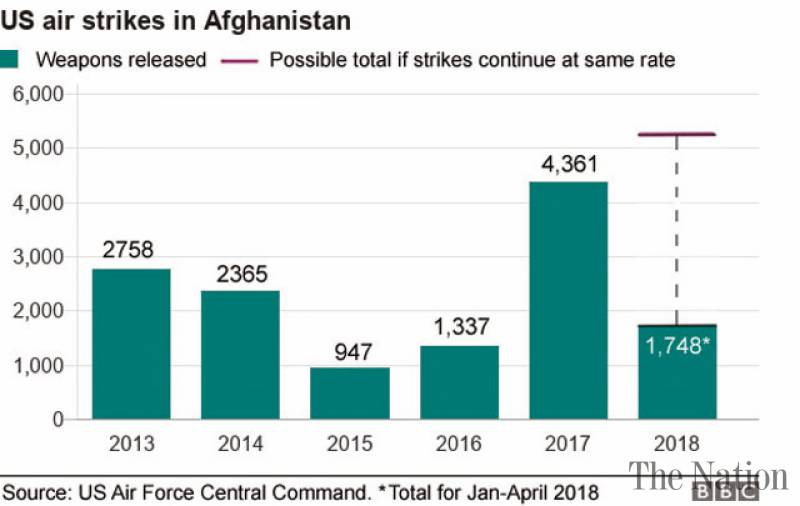
US Air Strikes in AFghanistanIn a 5 June report, the Afghanistan Independent Human Rights Commission said the attack was a “war crime”.

After initially denying that civilians had been killed, the Afghan government eventually apologised well over a month later and offered compensation to victims’ families. It has announced an investigation. “The key difference between the government and insurgents is that a legitimate government will always seek forgiveness for mistakes,” President Ashraf Ghani said.

Activists say the US also bears responsibility for such attacks carried out by Afghan air forces. “They train the pilots, the controllers, and they provide all the equipment,” said Patricia Gossman, the senior Afghanistan researcher at Human Rights Watch.

The Nato mission in Afghanistan, Resolute Support, said US and international forces had “no involvement” in the 2 April attack. While advisers “assist in the development of doctrine that guides the Afghan Air Force decision-making process”, a spokesperson said, they are not involved in decision-making for Afghan mission planning or targeting,

The spokesperson added: “Both the Afghan Air Force and US Forces-Afghanistan adhere to the International Laws of Armed Conflict. We constantly reiterate the importance of minimising civilian casualties, from operational planning, to targeting, to execution.

“Distinguishing military targets from civilian persons, limiting collateral damage, and using only proportional force are all assessed and applied prior to each strike.”

But Afghan forces are not the only ones that make mistakes: US bombs killed at least 154 civilians in 2017, according to the UN mission in Afghanistan, while the Afghan Air Force killed 99.

Observers say that about a decade ago international forces made a concerted effort to bring down civilian casualties from air strikes. Then Afghan President Hamid Karzai was a strident critic of US bombings, decrying them as violations of Afghanistan’s sovereignty.

“They had a dedicated Civilian Casualty mitigation team that analysed each incident, they had people who made site visits,” said Ms Gossman. “Since 2014, the Civilian Casualties Team at Resolute Support is much smaller, they don’t do site visits. They don’t talk to victims, witnesses or other local sources like medical personnel.”

Resolute Support says it and the US military only investigate allegations of civilian casualties from their own actions. Those investigations may include site visits if it safe to do so and “if reasonably available information is insufficient to confirm or disprove the allegation”.

Most civilian casualties in Afghanistan are still caused by anti-government groups like the Taliban and IS and, despite the heavy bombing, it does not appear that the US has become more careless in its approach to protecting civilians. The total number of weapons dropped by the US Air Force increased by 226% from 2016 to 2017, while over the same period, civilian casualties from Afghan and US air strikes rose by 7%.

Total civilian casualties from all sources actually decreased slightly, driven in particular by a lower toll from ground offensives. So although more civilians died in air attacks, it looks like the increased air cover may have prevented the Taliban from mounting major assaults on population centres, says Kate Clark.

In any case, the Dasht-e-Archi incident should be “a wake-up call for the government, people in charge of the air force and the US trainers”, she said.

Others believe that the entire strategy of pounding the Taliban militarily is misguided. A recent BBC study found that Taliban fighters are openly active in 70% of Afghanistan.

Barnett Rubin, who served as senior adviser to the Special Representative for Afghanistan and Pakistan at the US Department of State from 2009-2013, said the air campaign was having “no strategic effect”.

“They are just fighting the same war over for the 17th time,” said Mr Rubin, who argues that a consensus between Afghanistan’s neighbours and the major powers is a pre-requisite to creating a stable Afghanistan.

The current situation “is an irreversible stalemate”, he said, adding that if it changes “in the medium to long-term, it will only change against us.”–BBC

Originally Published in Daily The Nation 
Categories
Articles Current Affairs Pakistani Newspapers

Water crisis: Why is Pakistan running dry?

Pakistan could “run dry” by 2025 as its water shortage is reaching an alarming level. The authorities remain negligent about the crisis that’s posing a serious threat to the country’s stability, DW reports.

According to a recent report by the International Monetary Fund (IMF), Pakistan ranks third in the world among countries facing acute water shortage. Reports by the United Nations Development Programme (UNDP) and the Pakistan Council of Research in Water Resources (PCRWR) also warn the authorities that the South Asian country will reach absolute water scarcity by 2025. “No person in Pakistan, whether from the north with its more than 5,000 glaciers, or from the south with its ‘hyper deserts,’ will be immune to this scarcity,” said Neil Buhne, UN humanitarian coordinator for Pakistan.

Researchers predict that Pakistan is on its way to becoming the most water-stressed country in the region by the year 2040. It is not the first time that development and research organisations have alerted Pakistani authorities about an impending crisis, which some analysts say poses a bigger threat to the country than terrorism says DW in its report on water issue in Pakistan.

In 2016, PCRWR reported that Pakistan touched the “water stress line” in 1990 and crossed the “water scarcity line” in 2005. If this situation persists, Pakistan is likely to face an acute water shortage or a drought-like situation in the near future, according to PCRWR, which is affiliated with the South Asian country’s Ministry of Science and Technology.

Categories
Articles CSS Notes CSS Optional subjects Foreign Articles International Relations Pakistani Newspapers

Are cracks emerging in the Russia-Iran alliance in Syria? | CSS International Relations

Are cracks emerging in the Russia-Iran alliance in Syria?

By: Eric Randolph, Anais Llobet 

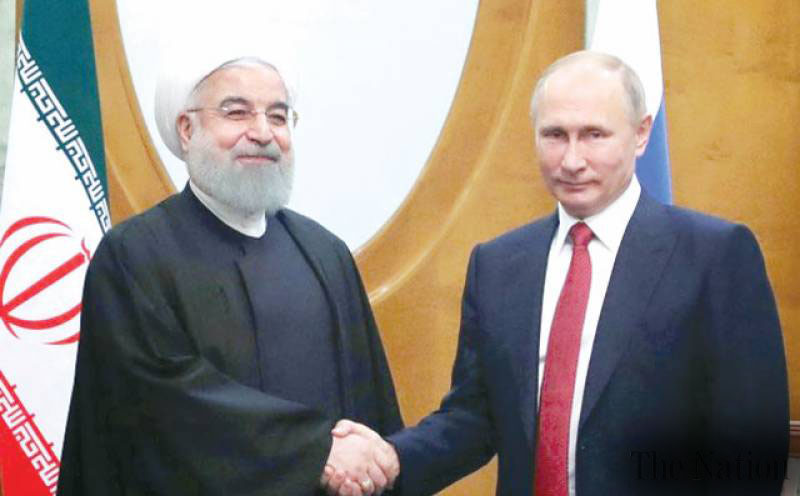
Russia’s recent call for foreign forces to leave Syria was seen as a possible turning-point in its tricky alliance with Iran, though analysts say their partnership still has a long way to run.

“With the start of the political process in its most active phase, foreign armed forces will withdraw from Syrian territory,” President Vladimir Putin vowed after meeting his Syrian counterpart Bashar al-Assad in Sochi .

Categories
Articles CSS Notes Current Affairs Pakistani Newspapers

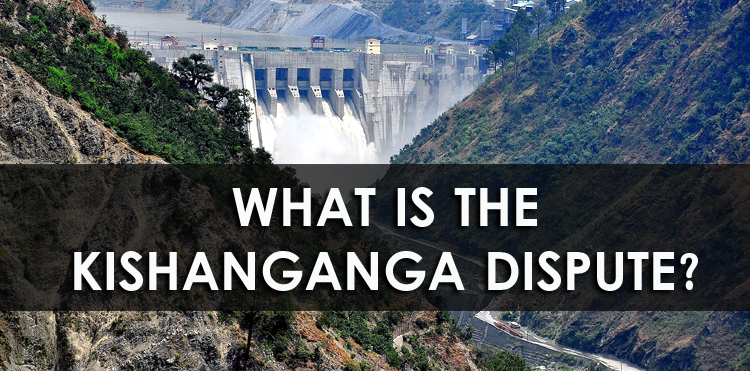
WHAT IS THE KISHANGANGA DISPUTE?

By: Anwar Iqbal in Washington

WHAT IS THE KISHANGANGA DISPUTE?

KISHANGANGA DISPUTE

THE dispute revolves around a hydroelectric power plant on the Kishanganga River, which is a tributary of the Jhelum and is known as the Neelum in Pakistan.

On May 19, 2018, Indian Prime Minister Narendra Modi inaugurated the project -which includes a dam on the tributary-barely metres away from the Line of Control in the disputed Kashmir region.

The project will generate 1,713 million units of electricity per year. The dam will divert Jhelum waters to an underground power house. To do so, it will transfer the water from the Gurez Valley back into mainland Kashmir, instead of allowing it to flow into Pakistan.

The Kishanganga River flows through the regions of Neelum in AJK and Astore before entering the India-held region of Gurez. The dam will give India control over a river that flows from Pakistan into India-held Kashmir and then re-enters Pakistan.

Categories
Articles Current Affairs Pakistani Newspapers

Why India wants more presence in Afghanistan | CSS Current Affairs

Why India wants more presence in Afghanistan | CSS Current Affairs

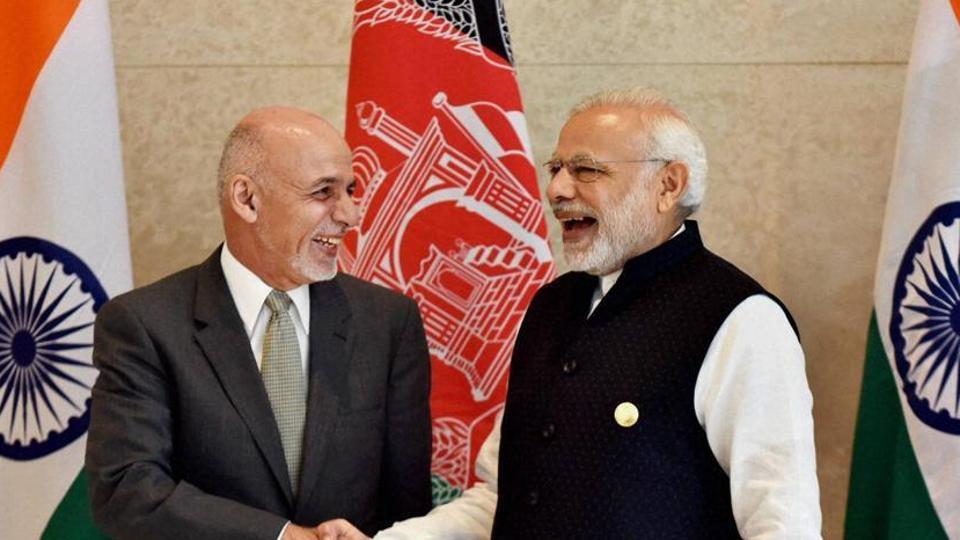
The enemy of an enemy is always a friend. In our field of study this can be termed as a strategic partner or an ally. That is the sort of relationship India is trying to build with Afghanistan. Our next door neighbour in the West is India’s dream ‘backdoor entrance’ into Pakistan. It’d be ideal for the Indians to manipulate the Afghan-Pakistan situation to their favour by buying the Afghan loyalty and using it against their one true enemy. However, unfortunately for India, we do not live in Narnia and things are not as magically easy as they would want them to be. The situation might seem to be in favour of the Indians at present since they have managed to build cordial relations with Afghanistan but it can’t be understated that an Afghanistan minus Pakistan is not possible.

Current Affairs MCQs | CSS Times General Knowledge MCQs

Let’s take a step back and discuss things objectively. There is no doubt about the fact that there is only one thing common amongst the otherwise divided Afghan government and that is their blame for Pakistan. They blame us for their problems. These allegations are obviously baseless but that is something to be discussed in another debate. Right now the aspect that needs to be focused on is that the Indians have no brotherly affiliation or cultural proximity with the Afghans, unlike Pakistan. They are merely trying to use their land as a playground for their massacre intended for Pakistan. Undoubtedly they are smart about it as we all know strategic planning with a hint of negativity is a part of India’s skill set and they feel no shame in using it anywhere and everywhere. Their $200 million aid to be spread over the future five years is not a step to help Afghanistan stand up on its own feet in terms of education, infrastructure, health and other aspects of a state. This is actually their attempt to have a more dependent state that comes running to India in all times of need. One can simply not ignore the wish of their Godfather and the Afghans will be no exception.

They blame Pakistan for using their land in war to gain favours from the Americans but the question is, why love India when that is exactly what they are doing as well? India is only strengthening Afghanistan up to the extent where it is stable enough to be used and manipulated against Pakistan. Yes, they are investing in their institutions in the present scenario but that is only so that they can reap what they sow in the past. There is one single reason why India wants more presence in Afghanistan, to threaten Pakistan from both sides when the time comes. It seems like all of India’s military and conventional strategies seem to be revolving around Pakistan’s lack of strategic depth. Their self-declared victory bound Cold Start Doctrine and their other regional pursuits like this venture in Afghanistan all revolves around the single advantage they have and that is Pakistan’s narrow territory. What they don’t realize is that this can and will be used in our favour as well when the time demands it.

However, despite India’s wishes and hopes there are some important factors that cannot be avoided when talking about the Pak-Indo-Afghan triangle. One of the major factors here is the ethnic, cultural and religious similarities that Afghanistan and Pakistan share. The Pashtun element between the two states is very strong and although India tries its best to maneuver this situation and highlight the aspect in negative light to create a rift between the two states and their people, this is not an easy goal to achieve. Pakistan and Afghanistan go long back and here it must be admitted that there is a certain degree of bitter taste and skepticism between the two states but that is something that can be resolved through dialogue and other diplomatic channels. Given all of that the only hurdle or might we say the only force stopping this from happening is the neighbour next door with rapidly growing hegemonic ambitions. They are willing to compromise the security and stability of the region to achieve their selfish desires and this is the only reason why they want more presence in Afghanistan.

Originally posted in: Daily Times

Watch Video: 25 Preparation Tips on How to Study for CSS at home

Check our daily updated ‘s Complete Day by Day Current Affairs Notes MCQs

[catlist name=”Day by Day Current Affairs”]

Categories
Articles Pakistani Newspapers

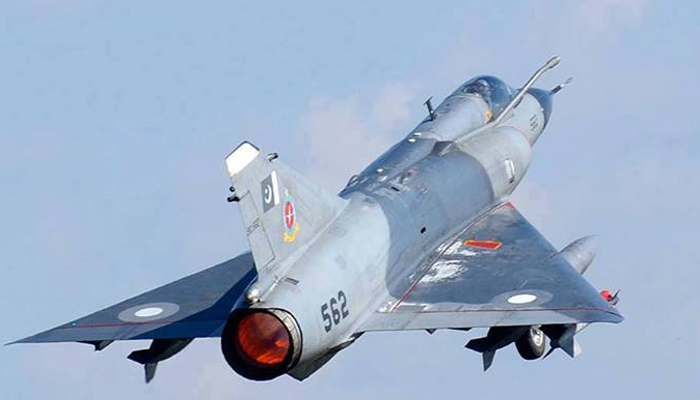
Thrifty at 50: Pakistan keeps ageing Mirages flying

Thrifty at 50: Pakistan keeps ageing Mirages flying

The sprawling complex at Kamra, west of Islamabad, reverbates at the thundering take-off of a Mirage Rose-1, the latest ageing fighter jet to have been gutted and reassembled by the Pakistani Air Force.

Fifty years after Pakistan bought its first Mirages, many planes in the venerable fleet are still being patched up, overhauled and upgraded for use in combat, years after conventional wisdom dictates they should be grounded.

That includes one of the first two planes originally purchased from France´s Dassault in 1967, which was in a hangar at Kamra after its record fifth overhaul when AFP visited recently.

The techniques they have developed are reminiscent of — but far more high-tech and lethal than — the improvised methods used to keep classic American cars running on the streets of Havana.

“We have achieved such a capability that our experts can integrate any latest system with the ageing Mirages,” says Air Commodore Salman M. Farooqi, deputy managing director of the Mirage Rebuild Factory (MRF) at the Kamra complex.

Pakistan bought its first Mirages to diversify its fleet, which in the late 1960s largely consisted of US-built planes: F-104 Starfighters, T-37 Tweety Birds and F-86 Sabres.

The Mirage became a popular choice, with the Air Force buying 17 different variants in later years, eventually owning the second-highest number of the fighter jets after France.

They performed bombing missions during Pakistan´s failed war with India in 1971 — one of the shortest conflicts in history, lasting just 13 days and leading to the creation of Bangladesh.

Thrifty at 50 Pakistan keeps ageing Mirages flying

But Mirages flew on, also carrying out reconnaissance missions in India, and intercepting and shooting down Soviet and Afghan planes that violated Pakistani airspace during the Soviet war.

Usually the jet has two or three life cycles, each spanning around 12 years. But overhauling them abroad was expensive for Pakistan, a developing country whose budget is already disproportionately tilted towards its military and which has historically received billions in military assistance from countries such as the US.

So, with the help of experts from Dassault, the air force decided if you want something done for the right price, you´ve got to do it yourself.

Current Affairs MCQs | CSS Times General Knowledge MCQs

Makeover

The Mirage Rebuild Factory was established at the Pakistan Aeronautical Complex (PAC) in 1978, and in the years since has saved “billions” of dollars for Pakistan, according to Group Captain Muhammad Farooq, in charge of one of the maintenance hangars — though he said the exact figure was difficult to pin down.

The planes take some seven weeks to be overhauled and repainted, he said, adding that usually the MRF has the capacity for more than a dozen planes a year. Its calendar for the next decade or so is already booked up.

At least eight different Mirage variants, including the Mirage 5-EF, Mirage III-DP and Mirage-III Rose-I, were in one of the maintenance hangers when AFP visited.

Engineers and technicians were dismantling cockpit instrument panels and landing gear while undertaking a “non-destructive inspection”, essentially an X-ray to detect faults in the wings and airframe.

Dozens of engines awaiting overhaul were piled in one hangar. Even planes that had suffered accidents such as fires breaking out have been patched back together at the facility.

Pakistan has also been buying up discarded Mirages from other countries to bring through the facility, said retired Air Marshal Shahid Lateef.

The most important technological improvement, developed with the help of South Africa, is the ability to integrate air-to-air refuelling, Farooqi said.

The “identification of friend and foe” (IFF) system, which detects when a Mirage has been locked on to by the system of another plane, was also a key development, he said.

Grand dames 

But even with the improvements and cost-saving measures, the ageing planes are becoming more difficult to maintain.

“They have outlived their lives… after their overhauls (they) have become highly unreliable, we even met with lots of accidents,” Lateef said.

The best option to replace them would be the Rafale, as neighbour and arch-rival India — which has also flown and maintained Mirages for decades — is doing, signing a deal with Dassault in 2016.

The price tag is too much for Pakistan, however, retired Air Commodore Tariq Yazdani said.

Instead Pakistan plans to replace them with the JF-17 Thunder aircraft that it co-developed and co-produced with China, the original manufacturer.

Even as it becomes more urgent to phase them out, Mirages´ status as the grand dames of Pakistani military aviation cannot be dismissed, Yazdani, who has logged 1,500 hours flying them, told AFP.

It is a “very agile aircraft capable of penetrating deep into the enemy´s territory without being detected by radar, which makes its sole mission — to drop bombs on the enemy´s position — quite easy,” he said.

“It is an old aircraft,” said aviation writer Alan Warnes, author of two books on the Pakistani air force. “But Pakistani pilots have been flying this plane with the utmost accuracy and expertise.”

Courtesy: Daily The News


Watch Video: 25 Preparation Tips on How to Study for CSS at home

Check our daily updated ‘s Complete Day by Day Current Affairs Notes MCQs

[catlist name=”Day by Day Current Affairs”]

Categories
Articles Pakistani Newspapers

Indian Air Force exercise and its objectives (By: Waqar Ahmed)

Indian Air Force exercise and its objectives

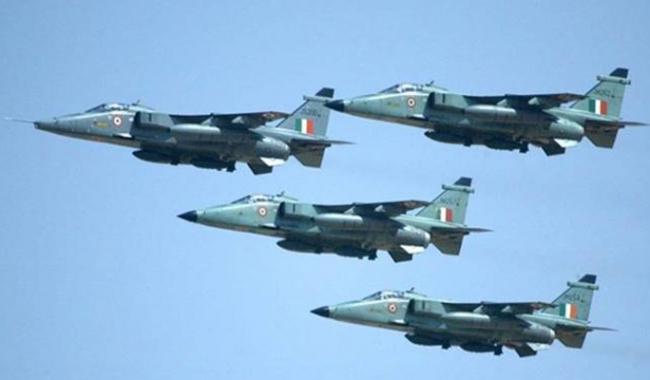
Pakistani media has generally ignored some important news coming from across the borders i.e. the IAF’s entire war-machinery has been activated for the ongoing exercise GaganShakti.

Gagan Shakti 2018 is being held nationwide by the Indian Air Force. The exercise began on April 8, and will end on April 22. It’s the biggest such exercise in terms of scale since the Operation Brasstacks in 1986-1987 or Operation Parakram in 2001-2002.

As many as 1,150 fighters, aircraft, helicopters and drones have been deployed for the massive exercise, which is taking place with active participation from the Indian Army and Navy for integrated land-air-sea combat operations.

According to reports in the Indian media, the Indian Air Force launched 5,000 sorties in just three days, simulating attacks on Pakistan.

It was also reported that the IAF has systematically worked towards achieving 83 per cent serviceability (operational availability of the number of aircraft at any given time) for the exercise, in conjunction with Hindustan Aeronautics and base repair depots, from the usual 55pc-60pc in peacetime.

Categories
Current Affairs Pakistani Newspapers

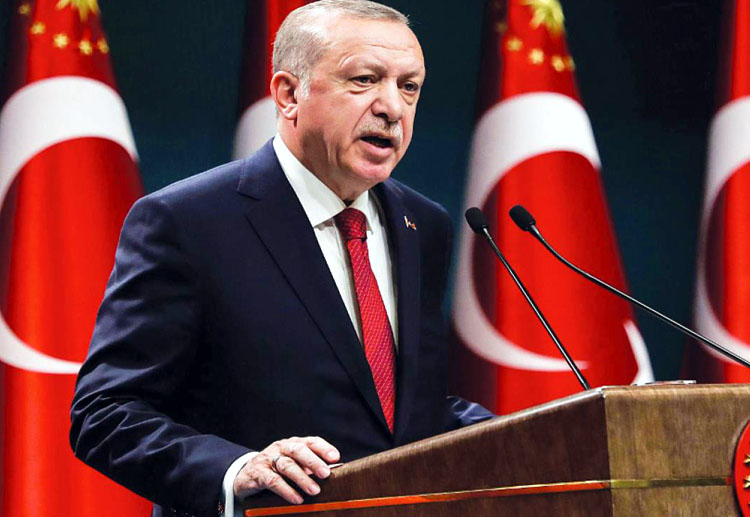
Erdogan`s snap polls: bold gambit or checkmate?

Erdogan`s snap polls: bold gambit or checkmate?

With his stunning call for elections in just over two months, Turkish President Recep Tayyip Erdogan is seeking to wrong-foot an unprepared opposition and capitalise on surging nationalist sentiment after his operation in Syria, analysts say.

Check also: General Science MCQs for CSS

Erdogan and his party will be the strong favourites to win the simultaneous presidential and parliamentary polls on June 24 but may still be taking a risk against the background of a deteriorating economy.

bold gambit

The polls are significant because after the elections a new executive presidency which critics worry will give the head of state authoritarian powers will come into force.

And if he wins a new five-year mandate then Erdogan who has already been in power as premier and then president for 15 years will be able to enter a third decade in office.

`[Erdogan] wants to show he is the absolute master of the political agenda,` said Dorothee Schmid, head of the French Institute of International Relations` (IFRI) Turkey Programme.

The polls had originally been due to be held on Nov 3, 2019.

`The effect of surprise is part of his tactics to control the opposition, both inside and out, thus restoring the balance of power in his f avour,` said Schmid.

Clear favourite to win

The main opposition secular Republican People`s Party (CHP) has yet to even name its presidential candidate while the breakaway nationalist f orm ation of ex-interior minister Meral Aksener, the Iyi (Good) Party, was only set up in October.

bold gambit

The pro-Kurdish Peoples` Democratic Party (HDP), meanwhile, has been weakened by the arrests of its most prominent figures and will prioritise making the 10 percent threshold to win seats in parliament.

`Checkmate`, read the headline in pro government daily YeniSafak on its front page on Thursday.

Berk Esen, assistant professor at the department of international relations at Bilkent University in Ankara, said the timing reduced the chance of any opposition alliance that could rattle Erdogan.

`Erdogan may have wanted to go for elections before opposition parties could strike a deal on an electoral coalition.

Esen said Erdogan was the `clear f avourite to win` as the opposition lacked a game plan and, except Aksener`s party, did not even have its candidates ready.

Economic pressures

There has been a surge of nationalist sentiment in Turkey after the army prised control of the Afrin region of northern Syria from Kurdish militia after an operation ordered by Erdogan.

His Islamic-rooted ruling Justice and Development Party (AKP) will fight the election in alliance with the right-wing Nationalist Movement Party (MHP) and Erdogan`s rhetoric has become more nationali st-tinge d in recent years.

But in the forefront of the mind of Erdogan a proven election fighter who has won every poll since the AKP came to power in 2002 the economy was likely to have loomed large. While growth in Turkey was 7.4 per cent in 2017, double-digit inflation, a wide current account deficit and the need for debt restructuring at top companies could be harbingers of trouble ahead.

`There is no doubt the decision was made in large part because of economic pressures and the related concern that the AKP`s and Erdogan`s popularity will slip over the course of 2018 and 2019,` said Anthony Skinner, MENA director at global risk consultancy Verisk Maplecroft.

Grown disillusioned

The government has appeared on an elec-tion footing since the start of the year with rallies hosted by Erdogan or Prime Minister Binali Yildirim almost every weekend.

And in a situation already angrily denounced by the opposition, the election will take place under the state of emergency in place since the July 2016 attempted coup, which was renewed for a seventh time on Wednesday.

`I see the decision as a calculated move, for which the costs and benefits have been carefully weighed up,` said Skinner, noting that the AKP has an `effective` public opinion polling machine.

But it will not all be smooth sailing for the AKP in a highly polarised country roughly split between supporters and opponents of Erdogan.

The executive presidency was only approved in the April 2017 referendum with 51.4 per cent of the vote, despite the `yes` vote enjoying disproportionately favourable media coverage.

This also is the first time that Erdogan has felt the need to call snap polls, although he did order an election re-run in November 2015 af ter the party lost its overall majority in June 2015 polls.

`There are voters who have been seduced by Erdogan at one point and who may have grown disillusioned because of growing authoritarianism,` said Didier Billion, deputy director of the Paris-based Institute for International and Strategic Relations.

`He may lose their voice,` he said.-AFP

Courtesy: Daily Dawn


Watch Video: 25 Preparation Tips on How to Study for CSS at home

Check our daily updated ‘s Complete Day by Day Current Affairs Notes MCQs

[catlist name=”Day by Day Current Affairs”]