Categories
Articles Current Affairs Pakistani Newspapers

Kashmir and Indian identity (By: Abrahim Shah, 3rd in CSS 2018)

The Modi-led BJP government’s decision to alter Kashmir’s status is merely the culmination of India’s drive towards fascism and the embracing of a national image highly exclusive in nature. This exclusion is not limited to the BJP’s tenure, but is in fact a product of India’s struggles with its own identity and response to colonialism. The Kashmir crisis must, therefore, be seen in a larger historical and political context which places Indian nationalism at the very heart of this crisis.

Kashmir was always the cornerstone of India’s nationalist discourse. India’s first prime minister, Jawaharlal Nehru, viewed Kashmir’s inclusion in India as validation of his secular project. Modi, in turn, imagines Kashmir as his ultimate triumph, the acme of his ambition to impose Hindutva on India. Both these movements are predicated on and have been successful because of the extreme levels of violence the Indian state unleashed against the Kashmiri people.
Categories
Articles Current Affairs Pakistani Newspapers

US vs China (By: Dr Farrukh Saleem)

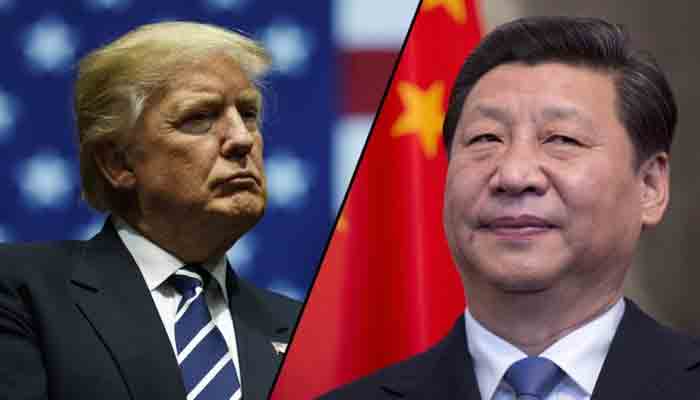
The war between the US and China is getting hotter. Artificial intelligence (AI) is the new weapon of war. In the US corner are: Google, Microsoft, Amazon, Facebook, IBM and Apple. In the Chinese corner are: Baidu, Alibaba and Tencent. According to Amy Webb’s ‘The big nine: How the tech titans and their thinking machines could warp humanity’, the war is “aimed toward control and global domination” and “AI will determine who emerges the victor”.

In the simplest of terms, AI “refers to any computer grogram or system that can perform tasks that resemble acts of human intelligence.” There are three types of AI: Artificial narrow intelligence (ANI), artificial general intelligence (AGI) and artificial super intelligence (ASI). ANI is a computer programme or system that outperforms humans in some very narrowly defined task (examples: Siri, chess, smart personal assistants, voice to text features, automated responders, self-driven cars etc).

Categories
Articles Current Affairs Pakistani Newspapers

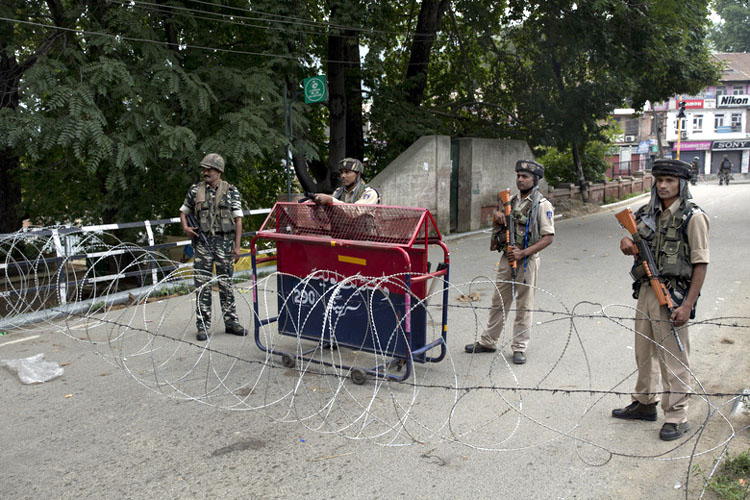
Explainer: What India’s Change to Occupied Kashmir’s Status Means

India’s government has revoked the special constitutional status of Indian-occupied Kashmir (IoK), amid a heavy security crackdown in the disputed region.

The constitutional provision forbids Indians from outside the region from buying land or permanently settling in the Muslim-majority territory.

What is happening?

The Hindu nationalist-led government of Indian Prime Minister Narendra Modi on Monday proposed revoking Article 370 of India’s constitution, which confers special rights to permanent residents of IoK.

Categories
Pakistani Newspapers

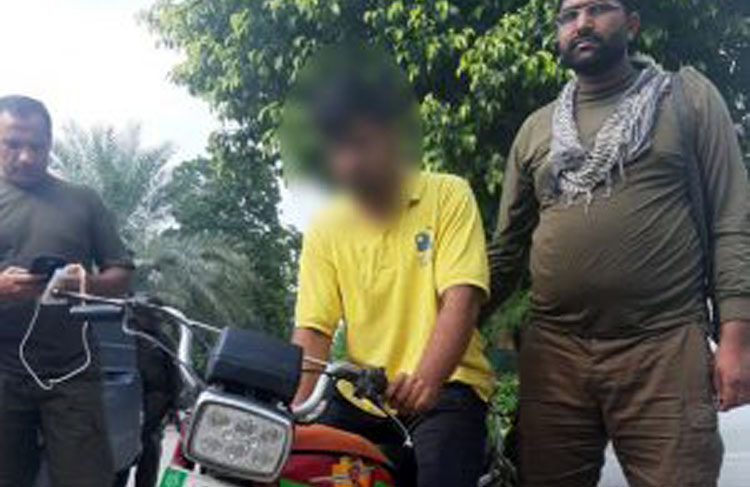
Police Arrested a Man Who Harassed a Girl By Flashing His Private Body Part

Police arrested a man on Friday who harassed a girl in Lahore by flashing his private body part.

Police started investigating this case when the girl, who had been harassed, uploaded a video of him on social media in which he was on his motorcycle and could be clearly seen displaying his private body part to the girl who, at that time, was passing by.

Categories
Articles Pakistani Newspapers

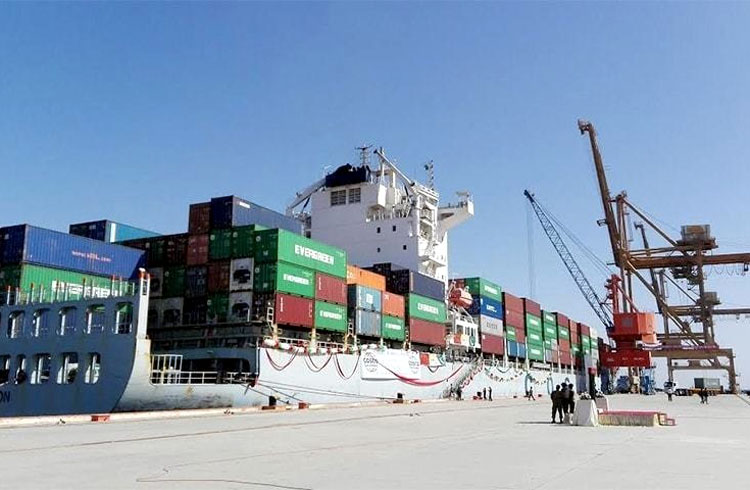
Will CPEC survive the IMF bailout? (By: Afshan Subohi)

By: Afshan Subohi

The staff report released by the International Monetary Fund (IMF) last week must have provided some measure of comfort to the champions of the China-Pakistan Economic Corridor (CPEC) as well as China that chose Pakistan to be the first key destination for the Belt and Road Initiative (BRI), which aims to sustain its economic triumph and realise future ambitions.

If this is just a coincidence, it is intriguing. After a long lull, there is light blipping again on the CPEC drawing board. Last Friday, a 55-member Chinese delegation of business executives met Prime Minister Imran Khan and reportedly committed to ploughing $5 billion investment over the next five years. “Probably the interaction with the Chinese delegations was already planned, but the fact that it did materialise as soon as details of the IMF deal were made public kindled new hope for the future,” commented a top leader of the government’s economic team.

In its staff report following the approval of a three-year $6bn bailout programme, the IMF mentions the repayment of $14.68bn due for $21.8bn bilateral and commercial loans that Pakistan owes to China. This is almost 24pc of the country’s total $85.8bn external debt and liabilities. The document states that the Chinese commercial debt will be fully retired by the end of the programme in 2022 while the bilateral debt ($15.5bn) will be almost half of what the country owes at this point to $7.9bn.

Categories
Articles Pakistani Newspapers

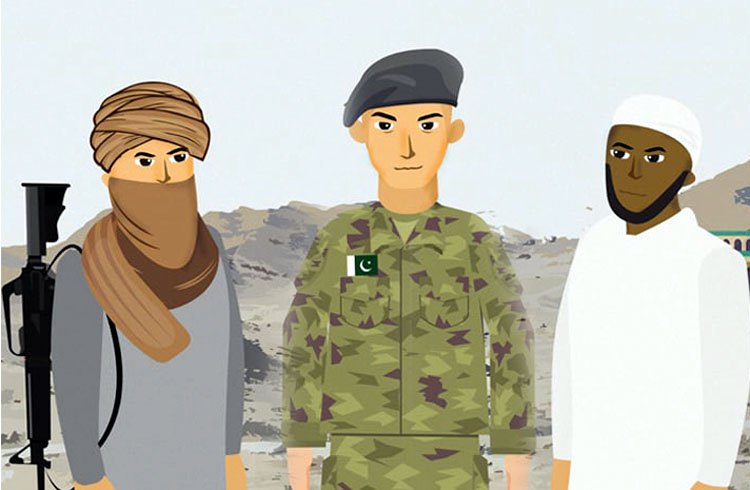
Religion, Nationalism and Insurgency in Balochistan

A long the major highways across the country, madressahs, mosques and other big and small structures of various religious denominations are a common sight. From Karachi to Torkham, Islamabad to Gilgit and Peshawar to Kotri, the spread of religious institutions is a visible indication of the religious ethos in the country. But the architectural symmetry of madressahs, mosques and religious centres? also points to the presence of religious forces that are at work to create a kind of national cohesion.

The main beneficiary of religious institutionalisation is a major segment of the lower income groups. In Punjab, this phenomenon has already significantly transformed social structures, and a similar transformation is also underway in Sindh. Now, not unlike the rest of the country, such structures are increasingly sprouting up along the major highways and inter-district roads in Balochistan. But, the case of Balochistan is a more complex one in many respects.

Rapid urbanisation in parts of Balochistan and a growing middle class can be counted as primary factors behind growing religiosity in the province. The Baloch overseas workers in Middle Eastern countries, as well as Omani and Iranian influences in the coastal and bordering regions, have also factored in to change the socio-economic fabric of the area. Encompassing all this is the state’s larger religion-oriented national cohesion project, which defines Pakistan’s ideological foundation in religious terms and places religious identity above all other identities including ethnic. The historical processes of Islamicisation of the state and society palpably indicate that.

Categories
Articles Pakistani Newspapers

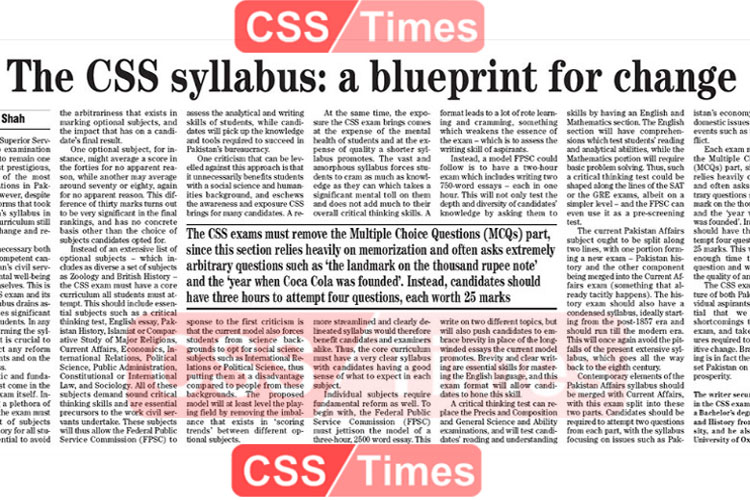
The CSS Syllabus: A Blueprint for Change (By: Abrahim Shah | 3rd in CSS 2018)

The Central Superior Services (CSS) examination continues to remain one of the most prestigious, and indeed, one of the most daunting examinations in Pakistan. In reality, however, despite the substantial reforms that took place in the exam’s syllabus in 2016, the exam’s curriculum still requires drastic change and reform.

This change is necessary both to pick the most competent candidates for Pakistan’s civil service, and for the mental well-being of candidates themselves. This is so because the CSS exam and its nearly endless syllabus drains aspirants and imposes significant mental strain on students. In any drive towards reforming the syllabus, therefore, it is crucial to analyse the impact any reform will have on students and on the recruitment process.

Categories
Articles Pakistani Newspapers

My observations on Pakistan’s economy (By Tang Tianru)

Tang Tianru
Tang Tianru | The writer is the Managing Director of an Islamabad-based Chinese company

Pakistan’s current fiscal and taxation policies are characterised by increasing tariffs, expanding the proportion of taxes, raising all kinds of living, production and material rates, resulting in a sharp rise in the production costs of enterprises and an increase in the burden of business operation. At the same time, the exchange rate of the Pakistani rupee against the US dollar has depreciated sharply recently. The consumption cost of the people has risen sharply in a short period of time. As a result, the market demand becomes weaker, and the inflation rate is higher. At the time of rising production costs, enterprises have encountered the double challenge of shrinking market demand, adding to their difficulties and worrying conditions. Some enterprises have stopped production or sought to withdraw from the Pakistani market to seek overseas development, thus increasing the unemployment rate in Pakistan.

Categories
Articles Pakistani Newspapers

An overview of Pakistan’s economy (by: Maham Fatiama)

[mks_button size=”medium” title=”By: Maham Fatiama” style=”squared” url=”#” target=”_self” bg_color=”#1e73be” txt_color=”#FFFFFF” icon=”” icon_type=”” nofollow=”1″]

The industrial sector of the country contributes to 20 percent of GDP. In 2018 it recorded a growth of 5.80% as compared to the growth of 5.43% last year

Pakistan is facing a financial crisis since its independence in 1947. There are many reasons but political crisis has always been a major one.

Currently, we are facing trade deficit and that is because of wrong financial policies of the past governments. That is also because certain experiments were done with the economy in the past which didn’t prove fruitful. For example, before 1970s Pakistan’s private sector was booming and companies were making profit hence making jobs vacancies. But, during the regime of Zulfiqar Ali Bhutto, Pakistani companies were nationalized and they came under the direct control of the government of Pakistan. Therefore many of the companies and businessmen shifted to other lands in the search of a level playing field.

Categories
Articles Pakistani Newspapers

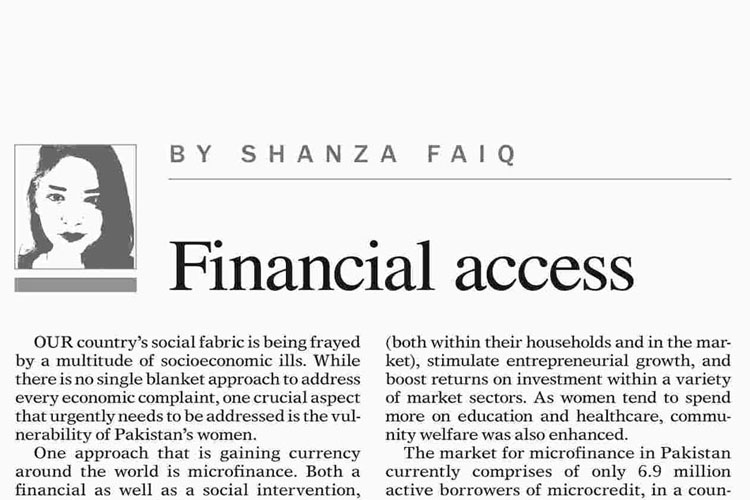
Financial Access | Article by Shanza Faiq (First in CSS 2018)

OUR country’s social fabric is being frayed by a multitude of socioeconomic ills. While there is no single blanket approach to address every economic complaint, one crucial aspect that urgently needs to be addressed is the vulnerability of Pakistan’s women.