

CSS Gender Studies Notes
What are the theories of social construction of gender? (CSS-2016)
Social construction is something you might not be aware of. You are somewhat living in segregation depending on what gender, race and class you are. Race, class and gender don’t really mean anything. They only have a meaning because society gives them a meaning. Social construction is how society groups people and how it privileges certain groups over others. For example, you are a woman or a man because society tells you that you are, not because you choose to be. Simple as that. Just like it tells you what race you’re classified as and what social class you belong in. It is all just a social process that makes us differentiate between what’s “normal” and what’s not “normal.”
According to the author of “Night To His Day: The Social Construction of Gender,”, Judith Lorber (born November 28, 1931) is Professor Emerita of Sociology and Women’s Studies at The CUNY Graduate Center and Brooklyn College of the City University of New York.) the social construction of gender begins “with the assignment to a sex category on the basis of what the genitalia look like at birth” When a baby is born, the first thing a doctor does is look at the baby’s genitalia in order to determine whether it will be a boy or a girl; this is the beginning of the gender process of social construction. After they are classified as boy or girl, parents become part of this societal process as they start dressing them with colors that identify their gender. The “normal” thing to do in this case would be for baby girls to be dressed in pink and baby boys to be dressed in blue. It is just not normal to dress your baby boy in pink or your baby girl in blue, right? The reason for this is because society has made colors become a symbol to distinguish boys from girls. After this, as children grow up they start learning how they are supposed to act by observing and imitating the people of the same gender as them; girls should act like their mommy and boys should act like their daddy. Each gender is expected to dress and act in a certain way, but these behaviors then lead to stereotypes.
Allan G. Johnson, the author of “Patriarchy,” states some of the very common stereotypes or “qualities” of men: “control, strength, efficiency, competitiveness, toughness, coolness under pressure” These are just some of the many stereotypes of men regarding how they should “normally” act and try to portray themselves. Stereotypes for women have also come into place. Johnson lists some common stereotypes that society gives women as well: “inefficiency, cooperation, mutuality, equality, sharing compassion, caring,…emotional expressiveness” Later on in the passage, Johnson states something very interesting: “Power looks sexy on men, not on women” The stereotype of “efficiency” for men and “inefficiency” for women gives a double meaning to this quote. Since women are inefficient, in other words unskilled, compared to men, it is evident that society’s opinion on gender describes that men should have the power. This quote is one more thing that is contributing to the social construction of gender by making men seem like they have more power and privilege over women.
Check Also: CSS Gender Studies MCQs
Privilege doesn’t just fall into the social construction of gender, but also that of class difference. Sandra K. Hoyt, the author of “Mentoring with Class,” defines social class as an “economic structure” There are three different types of social classes: upper, middle, and lower class. Everyone in this society is categorized within this economic structure based on their financial status. The upper class is known as the “rich,” the middle class as the “norm,” and the lower class as the “poor.” The upper class is usually thought to have higher privileges than the lower class. For example, in terms of education, the students that belong in the upper class have a higher chance to be successful in life because they come from wealthy families that can provide them with a private education system. In contrast, the lower class students have to learn how to deal with what’s provided for them. If the public system is not preparing them well enough just like a private schooling system would, then there’s nothing much to do. Let’s also take into consideration that the social construction of class difference isn’t only necessarily identified by society depending on financial status. Race also helps us get an idea of which social class people belong in.
Racial formation is another term for the social construction of race. The authors of “Racial Formation in the United States,” Michael Omi and Howard Winant, define racial formation as “the sociohistorical process by which racial categories are created, inhabited, transformed, and destroyed” By saying that racial formation is a “sociohistorical process” they are saying that race was formed and given a meaning by society because of the many critical events that have happened in history over time. They also state that “race is a concept which signifies and symbolizes social conflicts and interests by referring to different types of human bodies” In other words, people are characterized and identified by only their appearance more specifically, skin pigmentation. There are standards, stereotypes and expectations that follow these physical characteristics.
This goes back to our previous example of how not only financial status helps us identify what social class someone is in. Someone might just make assumptions of what race you are just by saying the class you belong to. In one of our previous lectures in class, we were discussing the difference between class and how race plays a role in the hierarchy of social class. Our instructor, Chesa, asked us, “If you had to imagine the upper class, how would you describe it?” We all sat and thought about it for a second, and the first two things that were said out loud were the words “rich” and “white.” She asked us once again, but this time it was to think about the middle class and most people described it as the “normal.” Normal to us was a white fenced house, a typical family of three and a nice car. Now, when she asked how we see a working (lower) class, people said “people of color” and people living in “apartments.” It was surprising to see how everyone was in consensus with all that was being said. We all knew which race usually was associated with each social class as well as the typical stereotypes of class, race and gender. This concludes that we are apparently all participants of this social construction.
This social construction in this society is segregating us depending on our physical appearance and our material possessions. We are seen differently because of where we live, where we come from and how we look. Women are weak, therefore men, who are strong and controlling, should be the ones in power. If you live in an apartment, then you must be from the lower class, but if you live in a house then you must be either middle or upper class. If you go to a private school then you must be rich, but if you go to a public school then most certainly you’re poor or low income. This is all what society has inculcated in us, but we also have fault that we have been caught up on this whole idea of stereotypes and standards that we are supposed to follow because after all, we believe what we want to believe.
Watch CSS Gender Studies LIVE Introductory Lecture by Mam Fatima-tu-Zahra
Understanding Gender
For many people, the terms “gender” and “sex” are used interchangeably and thus incorrectly. This idea has become so common, particularly in western societies, that it is rarely questioned. We are born, assigned a sex, and sent out into the world. For many people, this is cause for little, if any dissonance. Yet biological sex and gender are different; gender is not inherently nor solely connected to one’s physical anatomy.
Biological Gender (sex) includes physical attributes such as external genitalia, sex chromosomes, gonads, sex hormones, and internal reproductive structures. At birth, it is used to assign sex, that is, to identify individuals as male or female. Gender on the other hand is far more complicated. It is the complex interrelationship between an individual’s sex (gender biology), one’s internal sense of self as male, female, both or neither (gender identity) as well as one’s outward presentations and behaviors (gender expression) related to that perception, including their gender role. Together, the intersection of these three dimensions produces one’s authentic sense of gender, both in how people experience their own gender as well as how others perceive it.
The Gender Spectrum
Western culture has come to view gender as a binary concept, with two rigidly fixed options: male or female, both grounded in a person’s physical anatomy. When a child is born, a quick glance between the legs determines the gender label that the child will carry for life. But even if gender is to be restricted to basic biology, a binary concept still fails to capture the rich variation that exists. Rather than just two distinct boxes, biological gender occurs across a continuum of possibilities. This spectrum of anatomical variations by itself should be enough to disregard the simplistic notions of a binary gender system.
But beyond anatomy, there are multiple domains defining gender. In turn, these domains can be independently characterized across a range of possibilities. Instead of the static, binary model produced through a solely physical understanding of gender, a far richer tapestry of biology, gender expression, and gender identity intersect in a multidimensional array of possibilities. Quite simply, the gender spectrum represents a more nuanced, and ultimately truly authentic model of human gender.
Falling Into Line
Gender is all around us. Like water surrounding creatures in the sea, we are often unaware of its ever-present nature. Gender is actually taught to us from the moment we are born. Gender expectations and messages bombard us constantly. Upbringing, culture, peers, schools, community, media, and religion are some of the many influences that shape our understanding of this core aspect of self. How you learned and interacted with gender as a young child directly influences how you view the world today. Gendered interactions between parent and child begin as soon as the sex of the baby is known. In short, many aspects of gender are socially constructed, particularly with regard to gender expression.
Like other social constructs, gender is closely monitored and reinforced by society. Practically everything in society is assigned a gender—toys, colors, clothes and behaviors are just some of the more obvious examples. Through a combination of social conditioning and personal preference, by age three most children prefer activities and exhibit behaviors typically associated with their sex. Accepted social gender roles and expectations are so entrenched in our culture that most people cannot imagine any other way. As a result, individuals fitting neatly into these expectations rarely if ever question what gender really means. They have never had to, because the system has worked for them.
About Gender-expansiveness
“Gender-expansive” is an umbrella term used for individuals that broaden commonly held definitions of gender, including its expression, associated identities, and/or other perceived gender norms, in one or more aspects of their life. These individuals expand the definition of gender through their own identity and/or expression. Some individuals do not identify with being either male or female; others identify as a blend of both, while still others identify with a gender, but express their gender in ways that differ from stereotypical presentations. A gender-expansive person’s preferences and self-expression may fall outside commonly understood gender norms within their own culture; or they may be aligned with them even as one’s internal gender identity doesn’t align with the sex assigned at birth.
This diversity of gender is a normal part of the human experience, across cultures and throughout history. Non- binary gender diversity exists all over the world, documented by countless historians and anthropologists. Examples of individuals living comfortably outside of typical male/female expectations and/or identities are found in every region of the globe. The Calalai and Calabai (women, men, calabai, and calalai) of Indonesia, two-spirit Native Americans, and the hijra of India all represent more complex understandings of gender than allowed for by a simplistic binary model.
Further, what might be considered gender-expansive in one period of history may become gender normative in another. One need only examine trends related to men wearing earrings or women sporting tattoos to quickly see the malleability of social expectations about gender. Even the seemingly intractable “pink is for girls, blue is for boys” notions are relatively new. While there is some debate about the reasons why they reversed, what is well documented is that not until the mid-twentieth century were notions of pink for girls or blue for boys so firmly ensconced. You can make the case that “pink is the new blue!”
Gender and Privilege
When someone is “typically gendered,” they benefit from gender privilege. For individuals whose biological sex, gender expression, and gender identity neatly align, often referred to as Cisgender (often abbreviated to simply cis is a classification for people whose experiences of their own gender agree with the sex they were assigned at birth), there is a level of congruence as they encounter the world around them. Like many forms of social privilege, this is frequently an unexamined aspect of their lives. Forms they fill out, the clothing stores in which they shop, or identification papers they carry bring few if any second thoughts. Yet for a transgender or otherwise gender-expansive person, each of these, and many more examples, is a constant reminder that they move about in a culture that really does not account for their own experience. Social privilege comes from an assumption that one’s own perspective is universal; whether related to race, or language, or gender, privilege comes from being part of the “norm.” Or, as Dorothee Steffensky-Sölle described it: Privilege is being able to choose what you will not see.
To understand this more intuitively, think about the last time you were in a public setting and needed to use a restroom. For Cisgender individuals, this rarely presents a problem or question (issues of cleanliness notwithstanding!). Yet for an individual who does not fit into narrowly defined expectations of gender presentation or identity, restroom use can present a whole host of challenges, sometimes even becoming a matter of life and death. The daily need to make judgments about what one does, or wears, or says based on other people’s perceptions of their gender is a burden that many people never encounter. These everyday reminders of being different are also constant reinforcement of being “other”.
The Social Construction of Gender
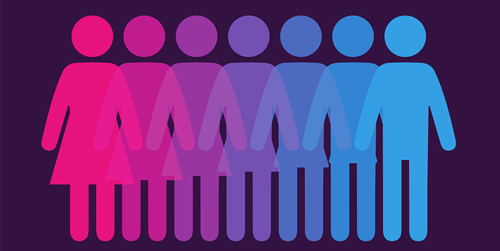
Gender is socially constructed and a result of sociocultural influences throughout an individual’s development Gender identity can be affected by, and is different from one society to another depending on the way the members of society evaluate the role of females and males. Our gender identity can be influenced from the ethnicity of the group, their historical and cultural background, family values and religion. Often people confuse or misuse the terms gender and sex. The term sex refers to the biological distinction of being male and female to make the distinction clearer one could consider that we inherit the sex but we learn our gender (Boss, 2008). Gender is a structural feature of society and the sociological significance of gender is that it is a devise by which society controls its members Gender like social class and race can be used to socially categorize people and even lead to prejudice and discrimination. Prejudice is a set of attitudes, more likely unfavorable, towards members of a group. Discrimination is overt negative behaviors towards a person based on his or her membership in a group (Pennsylvania State University, 2011). When there is differential treatment of people based on their sex the term sexism defines this behavior. Sexism refers to any bias against an individual or group based on the individual’s or group’s sex Gender discrimination is another way one could define sexism and in particular this is associated with discrimination and stereotyped beliefs against women. Stereotypes are beliefs about the characteristics, attributes, and behaviors of members of certain groups and most of them are “socioculturally” based Stereotype ideas and beliefs regarding women, although they have been changed and improved, are still evident in our country and in other modern cultures. Unfortunately in several countries around the world such as Arabian courtiers, Africa and India things have not changed much and women are still considered a minority and do not have equal access and rights in their societies as do males (Henslin, 2006). This variation regarding gender around the world makes prominent that gender identity is influenced by social variables and has little to do with biological variables.
The idea of social construction of gender sees society, not biological sex differences, as the basis for gender identity there are many different processes by which the expectations associated with being a boy or a girl is passed on through society. For instance one could see this from the moment a child comes into the world and from the fact that he/she has to face a “blue” or “pink” reality. I recently attended a baby shower party and I was shocked first by the amount of items a baby needs and even more about the color choice of each item. Everything was pink, as a baby girl was expected, and honestly I never imaged how many different shades of pink actually exist for products such as baby clothes. The house decoration was pink, people were wearing pink or pastel colors, all the gift wrappers pink as well as the gifts themselves. My gift was one of the few items of a different color, as I chose yellow and light purple items, which was actually a challenging task to find as most of the items in the store I shopped were blue or pink. The social construction of gender could be further been seen by the way parents behave to their children, by their expectations about how their children should behave and act, and by the toys they buy for them. For example girls are supposed to play with dolls and be sweet and emotional and boys are supposed to play with action figures and be aggressive and rational. Therefore clothes, toys, and even the language used with young children follow the trend of stereotyping gender. Children learn by modeling and the messages they receive and act accordingly. An example similar to the dress code we having for children can also be seen with adults, particularly in the colors, fabrics and designs specific to each gender. Another example is the situation of a female working in the business field that is expected to dress in masculine way in order to be considered successful and to be taken more seriously. This could demonstrate again how social influences affect gender expectations and shape behaviors and norm regarding gender.
Apart from the family, which is the first agent of socialization and learning gender identity, children learn from other sources such as school. Starting from the first years of school, including day care center years, children learn their gender identity from playing and interacting with other children and care providers. By visiting a child care program one may notice that the environment is arranged in ways to promote gender identity. Most likely there will be an area staged as the housekeeping corner where girls the play and there will be another area with building blocks and tool kit items where the boys play. However it is believed by several that the kind of toys and roles children play affect their future and the skills they learn. Playing with blocks is considered giving experience in spatial relations and in mathematical concepts, where playing with dolls and dramatic role playing is associated with learning to be a nurturer. As children grow more stereotype ideas are involve regarding which subjects are favorable and suitable for each gender. For instance the most obvious example is math and probably all of us have heard the notion that boys are better in math than girls. Therefore one could see that again social influence affects perception about gender identity and roles. However perceptions such as this can lead to stereotype threads which are the fear or nervousness that one’s behavior will exemplify a negative stereotype about his in-group and thereby in essence confirming the accuracy of the stereotype.
Furthermore the media also affects and influences gender identity. For instance children are constantly bombarded with shows depicting gender stereotype models from toys marketed as for boys or girls, to children’s TV programs and shows. It is common for the children’s programs to emphasize the role of the male “hero” who saves the weak female. Children interpret these messages as “real life” which shapes their reality, behavior, and expectations of their gender role. However, the social construction of gender does not happen only once and does not stop with children. It continues throughout the rest of our lives and influences our perspective and the way we view things and situations. Regarding the media one is able to see an example of gender stereotyping by observing the messages of advertisements. Recently I had conversation with my husband relating to the issue of sexism regarding a car show he was watching on TV where standing next to the new cars were beautiful female models. My comment was that is an example of benevolent sexism. Benevolent sexism involves the attribution of typically positive traits or qualities towards women but these traits are deriving from stereotypes that see. Women in limited ways and often stem from male-centered perspectives. My husband did not want to accept this and he argued that male models are sometimes used as well. We end up watching the car show for over an hour in order to find a male model next to a car but we did not see any.
Additionally cultural and religious beliefs and attitudes have a serious impact on gender identity and in many cases promote stereotype beliefs against women and lead to gender discrimination. When it comes to culture and religious influences in a society regarding the view of gender I believe the concept of institutionalized sexism is appropriate to describe this situation. Institutionalized sexism is the sexist attitudes that are held by the vast majority of people living in a society where stereotypes and discrimination are the norm when a society has specific norms people living within the society will adapt to them and they will do the same even for discriminatory norms. For instance when a society, due to religious and cultural reasons, view women as weak or inferior people living within the society will develop the same views and will act accordingly. One can see this for example in many Muslim countries and also with different religious groups, even in our own country. People tend to conform to their group and will do the same even when they engage in discriminatory behaviors as they want to fit in and be accepted by their group which is known as normative conformity
Society constructs our gender and categorizes its members similar as it does with age, ethnicity, race, social class and status. However the categorization according to gender is another way of manipulating members of a society and to promote inequalities. There are obvious biological and anthropological differences between the two sexes but we cannot use these differences to infer conclusions and provide stereotyped models about gender. As mentioned in the beginning sexism is the term that accounts for gender discrimination and has different forms. One of them already mentioned is benevolent sexism characterized by positive but stereotyped views of women. Contrarily another form is hostile sexism which is characterized by negative stereotypical views towards women. For instance hostile sexism views of women are centered on beliefs that women are inferior to men due to superficial views that one can hold again women. Lastly another form of sexism is ambivalent sexism which holds views of both hostile and benevolent sexist attitudes simultaneously however no matter the form, sexism has overall negative consequences and results in stereotyping women, and even prejudice and discrimination. The United States of America and other developed countries have come a long way in trying to eliminate discrimination against women but there is still a room for improvement. Gender as mentioned above results from sociocultural influences. Research and theory derived from social psychology could be able to develop appropriate interventions that could target a vast range of individuals and institutions in order to promote equality of genders and eliminate gender discriminations.
Leave a Reply