Categories
Articles Current Affairs Pakistani Newspapers

China’s growing influence in South Asia (By: Rida Khan)

Let China sleep, for when she wakes, she will shake the world,” Napoleon’s words seem spookily veracious today, as the shock waves from China’s awakening echo around the globe.

Ever since the Asian Dragon has risen it has been expanding its wings in dabbling Asian countries by helping them built their finances in projects granted by their government.

Just over half a century ago, China was reeling from one of the most significant economic catastrophes in state history. Today, China has exploded with GDP growth at 6.8% per year making the state the second largest economy of the world. It had lifted more than 600 million people out of poverty and has emerged as the largest trading partner of US, EU, India and Japan. Measured strictly by GDP, China will likely surpass the US within the next few years (Giles).

The most remarkable economic transformation in human history has led to a significant ‘rise of China’ phenomenon, which caused a profound “shift in global dynamics and evolving geopolitics” in a more “south-orientated world” (UN).

China has also broadened its diplomatic activities ever since, playing a key role in international institutions and wielding greater geopolitical influence in Asia and around the world. In the process it has become the second most influential country in the world after the US. For instance, its role in stimulating the world economy and even resolving nuclear issues in the Korean Peninsula and the Persian Gulf has been crucial.

In this new order, China is becoming a more responsible player on the global stage and addressing international issues such as global terrorism, environmental degradation, energy security, international crime and so on.

In political realism, power is the capability to make another state do something it would not otherwise do and vice versa. What makes a state powerful is about its capability of influencing another. In the world of states, this capability is based on both tangible and intangible characteristics of the state. Tangible characteristics include things as state’s size, economy, military, technological development and population. Talking specifically of Asia, China is indeed the ASIAN DRAGON.   Ambitiousness, hardworking, national will, the intangible characteristics, also drove China to success.

As power is inflationary, so when countries become stronger, their interest expands beyond their borders, where they must find new ways to protect those interests. China is no exception. Thus, in order to sustain its peaceful rise, it is increasing its influence around the world and South Asia is no different.

The South Asian region, home to one fourth of the world’s population, is one of the least economically integrated regions in the world. Intraregional trade remains well below its potential due to, “historical political tensions and mistrust, with cross-border conflicts and security concerns” (World Bank). Most South Asian countries rely heavily on developed nations as export destinations, and increasingly import from China.

Since 21st century, China has been conducting multi-dimensional cooperation with all of the South Asian countries (Afghanistan, Bangladesh, Bhutan, India, Maldives, Nepal, Pakistan and Sri Lanka). Chinas linkage with South Asian countries expanded to all fields including economic, communication, cultural exchange, energy and the untraditional security cooperation.

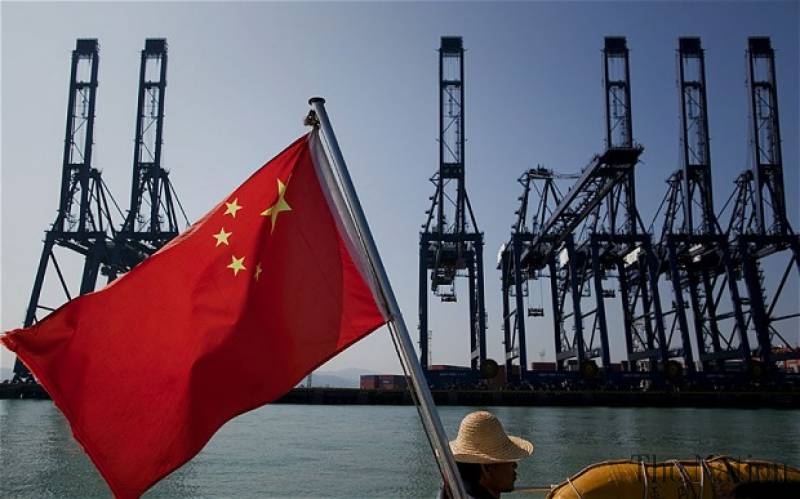
China’s major interests in South Asia include promoting stability in both Afghanistan and Pakistan in order to curb the influence of Islamist extremists, and to facilitate trade and energy corridors throughout the region that China can access, that is to increase its presence in the Indian Ocean Region. The Ocean accounts for half the world’s seaborne container traffic, and 70 percent of the total traffic of the world’s petroleum. China considers the Ocean to be a key strategic waterway because a significant portion of its goods and oil transit through the Ocean. China’s South Asian Strategy also focuses on enhancing its influence with other South Asian states as part of a global effort to extend its diplomatic and economic influence.

As China is energy thirsty economic power, it is highly sensitive to the fact that these resources, which are essential to China’s economic productivity could be interdicted by hostile state or non-state actors. So, China seeks greater presence and influence in the Indian Ocean region, primarily to protect the sea lines of communication upon which its economy depends, as well as to expand its influence.

It is in this context that cases such as CPEC can be viewed. The China-Pakistan nexus is by far the most important and dynamic relationship in South Asia , accentuating China’s desire to maintain a foothold in the Indian Ocean.  In 2015, China and Pakistan launched the China-Pakistan Economic Corridor (CPEC)—which falls under the OBOR umbrella—with the signing of 49 agreements to finance a variety of projects with a total expected value of $46 billion, including upgrades to Pakistan’s Gwadar Port, oil and gas pipelines, road and railway infrastructure, and a series of energy projects. CPEC aims to link western China by road and rail down to the Gwadar deep water port, located at the edge of the Strait of Hormuz in the Arabian Sea, via 2,000 miles of rail, road, and pipelines.

China’s one of the major interests in South Asia is to promote peace and stability in Afghanistan, which stems in part from its desire to access the country as a gateway to Central Asia and Europe. It is also primarily driven by its desire to prevent conflict from spilling over into western China in the Xinjiang autonomous region as given the presumed link between the Taliban leadership in Afghanistan and the East Turkestan Independence Movement, a Uighur separatist movement in China’s Xinjian province that borders Afghanistan. China hopes that, eventually, long-term stability in Afghanistan will allow it to build railways, roads, electricity, and water projects in the country as part of its Silk Road Economic Belt.

Projects like CPEC, Belt and Road Initiative are the part of the “Chinese dream” that will fulfill China’s plan to become next superpower. Through project like these China is in a way securing a new alternative trade for goods especially oil and gas from Middle East.

China’s one belt and road initiative is the most ambitious infrastructure project in modern history that’s designed to reroute the global trade. This potentially ambitious project covering about  60%  of the world’s population, about one-third of the world’s GDP, and about a quarter of all the goods and services the world moves, creating a network of railways, roads, pipelines, and utility grids that would link China and Central Asia, West Asia, and parts of South Asia . “One Belt, One Road” strategy, is expected to relieve China of the “Malacca dilemma”, what then President Hu Jintao in 2003 called China’s overreliance on the Malacca Strait for trade.

While the concerns in Afghanistan persist, China has already become a major investor in Afghanistan, through projects like the Mes Aynak copper mine—a $3.5 billion project in Logar province, the largest direct foreign investment in Afghanistan’s history—particularly due to its considerable supply of rare earth minerals and its potential as a pathway for Chinese trade into Central Asia.

In the past decade, China has emerged as a top exporter of goods to the region breaking into South Asian markets with its export-led growth strategy. Bangladesh provides the starkest example of this trend. China has become Bangladesh’s top trading partner in 2015, imports from China (including Hong Kong) were 27 percent of Bangladesh’s total imports. China offers cheaper Chinese products (especially cotton and other fabrics central to Bangladesh’s garment industry) without the visa, transport, and customs challenges. Besides, Bangladesh and China hold regular military exchanges, Beijing has provided Dhaka with five maritime patrol vessels, two small warships, 44 tanks, and 16 fighter jets, as well as surface-to-air and anti-ship missiles. Bangladesh has even allocated two special economic zones for Chinese investors in Chittagong, a major port, and Dhaka, the capital. In return China played a large role in developing and modernizing Bangladesh’s port at Chittagong.

The Chinese dragon has advanced swiftly in Sri Lanka, which is located on a key trade route in the Indian Ocean. China’s exports to Sri Lanka are rising fast. Other than Pakistan, Sri Lanka has been the leading beneficiary of Chinese infrastructure investment in South Asia , with nearly $15 billion worth of projects between 2009 and 2014. More than the bilateral trade, it is the growing Chinese investment in infrastructure that has enhanced China’s influence in Sri Lanka. Some of the Chinese investments in Sri Lanka are the construction of Puttalam Coal Power Plant, Supreme Court Complex, Gingang Flood Protection Scheme, a US$1 .4 billion plan to build an artificial island off Colombo, designed with malls, hotels and marinas, a project that seeks to rival Singapore and Dubai. On other hand to facilitate Chinese investment, the Sri Lankan Board of Investment has taken various steps like demarcating a separate zone for Chinese investors at Mirigama (China is the first country to have an Exclusive Economic Zone – EEZ – in Sri Lanka), establishing an investment promotion office in Shanghai, and earmarking a special five year visa for investors. Sri Lanka had even allowed Chinese submarines to dock at Colombo port twice in late 2014.

Nepal showcases another facet of China’s growing influence in South Asia . Unlike Sri Lanka and Bangladesh, which give China access to strategically located ports, Nepal is a small, landlocked country. Its location squeezed between Tibet and India makes it an important buffer zone for China. China’s main interest in Nepal also stems from its concern over the large Tibetan refugee community there.  Beijing has pressed Kathmandu to tighten its borders with Tibet, which has led to a major decrease in the number of Tibetans able to flee to Nepal in recent years. China is also bolstering trade with Nepal, pursuing road building and hydropower projects and had provided its swift assistance following the devastating earthquake in April 2015. Nepal had also signed several agreements with China, including a permanent arrangement for energy supplies and a transit treaty granting Nepal access to Chinese ports.

China has its influence even in India. India–China economic relations have expanded in recent years. China has captured Indian market not only in the subcontinent but also in India. It is India’s biggest trading partner, with bilateral trade totaling around $71 billion in 2014. Despite the border tensions and maritime competition, India is interested in expanding economic and commercial ties between countries. The two countries had signed 24 agreements and nearly $30 billion worth of business deals. Though India’s trade relationship with China has leapfrogged in the last decade, the corresponding political relationship has been higgledy-piggledy. A section within India (belonging to the strategic community) believes in the outdated “string of pearls” strategy by China and views Beijing as a threat, advocating a confrontational strategy.

India fears that Chinese investment in South Asian ports not only serves Chinese commercial interests, but also facilitates Chinese military goals. India perceives the Chinese presence in South Asian countries as a design to circumvent what was once considered as India’s sphere of influence.

The reason why china is so far successful in influencing south Asia is because of many factors. The one of major reasons are that it has managed to project itself as a disinterested neighbour. China has never interfered with other countries’ internal affairs. Besides unlike the rest of the international community where countries have to meet strict ethical order, China offers billions of dollars mostly in loans with far fewer conditions. BRI has been hit with less democratic countries in the region.

However the challenge for China is to ensure that its ameliorating position benefits all nations. It is high time that the nations of South Asia move beyond mistrust and old paradigms and engage with each other in meaningful and mutually-beneficial ways. This remains the region’s greatest challenge.

Published in: Daily Nation Lahore


The above article can be read for

CSS Current Affairs, CSS International Relations, China Pakistan Relations, China and South Asia

 

Categories
Articles International Relations Pakistani Newspapers

Is Iran`s Rouhani a lame duck president? | CSS International Relations

[mks_button size=”medium” title=”Eric Randolph” style=”squared” url=”#” target=”_self” bg_color=”#1e73be” txt_color=”#FFFFFF” icon=”” icon_type=”” nofollow=”0″]

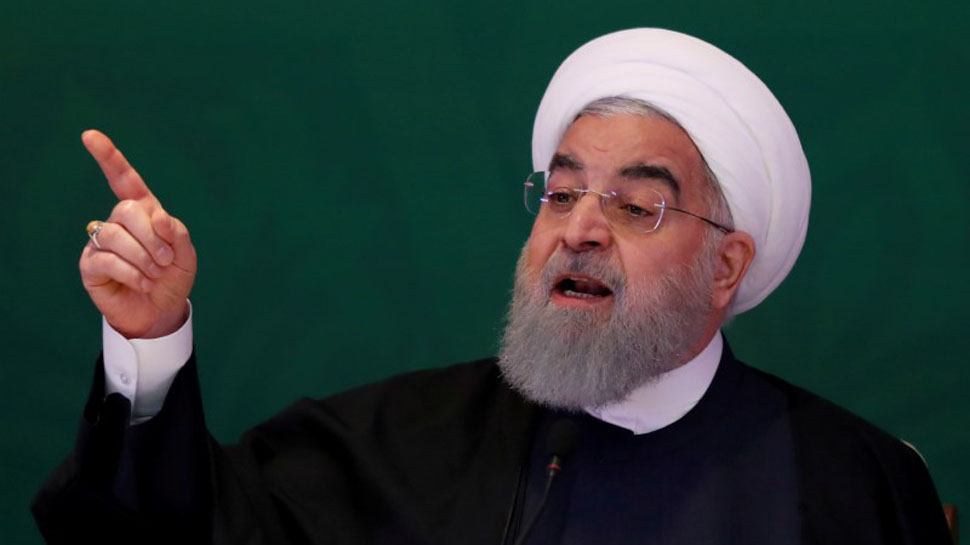
Having staked everything on a now-crumbling nuclear deal, Iran`s President Hassan Rouhani has little to show for his five years in power and is seeing his support evaporate.

The fifth anniversary of Rouhani`s first inauguration fell on Friday, but with the economy in crisis and US sanctions set to return just four days later, there were no celebrations.

Rouhani was supposed to be the centrist who could heal Iran`s divisions and build a China-like development model in which economic growth would head off demands for major political reform.

Categories
Foreign Articles International Relations

Helsinki Summit – a Diplomatic Fiasco for Trump (Dr. Imran Khalid)

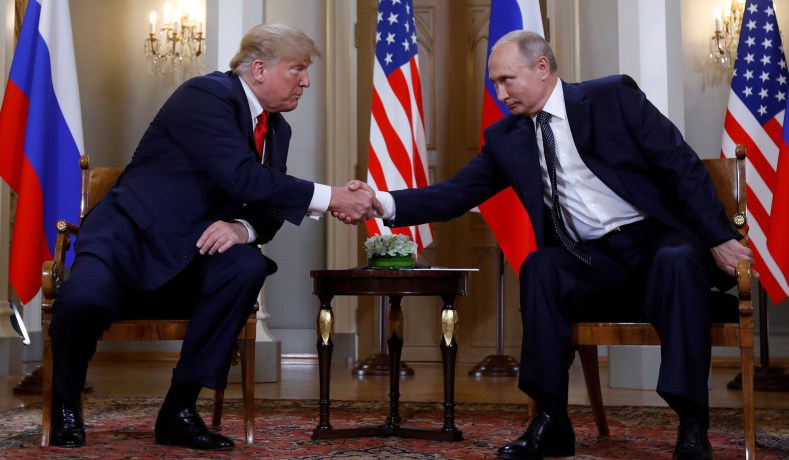
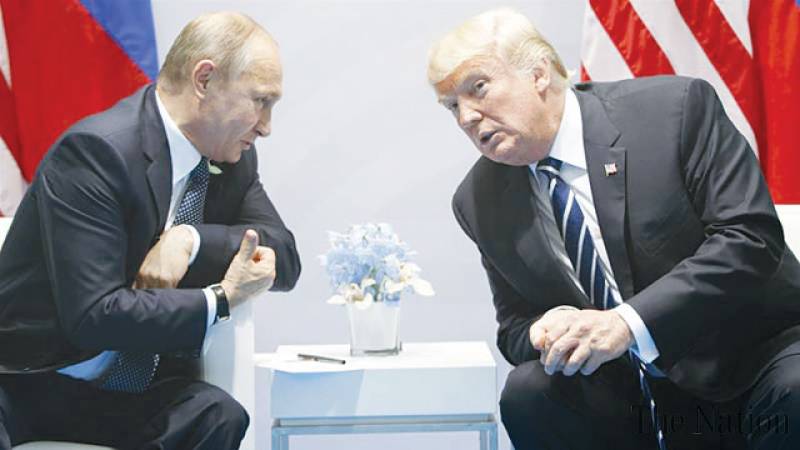
In one sentence, the just-concluded Helsinki summit can best be described as “Russia first”. This is all what Donald did in those five hours of discussions and one-on-one meeting with Vladimir Putin. In the post-summit press conference, both failed to tell the world about a single concrete point that would have a positive impact on global peace and stability. This agenda-less meeting was destined to be a diplomatic fiasco for Trump – but it is a success for Putin who has been able to weaken Trump in his home ground. Prior to the meeting, during the session and after the summit, President Donald Trump did nothing but defending the Russians and Putin and blaming his predecessors and the American establishment for all the troubles between Moscow and Washington.

“Our relationship with Russia has NEVER been worse thanks to many years of U.S. foolishness and stupidity, and now the Rigged Witch Hunt!!” is how Donald Trump tweeted just a couple of hours before the start of his much-touted summit with Vladimir Putin in Helsinki.  But Vladimir Putin “reciprocated” this welcome tweet by arriving at the meeting room 35 minutes late, while maintaining his long tradition of arriving late at international summits and keeping his counterparts to wait for him. But interestingly, contrary to his extremely egoistic nature, President Donald Trump completely ignored this and remained silent on this deliberate delay. Just imagine, if any of the European leaders had kept Donald Trump waiting like this, then Trump would have made a big issue out of it and walked out of the meeting in rage. But Donald Trump devoured this “mild diplomatic offence” without any hitch and did his best to maintain a jolly mode throughout the marathon sessions with Putin and his team.

Categories
Constitutional Law CSS Notes CSS Optional subjects

The Concept of “Rule of Law” (CSS Constitutional Law Paper 2016) Solved

The Concept of “Rule of Law” (CSS Constitutional Law Paper 2016) Solved

The Concept of “Rule of Law” is an integral part of the British constitution. Explain this in the light of Dicey’s Exposition on the rule of law. Also elaborate its present day modern concept in a state. (CSS Constitutional Law Paper 2016)


Rule of Law

The rule of law is a term that is often used but difficult to define. A frequently heard saying is that the rule of law means the government of law, not men. But what is meant by “a government of law, not men”? Aren’t laws made by men and women in their roles as legislators? Don’t men and women enforce the law as police officers or interpret the law as judges?

The idea of the rule of law has been around for a long time. Many societies, including our own, have developed institutions and procedures to try to make the rule of law a reality. These institutions and procedures have contributed to the definition of what makes up the rule of law and what is necessary to achieve it.

Categories
CSS Notes CSS Optional subjects

Recent Trends in Anthropological Thought

How perspective of Anthropology can be used to study global trends like global warming erosion of biodiversity? (CSS 2017)

RECENT TRENDS IN ANTHROPOLOGICAL THOUGHT

At the outset to point out that although this seeks to describe the development of theories in anthropology since 1950, it is necessary, in order to put this in a proper perspective, to review the past in brief. It shall also be necessary to look at the developments in other disciplines, particularly in linguistics, because they came to provide the basic ideas on which much of the progress in anthropology in recent times largely depends. Anthropological thought has always progressed along two mutually exclusive paths and based on two basically different principles materialist and ideological. The materialists consider that the aim of anthropological study is to find out the basic law that governs the development of society and culture. Among the earlier exponents of this line of thought were Morgan, Tylor, Fraser, Spencer etc. The School of Evolution stood for scientific study of society and culture. In recent times, Cultural Ecology, Ecological Anthropology, Cultural Materialism etc. subscribe to this view.

Categories
CSS Notes CSS Optional subjects

Role of Human Resource Management in Organizational Performance

Role of Human Resource Management in Organizational Performance

What is Human Resource Management?

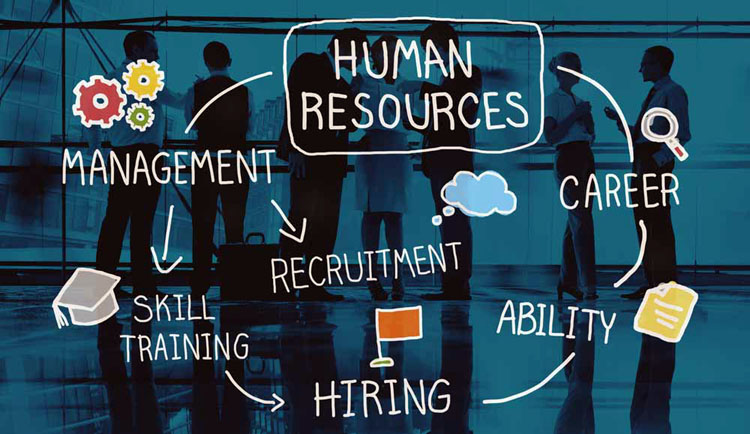
Human Resource Management (HRM) is the function within an organization that focuses on the recruitment of management and providing direction for the people who work in an organization.

The HRM department members provide the knowledge, necessary tools, training, administrative services, coaching, legal & management advice and talent management oversight that the rest of the organization needs for successful operation.

HRM functions are also performed by line managers who are directly responsible for the engagement, contribution and productivity of their reporting staff members. In a fully integrated talent management system the managers play a significant role in and take ownership responsibility for the recruitment process. They are also responsible for the ongoing development of and retention of superior employees

Organizations also perform HRM functions and tasks by outsourcing various components to outside suppliers and vendors. The tasks those are most frequently outsourced take HR time and energy away from the HR activities that provide the most strategic value to the company. This outsourcing most frequently involves payroll functions but vendors and external consultants can help an organization with HRM in many ways. Specifically, many HR departments outsource background checking, benefits administration, training such as sexual harassment training, temporary staffing, employee handbooks, policy manuals and affirmative action plans.

HR practitioners in a small business who have well-rounded expertise provide a number of services to employees. The areas in which HR maintains control can enhance employees’ perception of HR throughout the workforce when they believe HR considers employees to be its internal customers and renders services with that in mind.

Categories
Articles International Relations Pakistani Newspapers

Is Trump at war with the West? (By Ishaan Tharoor)

JUST one day after his stunning comments in Helsinki, President Donald Trump attempted to backtrack. In the Finnish capital, standing next to Russian President Vladimir Putin during a news conference, he had cast doubt on the conclusions of US intelligence agencies that Russia interfered in the 2016 election.

Back in the White House on Tuesday, however, Trump argued that he had simply misspoken; he read out a statement saying that he did, in fact, accept that Moscow attempted to sway the vote. At least for a moment.

`Could be other people also,` he added in the very next sentence. `A lot of people out there.

Not many people in Washington were convinced by Trump`s about-face. Since taking office, Trump has repeatedly called into question his own government`s investigations into Kremlin interference and dismissed the growing body of evidence linking that intrusion to his election win including a comment from Putin himself . Since the remarks in Helsinki, moreover, he had been interviewed by Fox News and made no mention of misspeaking. Even his attempted clarification on Tuesday was apparently self-edited into something more defiant.

Nor did Trump say anything about Russia`s 2014 annexation of Crimea or its role in buttressing the violent excesses of the Syrian regime.

That timidity stood in contrast to his sweeping criticism of America`s Nato allies in Brussels last week. To many Trump critics, his performances in both cities capped a year and a half of both tacit and overt attacks on the transatlantic alliance.

Trump`s behaviour was that `of a man who wants the alliance to fail`, wrote New York Times columnist David Brooks.

`His embrace of Putin was a victory dance on the Euro-American tomb.

`The Russian President was effectively given a free pass by a sitting US President to continue his hybrid war against the West,`wrote Guy Verhofstadt, a former Belgian prime minister. He called on European liberals to rally against Trumpism and its proxies, pointing to a former Trump adviser`s efforts to boost far-right populists on the continent. `The battle is now on to defeat Steve Bannon`s sick dream of a right wing populist revolution in Europe and a retreat to the murderous nationalism of Europe`s past,` he wrote.

It`s worth asking, even now, whom Trump sees as his enemy. His political campaign was couched in nativist rhetoric against `globalism`, a euphemism for a world of multicultural liberals and business and political elites who he claimed did not have America`s interests at heart.

Since taking power, he has focused such attacks on real institutions the Democratic Party and civil servants he dubs `the deep state` at home, and multilateral blocs such as Nato and the European Union overseas.

More broadly, he has shown consistent apathy for the American-built world order that guaranteed US supremacy for decades.

`In the post-war world, US policy had four attractive features: it had appealing core values; it was loyal to allies who shared those values; it believed in open and competitive markets; and it underpinned those markets with institutionalised rules,` wrote Martin Wolf of Financial Times. `This system was always incomplete and imperfect. But it was a highly original and attractive approach to the business of running the world.

Wolf suggests Trump is bent on rejecting that system, which is often what weare invoking when we refer now to the `West`: `For those who believe humanity must transcend its petty differences, these principles were a start. Yet today the US president appears hostile to core American values of democracy, freedom and the rule of law; he feels no loyalty to allies; he rejects open markets; and he despises international institutions. He believes that might makes right.

Trump may have diminished US leadership in the world,` Russian analyst Maxim Suchkov said to Today`s World View in Moscow last week, `but he still wants domination.

This worldview leads many analysts to suggest that Trump has more in common with autocrats like Putin than with the elected leaders of Europe`s major democracies. For critics of American hegemony, who have long argued that its stated values have little to do with its geopolitical actions, Trump has confirmed their beliefs.

`That reduces the US from being the leader of the free world to being just another grasping great power,` Daniel Fried, a former US diplomat and fellow at the Atlantic Council, said to my Washington Post colleagues David Nakamura and Carol Morello. It `undoes 100 years of America`s grand strategy, he added, `which worked out well for us.

It won the Cold War, because people behind the Iron Curtain were inspired by our ideas and ideals.

Instead, Trump champions another vision. Trump`s conception of the West is cultural, not political. It`s anchored in blood-and-soil rhetoric and anger against immigration. Just last week, he argued in Brussels that new migrant arrivals are `very bad for Europe` because they are `changing the culture`.

A host of mainstream European politicians would disagree, as would the majority of their populations. A new Pew survey of eight Western European countries, published this month, found that 66 per cent of those polled believe immigrants make their societies stronger.

But Trump sees this openness as a weakness. Here again, he makes himself a kindred spirit with Putin, another outsider standing sceptically at the door of the liberal West.

`Until 2014, Russia used to see itself as the easternmost bus stop of the Western world,` Dmitri Trenin, the director of the Carnegie Moscow Center, said to The Wall Street Journal. `Since then, there has been a fundamental shift and Russia has turned inward. The Russian elite and its leader, Putin, have come to the conclusion that attempting to become part of the West won`t lead to desired results.

This involves an attempt to turn east and cultivate deeper ties with Asia. But it has also seen the Kremlin build links with the same European far-right populists that Trump has celebrated.

Matteo Salvini, Italy`s interior minister and far-right leader, is pushing for the end of EU sanctions on Russia. Putin, meanwhile,has cultivated a global image as a preeminent Christian nationalist leader and is cheered by white supremacists in the United States.

The governments Putin and Trump lead may be at odds, but the two men themselves, argued journalist Leonid Ragozin, are on `the same side of the divide`. They represent `the same strain of a rising global culture: that of viciously xenophobic tabloids, politically biased infotainment TV, tacky showbiz, irresponsible populism, rabid nativism, and oligarchic kleptocracy,` he wrote for BuzzFeed News.

And their bewildered adversaries, now led by a hobbled Europe, are struggling to cope.

-By arrangement with The Washington Post

Courtesy: Daily Dawn

Categories
Essays Outlines

Essay Outline: The Role of Opposition in the Politics of Pakistan

  1. Introduction
  2. What is opposition, its forms and extent?
  • Fundamental components of liberal democracy
  • Parliamentary opposition
  • Unconstitutional opposition
  • Opposition as minority party
  1. A conceptual framework of opposition in Pakistan
  2. Historical events which have proved that opposition have played constructive role to mobilise public opinion in Pakistan.
  • Peasant movement in East Pakistan
  • Language movement in East Pakistan
  • Anti-Ahmadiyya movement in the Punjab
  • Anti-One Unit movement in West Pakistan
  1. What is the role of opposition in an emerging democracy of Pakistan?
  • The role in democratic governance
  • The voice of the voiceless
  • An alternative to the ruling government
  • An official opposition
  1. What the opposition can do for the people of Pakistan
  • To build confidence of the peopleIqra Shaukat CSS
  • To reassure their concerns and interests
  • To improve the quality of life
  • To criticize by offering cogent reasons
  • To protect society from the excesses and corruption of power
  • To change every abuse of executive power, bureaucracy redtapism
  • To address the issues of human rights
  • To protect the public funds
  • To be vigilant as watch dog
  • To stimulate democratic debate
  1. Is it true opposition has failed completely to play its role in Pakistan?
  2. Which factors are responsible for ineffective role of opposition in Pakistan?
  • Military – Bureaucratic oligarchy
  • Socio-Cultural incongruities
  • Difference of opinions between right and left
  • Ethic divisions of political parties
  • Linguistic problems
  1. What are the legitimate rights of the opposition in Pakistan?
  • To operate in a free and democratic atmosphere
  • To access state’s Media
  • To get freedom of association, speech and demonstrations
  • To freely access materials from official sources
  • To have free access to the people
  • To discharge its duty effectively
  • To be accorded the same treatment and facilities
  1. What are responsibilities of opposition in Pakistan?
  • To fair in the criticism of government policies
  • To uphold, defend the sovereignty
  • To work for national integration
  • To join hands government to tackle the natural disasters
  1. What are measures which can help to bolster the role of opposition in Pakistan?
  • By active political participation
  • By acting as organized and institutionalized agent
  • By taking stance on the contemporary issues
  • By harnessing public opinion
  • By leading to conciliation or unification
  • By playing oversight role to ensure government actions in the interest of general masses
  • By exposing weakness in government policies
  • By playing Effective role to further vistas of glory and achievement
  1. Conclusion
Categories
Articles International Relations Pakistani Newspapers

What will Trump and Putin agree on at Helsinki summit?

[mks_button size=”large” title=”By: Joe Macaron” style=”squared” url=”#” target=”_self” bg_color=”#1e73be” txt_color=”#FFFFFF” icon=”” icon_type=”” nofollow=”0″]

On July 16, US President Donald Trump will meet in the Finnish capital Helsinki a triumphant Russian President Vladimir Putin, who has just secured another victory in the Syrian war and obtained the international recognition he wanted from hosting the World Cup.

The Russian president will seek to exploit the growing rift between the United States and the European Union and the intensifying Iranian-Israeli rivalry to achieve his two main goals: Break Russia out of international isolation and become the sole kingmaker in Syria.

But in pursuing a deal with Trump, Putin poses the biggest threat to the legitimacy of his US counterpart domestically and internationally. The US establishment and intelligence community largely believe that the Kremlin favoured him in the 2016 US presidential race and an investigation into alleged Russian interference is still ongoing.

At the same time, Trump is confronted with an increasingly disgruntled group of allies who are wary of Russia’s aggressive posturing. That he will be meeting Putin right after attending the NATO summit in Brussels and visiting the UK (which has just had a major diplomatic crisis with Moscow), will not please any of them.

A history of Helsinki summits

The choice of Helsinki as the venue of the summit is not coincidental. The Finnish capital has hosted leaders of the two superpowers for important talks on two other major occasions.

In September 1990, a month after Iraq invaded Kuwait, US President George H W Bush met with Soviet leader Mikhail Gorbachev in Helsinki to discuss the crisis in the Gulf.

Preoccupied with the dissolution of the Eastern bloc after the fall of the Berlin Wall and with a Soviet Union on the verge of collapse, Gorbachev was negotiating from a position of weakness. Bush wanted his commitment to implementing sanctions on Saddam Hussein’s regime and he got it, in exchange for support for his counterpart’s reform plans. In March 1997, US President Bill Clinton met Russian President Boris Yeltsin to discuss a range of security and economic issues, including nuclear disarmament. At that summit, the Russian president had no trump cards to play.

The economic situation in Russia had been persistently deteriorating while the government was waging a highly unpopular war in Chechnya. Badly needing US financial support and backing, Yeltsin decided to concede to the expansion of NATO into Eastern Europe in return for Russia’s integration in the global economy with US help. For that disastrous decision, he was labelled a “US puppet” by his opponents.

On July 16, President Trump will meet President Putin, but this time around, it seems, the roles have been reversed. The US president is facing a growing legitimacy crisis at home, where he is perceived as “a Russian puppet”, while his Russian counterpart has been dealt a powerful hand.

The Trump-Putin deal

This will be the fourth meeting between the two leaders since Trump took office in January 2017. They met twice during the July 2017 G20 summit in Germany and once on the sidelines of the Asia-Pacific Economic Cooperation Summit (APEC) summit in Vietnam last November.

Since they last met, Trump succumbed to domestic pressure and took a number of anti-Russian measures, including approving lethal weapons sales to Ukraine in December, expelling Russian diplomats from the US in March, striking the Syrian regime and imposing additional sanctions on Russian officials in April.

Putin, too, upped the ante by giving a provocative speech on March 1, issuing unveiled threats of an arms race with the US. Then, after his re-election, he took advantage of the simmering US-EU trade war and the Iran nuclear deal crisis to re-engage with France and Germany, while also negotiating with Israel on key points of concern regarding the Syrian war.

Trump will give up Syria to Putin the way Gorbachev left Iraq to Bush in 1990.

Putin’s actions left Trump with no choice but to move up the meeting and send his national security adviser John Bolton to Moscow to set it up.

The US president plans to meet alone with his Russian counterpart and his translator, triggering concerns in the US and Europe regarding what he might concede if left alone in the room.

But despite these fears, no real breakthrough in US-Russian relations should be expected until Special Counsel Robert Mueller finalises his investigation. Lifting US sanctions on Russia, recognising its annexation of Crimea, and pulling US troops out of Eastern Europe are all off the table for the Helsinki summit; Trump’s hands are tied by US domestic politics. The only issue on which he can concede to lure in the Russian president is the Syrian war. Trump will give up Syria to Putin the way Gorbachev left Iraq to Bush in 1990.

The prerequisites for this deal are already in place. Trump’s closest ally, Israeli Prime Minister Benjamin Netanyahu, is scheduled to meet Putin on July 11, just five days before the Helsinki summit; this will be their third meeting this year.

Russia is engaging the Israeli prime minister, aiming to repeat the Deraa scenario in Quneitra province near the Israeli-occupied Golan Heights. Trump seems fine with the idea of ultimately removing US troops from the al-Tanf area on the Jordanian-Iraqi-Syrian border in return for keeping Iranian forces and their proxies away from southwest Syria. Trump’s endgame is not Syria. What he ultimately wants is for Putin to remain neutral in the US diplomatic offensive on Iran. The White House hopes Russia will follow through on the initial agreement with Saudi Arabia and OPEC and increase its oil output to compensate for the drop in Iranian oil exports caused by the reimposition of US sanctions. This move would diminish the effect of the US withdrawal from the Iran nuclear deal on international markets and minimise a potential negative impact on the US economy ahead of mid-term elections in November. Moreover, Trump is also attempting to outmanoeuvre the Europeans in their rapprochement with Moscow by offering Putin to rejoin the G7.

And it already seems that the agreement between the two leaders is solidified even before they met. Russia is passively watching as the EU states scramble to save the nuclear deal with Iran, while the US has done nothing to help the Syrian opposition factions it once supported against the Russian and Syrian regime operation in Deraa. Apart from that, the aftermath of the summit will also give an indication of how relations between Washington and Moscow will develop in the near future. Will a direct line of communication be re-established, most notably on arms control negotiations? Will the Russian ambassador in Washington have more access to US officials moving forward? Will the US establishment become more receptive to engaging Moscow without tangible shift in Russian policy post-Helsinky summit? If there is a change on one or more of these fronts, it could bring more dynamism into US-Russian relations.–AL JAZEERA

Printed in: Daily The Nation  

Categories
Articles Current Affairs Pakistani Newspapers

12 Afghan dams a new threat to Pakistan (By: Muhammad Nadeem Bhatti)

[mks_button size=”large” title=”By: Muhammad Nadeem Bhatti” style=”squared” url=”#” target=”_self” bg_color=”#1e73be” txt_color=”#FFFFFF” icon=”” icon_type=”” nofollow=”0″]

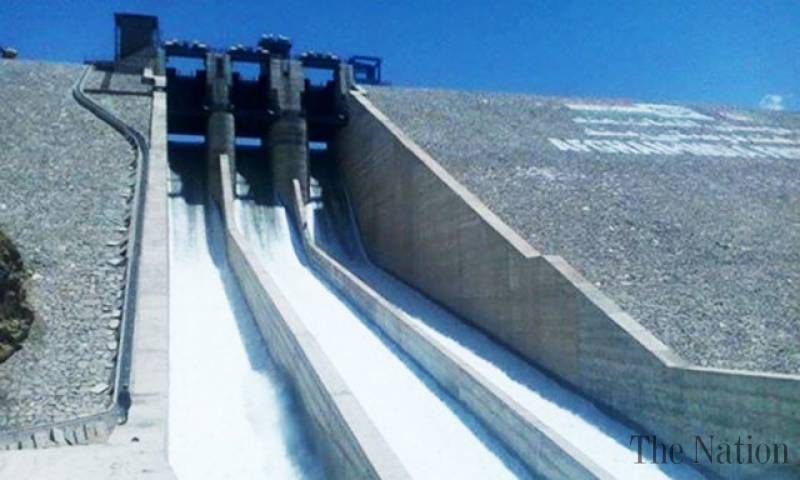
World moves on energy and the main source of it is water. In previous days what India had done to us is passed over, do we realise what Afghanistan is going to do with us now? Have we decided that after destroying our fields and villages, we all have to die with thirst. The first time we came to know in summer of 2010 that Afghanistan is not making one or two but the entire twelve dams at Kabul river and it has India’s full support. Not only the support, India actually convinced that the river would become a part of the aggression against Pakistan by creating dozens of dams on the river. India is not limited to technical support only, it is ready to invest. India has also developed Afghanistan’s feasibility report. Remember that before the announcement of the project, Afghanistan already had made few dams on Kabul based on American support. Now in this regard the World Bank is also ready to provide $8 billion for these dams to Afghanistan.

It is important to imagine the importance of the Kabul River for Pakistan. The river water is available nine months from February to October. 80 percent of the total agricultural cultivation of KP is irrigated from the same river. It is watering 60 percent of the land of Noshera, And, 85% fertile land of Charsadda is dependent on this river. Pakistan has made the Warsaw Dam over the river. Now, if Afghanistan builds twelve dams on this river and stores large quantities of water, then what kind of mess Pakistan will be facing.

It’s been years we know about Afgan dams. But in these years, this matter has never been discussed in our parliament. Unfortunately our leaders have rarely talked about how dramatic water crisis is going to get? Has any ministry prepared any report on it and has Parliament ever organised special session on that?

Allah has given a natural dam to Pakistan. This is the Kala Bagh Dam. Unfortunately when there is talk on this dam, some leaders begin jumping on the ground and say that this dam can only be built on their dead bodies. After India, Afghanistan too is making dams. But Pakistan is not doing much despite a crisis.

Pakistan is going to be suffering from a terrible crisis of water. What Afghanistan is going to do with us is very dangerous. We have a contract with India, but there is no agreement with Afghanistan regarding water. We burnt ourselves in Taliban fight but we could not have any agreement on water from Afghanistan. We delayed the Nailam Jhelum project and the case of India’s Kishan Ganga was strengthened; we could not even make the Munda Dam and now the number of proposed sub-dams of Afghanistan are powerful. Is it only our laziness or ineffectiveness?

It is not that we are completely dependent on India and Afghanistan for water and besides this we have no means. Pakistan is the reward of Allah. We also have snow curtains that make the water source of water. We also have monsoon showers and it is rainy in the winter too. Pakistan is wasting 90 percent of its water in the sea because it does not have the dam to store this water .This wasted water is worth $21 billion annually. First of all, we will have to make Kala Bagh Dam.

Water crisis is not limited to agricultural use only. The crisis of drinking water is also there. Only 12 percent of the water supply system is clean and 88% of people connected to it are drinking dirty and hazardous water. According to the report of the administration of planning and development, arsenic, fluoride and nitrate is being found in drinking water and according to the report of the Pakistan Council of Water Resources, 200,000 children are dying every year due to hazardous health water. According to an independent report, 300,000 children are dying every year due to hazardous water.

There is no doubt Pakistan is an agriculture country and depends upon 75% agriculture cultivation and the major crops are fully valuable even exportable by modern changes, especially cotton, cane and rice which need water on time to enhance the value of cultivation. Our leaders need to take immediate decisions of build dams for the survival of the country and if is not done one can say that we have made the final decision of collective suicide?

Courtesy: Daily The Nation