Categories
Articles Current Affairs

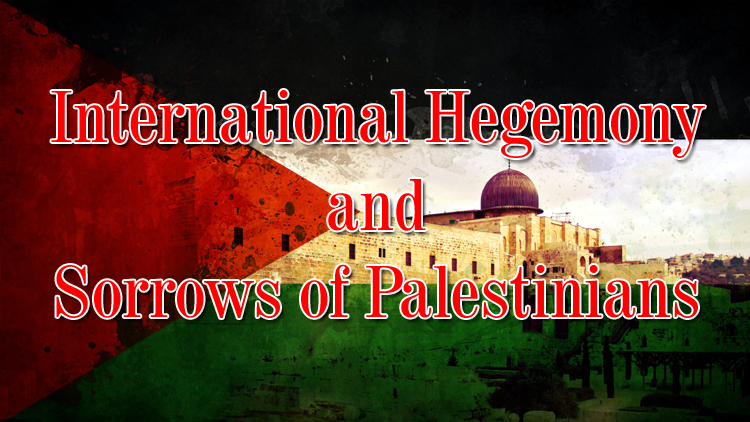
International Hegemony and Sorrows of Palestinians

International Hegemony and Sorrows of Palestinians

Palestine pledge called for international protection through OIC.

Leaders of Muslim nations have called for an international force to protect Palestinians, following the killing of more than 60 protesters by Israeli forces in Gaza.An extraordinary summit of the Organization of Islamic Cooperation in Istanbul voiced determination to take action against countries moving embassies to Jerusalem, as the US has done.

The Israeli–Palestinian conflict is the ongoing struggle between Israelis and Palestinians that began in the mid-20th century.The origins to the conflict can be traced back to Jewish immigration, and sectarian conflict in Mandatory Palestine between Jews and Arabs.It has been referred to as the world’s “most intractable conflict”, with the ongoing Israeli occupation of the West Bank and the Gaza Strip reaching 51 years.

Many attempts have been made to broker a two-state solution, involving the creation of an independent Palestinian state alongside the State of Israel (after Israel’s establishment in 1948). In 2007, the majority of both Israelis and Palestinians, according to a number of polls, preferred the two-state solution over any other solution as a means of resolving the conflict.Moreover, a majority of Jews see the Palestinians’ demand for an independent state as just, and thinks Israel can agree to the establishment of such a state.The majority of Palestinians and Israelis in the West Bank and Gaza Strip have expressed a preference for a two-state solution.Mutual distrust and significant disagreements are deep over basic issues, as is the reciprocal scepticism about the other side’s commitment to upholding obligations in an eventual agreement.

Check also: CSS Pakistan Affairs MCQs

Within Israeli and Palestinian society, the conflict generates a wide variety of views and opinions. This highlights the deep divisions which exist not only between Israelis and Palestinians, but also within each society. A hallmark of the conflict has been the level of violence witnessed for virtually its entire duration. Fighting has been conducted by regular armies, paramilitary groups, terror cells, and individuals. Casualties have not been restricted to the military, with a large number of fatalities in civilian population on both sides. There are prominent international actors involved in the conflict.

The two parties engaged in direct negotiation are the Israeli government, currently led by Benjamin Netanyahu, and the Palestine Liberation Organization (PLO), currently headed by Mahmoud Abbas. The official negotiations are mediated by an international contingent known as the Quartet on the Middle East (the Quartet) represented by a special envoy, that consists of the United States, Russia, the European Union, and the United Nations. The Arab League is another important actor, which has proposed an alternative peace plan. Jordan, having relinquished its claim to the West Bank in 1988 and holding a special role in the Muslim Holy shrines in Jerusalem, has also been a key participant.

Since 2006, the Palestinian side has been fractured by conflict between the two major factions: Fatah, the traditionally dominant party, and its later electoral challenger, Hamas. After Hamas’s electoral victory in 2006, the Quartet conditioned future foreign assistance to the Palestinian National Authority (PA) on the future government’s commitment to non-violence, recognition of the State of Israel, and acceptance of previous agreements. Hamas rejected these demands, which resulted in the Quartet’s suspension of its foreign assistance program, and the imposition of economic sanctions by the Israelis.A year later, following Hamas’s seizure of power in the Gaza Strip in June 2007, the territory officially recognized as the PA was split between Fatah in the West Bank, and Hamas in the Gaza Strip. The division of governance between the parties had effectively resulted in the collapse of bipartisan governance of the PA. However, in 2014, a Palestinian Unity Government, composed of both Fatah and Hamas, was formed. The latest round of peace negotiations began in July 2013 and was suspended in 2014.

The 1956 Suez Crisis resulted in a short-term Israeli occupation of the Gaza Strip and exile of the All-Palestine Government, which was later restored with Israeli withdrawal. The 1967 Six-Day War exerted a significant effect upon Palestinian nationalism, as Israel gained military control of the West Bank from Jordan and the Gaza Strip from Egypt.

The first Palestinian uprising began in 1987 as a response to escalating attacks and the endless occupation. By the early 1990s, international efforts to settle the conflict had begun, in light of the success of the Egyptian–Israeli peace treaty of 1982.

The tensions between Israel and Hamas escalated until late 2008, when Israel launched operation Cast Lead upon Gaza, resulting in thousands of civilian casualties and billions of dollars in damage. By February 2009, a ceasefire was signed with international mediation between the parties, though the occupation and small and sporadic eruptions of violence continued.

In 1993, Israeli officials led by Yitzhak Rabin and Palestinian leaders from the Palestine Liberation Organization led by Yasser Arafat strove to find a peaceful solution through what became known as the Oslo peace process.

The peace process has been predicated on a “two-state solution” thus far, but questions have been raised towards both sides’ resolve to end the dispute.An article by S. Daniel Abraham, an American entrepreneur and founder of the Center for Middle East Peace in Washington, US, published on the website of the Atlantic magazine in March 2013, cited the following statistics: “Right now, the total number of Jews and Arabs living … in Israel, the West Bank, and Gaza is just under 12 million people. At the moment, a shade under 50 percent of the population is Jewish.”

Israel has had its settlement growth and policies in the Palestinian territories harshly criticized by the European Union citing it as increasingly undermining the viability of the two-state solution and running in contrary to the Israeli-stated commitment to resume negotiations.

In December 2011, all the regional groupings on the UN Security Council named continued settlement construction and settler violence as disruptive to the resumption of talks, a call viewed by Russia as a “historic step”.A report published in February 2014 covering incidents over the three-year period of 2011–2013, Amnesty International asserted that Israeli forces employed reckless violence in the West Bank, and in some instances appeared to engage in wilful killings which would be tantamount to war crimes. Besides the numerous fatalities, Amnesty said at least 261 Palestinians, including 67 children, had been gravely injured by Israeli use of live ammunition. In this same period, 45 Palestinians, including 6 children had been killed. Amnesty’s review of 25 civilians deaths concluded that in no case was there evidence of the Palestinians posing an imminent threat. At the same time, over 8,000 Palestinians suffered serious injuries from other means, including rubber-coated metal bullets.

According to a May 2011 poll carried out by the Palestinian Center For Public Opinion that asked Palestinians from the Gaza Strip and the West Bank including East Jerusalem, “which of the following means is the best to end the occupation and lead to the establishing of an independent Palestinian state”, 5.0% supported “military operations”, 25.0% supported non-violent popular resistance, 32.1% favored negotiations until an agreement could be reached, 23.1% preferred holding an international conference that would impose a solution on all parties, 12.4% supported seeking a solution through the United Nations, and 2.4% otherwise.

Despite a long-term peace process and the general reconciliation of Israel with Egypt and Jordan, Israelis and Palestinians have failed to reach a final peace agreement. The key issues are mutual recognition, borders, security, water rights, control of Jerusalem, Israeli settlements, Palestinian freedom of movement, and Palestinian right of return. The violence of the conflict, in a region rich in sites of historic, cultural and religious interest worldwide, has been the object of numerous international conferences dealing with historic rights, security issues and human rights, and has been a factor hampering tourism in and general access to areas that are hotly contested.

Israel is acting like a terrorist and breaching UN resolutions of Peace which is totally unacceptable.Oslo Accord is a workable solution.World Leaders are needed to let the peace win over conflicts and violence.


Watch Video: 25 Preparation Tips on How to Study for CSS at home

Check our daily updated ‘s Complete Day by Day Current Affairs Notes MCQs

[catlist name=”Day by Day Current Affairs”]
Categories
CSS Optional subjects Foreign Articles

The World in Transition: Relevance of Nation State Concept in the Era of Global Interdependence

The World in Transition: Relevance of Nation State Concept in the Era of Global Interdependence

By Gen. Rajiv Narayanan

**The contents of this piece were presented at the Herat Security Dialogue – VI (13-14 October 2017). Note that references have been omitted here to help with the flow of the text.**

The extant World Order is in a state of flux in this ‘Age of Strategic Uncertainties’, with the US in strategic retrenchment and the EU in an economic slowdown and internal dissonance. In this vacuum a rising, revanchist China seeks to gain more geo-strategic and geo-political space using geo-economic coercion to achieve its phase one of the Chinese Dream – a unipolar Asia within a multi-polar World. China reckons that the ‘Shi’, i.e. the ‘Strategic Construct of Power’, is now flowing in its favour but it opines that this window is narrowing as other Middle and Rising Powers (like India, Japan, Russia, etc.) exert their own ‘Shi’ to carve out their respective space in Asia.

The recent events and trends show that the emerging World Order is tending towards multi-polarity leading to another period of jousting due to the ‘balance of power’. However the world today is very different from the previous centuries wherein such a change was preceded by a bloody carnage from a clash of arms – the ‘Thucydides Trap’. In this flux come other Middle and Rising Powers with their own national interests to guard and expand their influence creating a combustible environment.

Categories
Articles CSS Notes Current Affairs Pakistani Newspapers

WHAT IS THE KISHANGANGA DISPUTE?

By: Anwar Iqbal in Washington

WHAT IS THE KISHANGANGA DISPUTE?

KISHANGANGA DISPUTE

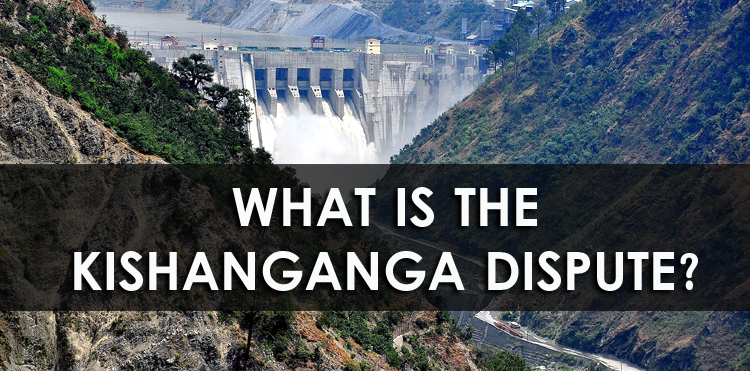
THE dispute revolves around a hydroelectric power plant on the Kishanganga River, which is a tributary of the Jhelum and is known as the Neelum in Pakistan.

On May 19, 2018, Indian Prime Minister Narendra Modi inaugurated the project -which includes a dam on the tributary-barely metres away from the Line of Control in the disputed Kashmir region.

The project will generate 1,713 million units of electricity per year. The dam will divert Jhelum waters to an underground power house. To do so, it will transfer the water from the Gurez Valley back into mainland Kashmir, instead of allowing it to flow into Pakistan.

The Kishanganga River flows through the regions of Neelum in AJK and Astore before entering the India-held region of Gurez. The dam will give India control over a river that flows from Pakistan into India-held Kashmir and then re-enters Pakistan.

Categories
CSS Notes Pakistan Affairs

NON-STATE ACTORS

NON-STATE ACTORS

Non-state actors (NSA) are entities that participate or act in international relations. They are organizations with sufficient power to influence and cause a change even though they do not belong to any established institution of a state.

The admission of non-state actors into international relations theory conflicts with the assumptions of realism and other black box theories of international relations, which argue that interactions between states are the main relationships of interest in studying international events.

Categories
CSS Compulsory Subjects CSS Notes CSS Optional subjects CSS Study Material Pakistan Affairs World General Knowledge

Governor General and Viceroy of Indo-Pak Subcontinent

Governor General of British India (Indo-Pak Subcontinent)

Warren Hastings (1772-1785) | Governor General of British India

  • First Governor General of India. By the Regulating Act of 1773, brought the Dual government system to an end. Zamindars were given judicial powers; establishment of civil and criminal courts in each district. In 1781, he founded the Calcutta Madrasa, for promotion of Islamic studies. He founded the Asiatic Society of Bengal with William Jones in 1784. | Governor General of British India

Sir John Macpherson (1785-1786)

  • He held the post temporarily

Lord Cornwallis (1786-1793)

  • Introduced Permanent Settlement of Bengal (also called Zamindari system). It was an agreement between East India Company and Bengali landlords to fix revenues to be raised from land. He introduced Police reforms according to which each district was divided into 400 square miles and placed under a police superintendent. Introduction of Civil Services in India. | Governor General of British India

Sir John Shore (1793-1798)

  • He followed policy of non-intervention. Introduced Charter Act of 1793 | Governor General of British India
Categories
CSS Tips Current Affairs

Simple Ways to Memorise All the Current Affairs & GK for Competitive Exams

Simple Ways to Memorise All the Current Affairs & GK for Competitive Exams

Asslam-o-Elikum and welcome to CSSTimes.pk. A lot of Aspirants have asked us…… How to get ready for General Knowledge and Current Affairs for the CSS Exams and all other Competitive Exams.

So I am sharing 4 possible Ways to reading and memorize Current Affairs and General Knowledge!

Before we set in motion you have to keep in mind a few important points regarding this:

In order to retain information about General Knowledge and Current Awareness for coming exams, constantly make sure your PERCEPTION is 100 percent clear about this.

Keep on the track and you will end up where you want to be. Never miss reading newspaper or current affairs more than a week.

Categories
Articles Current Affairs Pakistani Newspapers

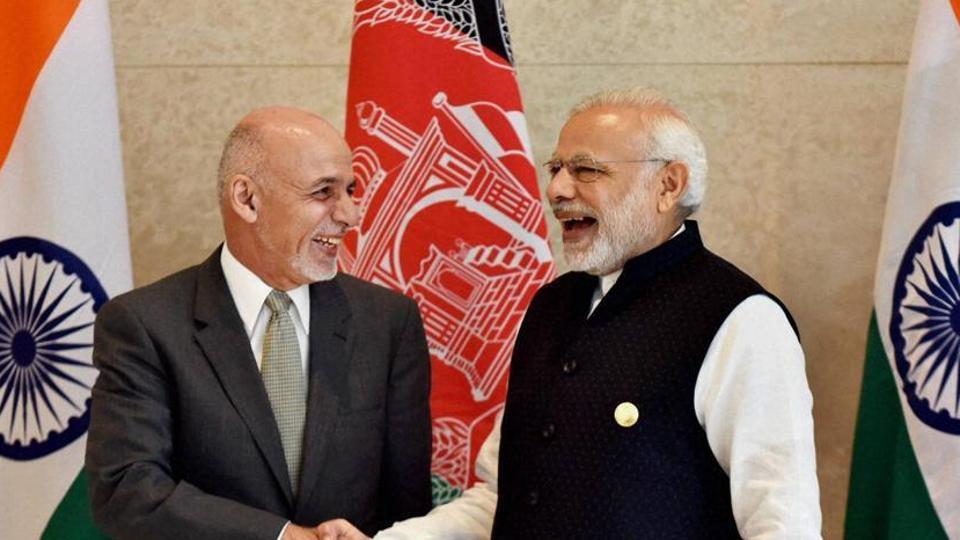
Why India wants more presence in Afghanistan | CSS Current Affairs

Why India wants more presence in Afghanistan | CSS Current Affairs

The enemy of an enemy is always a friend. In our field of study this can be termed as a strategic partner or an ally. That is the sort of relationship India is trying to build with Afghanistan. Our next door neighbour in the West is India’s dream ‘backdoor entrance’ into Pakistan. It’d be ideal for the Indians to manipulate the Afghan-Pakistan situation to their favour by buying the Afghan loyalty and using it against their one true enemy. However, unfortunately for India, we do not live in Narnia and things are not as magically easy as they would want them to be. The situation might seem to be in favour of the Indians at present since they have managed to build cordial relations with Afghanistan but it can’t be understated that an Afghanistan minus Pakistan is not possible.

Current Affairs MCQs | CSS Times General Knowledge MCQs

Let’s take a step back and discuss things objectively. There is no doubt about the fact that there is only one thing common amongst the otherwise divided Afghan government and that is their blame for Pakistan. They blame us for their problems. These allegations are obviously baseless but that is something to be discussed in another debate. Right now the aspect that needs to be focused on is that the Indians have no brotherly affiliation or cultural proximity with the Afghans, unlike Pakistan. They are merely trying to use their land as a playground for their massacre intended for Pakistan. Undoubtedly they are smart about it as we all know strategic planning with a hint of negativity is a part of India’s skill set and they feel no shame in using it anywhere and everywhere. Their $200 million aid to be spread over the future five years is not a step to help Afghanistan stand up on its own feet in terms of education, infrastructure, health and other aspects of a state. This is actually their attempt to have a more dependent state that comes running to India in all times of need. One can simply not ignore the wish of their Godfather and the Afghans will be no exception.

They blame Pakistan for using their land in war to gain favours from the Americans but the question is, why love India when that is exactly what they are doing as well? India is only strengthening Afghanistan up to the extent where it is stable enough to be used and manipulated against Pakistan. Yes, they are investing in their institutions in the present scenario but that is only so that they can reap what they sow in the past. There is one single reason why India wants more presence in Afghanistan, to threaten Pakistan from both sides when the time comes. It seems like all of India’s military and conventional strategies seem to be revolving around Pakistan’s lack of strategic depth. Their self-declared victory bound Cold Start Doctrine and their other regional pursuits like this venture in Afghanistan all revolves around the single advantage they have and that is Pakistan’s narrow territory. What they don’t realize is that this can and will be used in our favour as well when the time demands it.

However, despite India’s wishes and hopes there are some important factors that cannot be avoided when talking about the Pak-Indo-Afghan triangle. One of the major factors here is the ethnic, cultural and religious similarities that Afghanistan and Pakistan share. The Pashtun element between the two states is very strong and although India tries its best to maneuver this situation and highlight the aspect in negative light to create a rift between the two states and their people, this is not an easy goal to achieve. Pakistan and Afghanistan go long back and here it must be admitted that there is a certain degree of bitter taste and skepticism between the two states but that is something that can be resolved through dialogue and other diplomatic channels. Given all of that the only hurdle or might we say the only force stopping this from happening is the neighbour next door with rapidly growing hegemonic ambitions. They are willing to compromise the security and stability of the region to achieve their selfish desires and this is the only reason why they want more presence in Afghanistan.

Originally posted in: Daily Times

Watch Video: 25 Preparation Tips on How to Study for CSS at home

Check our daily updated ‘s Complete Day by Day Current Affairs Notes MCQs

[catlist name=”Day by Day Current Affairs”]
Categories
Essays Outlines

Essay Outline: Economic Challenges Faced by Pakistan

Essay Outline: Economic Challenges Faced by Pakistan

It is an open secret that writing standard English and grammatical accuracy play a vital role in success in essay writing for CSS Exam. You should know the art of literary and scholarly writing. It needs a long discussion to expatiate about improving written English but let me give you some rudimentary tips. A basic attribute which is to learn idiomatic usage in writing an essay should be developed. For earning grammatical accuracy in your writing, study English grammar thoroughly (not cursorily) to learn the correct usage of grammatical units i.e. verbs, adverbs, adjective, coordination, subordination, subject-verb agreement, phrasal verbs etc.

Essay Outline: Economic Challenges Faced by Pakistan

Outline

  • Maximum Size 2.5 Pages
  • Minimum Size 1.5 Pages

Your outline should be strictly adhered to the topic so that if one reads your Outline without knowing the topic he should reach the topic himself. This is the mirror test of a good outline.

You can use Headings and Sub Headings but keep it in mind make it as lengthy as manageable within time. Too long outline will require time for expansion and closure. You can trim you essay outline if it is too lengthy. But is should not be too short as well.

Your Outline has an effect on the examiner about you.

Essay Outline: Economic Challenges Faced by Pakistan

Read also: Essay Outline “Good Governance is deeply rooted in Human Development”

Essay Outline: Economic Challenges Faced by Pakistan

1. Introduction:

2. Brief History about economy of Pakistan:

Read also: CSS English Essay Paper 2021

3. Challenges faced by Pakistan:

  • We Consume More and Save Less
  • We Import More and Export Less.
  • Government spends more than it earns as Revenues
  • Inflation
  • Low Tax to GDP ratio
  • Devaluation of money
  • Trade deficit and balance of payment issue.
  • Our Share in the World Trade is Shrinking
  • Poor health and educational facilities
  • Political instability
  • Immature media
  • External debt, caught in foreign cloches.
  • Mismanagement and underutilization of natural resources
  • Energy crisis
  • Low FDI
  • Incompetent judiciary
  • Corruption
  • Low capital formation
  • Population pressure
  • Agrarian economy
  • Inconsistent policies
  • Untrained Labor force

Essay Outline: Economic Challenges Faced by Pakistan

Check also: General Science MCQs for CSS

4. Causes of economic turmoil:

  • Mismanagement
  • Wealth Concentration
  • Lack of good governance
  • External debt
  • Public issues unresolved.
  • Poor law and order situation.
  • Population pressure
  • Trade deficit

Essay Outline: Economic Challenges Faced by Pakistan

5. Remedial measures:

  • Exploration of new markets
  • Industrialization
  • Tight monetary policy
  • Investor’s friendly policies
  • Regional peace
  • Improved law and order
  • Good governance:

6. Conclusion:

Essay Outline: Economic Challenges Faced by Pakistan


Watch Video: 25 Preparation Tips on How to Study for CSS at home

Check our daily updated ‘s Complete Day by Day Current Affairs Notes MCQs

[catlist name=”Day by Day Current Affairs”]
Categories
Current Affairs Pakistani Newspapers

Erdogan`s snap polls: bold gambit or checkmate?

Erdogan`s snap polls: bold gambit or checkmate?

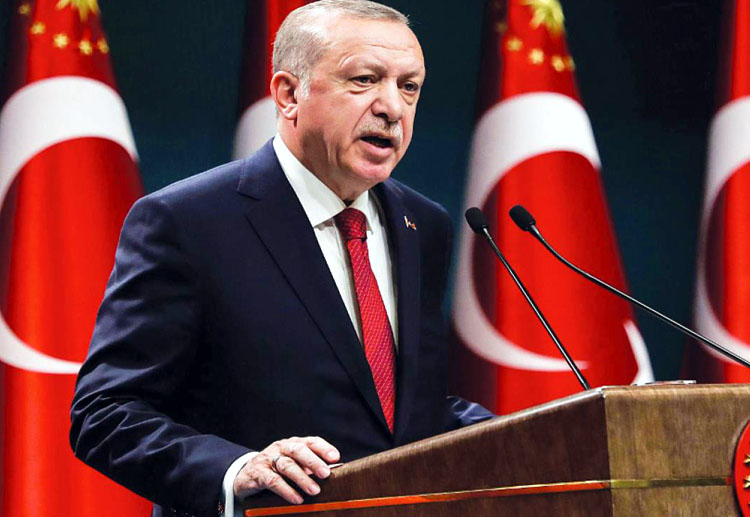
With his stunning call for elections in just over two months, Turkish President Recep Tayyip Erdogan is seeking to wrong-foot an unprepared opposition and capitalise on surging nationalist sentiment after his operation in Syria, analysts say.

Check also: General Science MCQs for CSS

Erdogan and his party will be the strong favourites to win the simultaneous presidential and parliamentary polls on June 24 but may still be taking a risk against the background of a deteriorating economy.

bold gambit

The polls are significant because after the elections a new executive presidency which critics worry will give the head of state authoritarian powers will come into force.

And if he wins a new five-year mandate then Erdogan who has already been in power as premier and then president for 15 years will be able to enter a third decade in office.

`[Erdogan] wants to show he is the absolute master of the political agenda,` said Dorothee Schmid, head of the French Institute of International Relations` (IFRI) Turkey Programme.

The polls had originally been due to be held on Nov 3, 2019.

`The effect of surprise is part of his tactics to control the opposition, both inside and out, thus restoring the balance of power in his f avour,` said Schmid.

Clear favourite to win

The main opposition secular Republican People`s Party (CHP) has yet to even name its presidential candidate while the breakaway nationalist f orm ation of ex-interior minister Meral Aksener, the Iyi (Good) Party, was only set up in October.

bold gambit

The pro-Kurdish Peoples` Democratic Party (HDP), meanwhile, has been weakened by the arrests of its most prominent figures and will prioritise making the 10 percent threshold to win seats in parliament.

`Checkmate`, read the headline in pro government daily YeniSafak on its front page on Thursday.

Berk Esen, assistant professor at the department of international relations at Bilkent University in Ankara, said the timing reduced the chance of any opposition alliance that could rattle Erdogan.

`Erdogan may have wanted to go for elections before opposition parties could strike a deal on an electoral coalition.

Esen said Erdogan was the `clear f avourite to win` as the opposition lacked a game plan and, except Aksener`s party, did not even have its candidates ready.

Economic pressures

There has been a surge of nationalist sentiment in Turkey after the army prised control of the Afrin region of northern Syria from Kurdish militia after an operation ordered by Erdogan.

His Islamic-rooted ruling Justice and Development Party (AKP) will fight the election in alliance with the right-wing Nationalist Movement Party (MHP) and Erdogan`s rhetoric has become more nationali st-tinge d in recent years.

But in the forefront of the mind of Erdogan a proven election fighter who has won every poll since the AKP came to power in 2002 the economy was likely to have loomed large. While growth in Turkey was 7.4 per cent in 2017, double-digit inflation, a wide current account deficit and the need for debt restructuring at top companies could be harbingers of trouble ahead.

`There is no doubt the decision was made in large part because of economic pressures and the related concern that the AKP`s and Erdogan`s popularity will slip over the course of 2018 and 2019,` said Anthony Skinner, MENA director at global risk consultancy Verisk Maplecroft.

Grown disillusioned

The government has appeared on an elec-tion footing since the start of the year with rallies hosted by Erdogan or Prime Minister Binali Yildirim almost every weekend.

And in a situation already angrily denounced by the opposition, the election will take place under the state of emergency in place since the July 2016 attempted coup, which was renewed for a seventh time on Wednesday.

`I see the decision as a calculated move, for which the costs and benefits have been carefully weighed up,` said Skinner, noting that the AKP has an `effective` public opinion polling machine.

But it will not all be smooth sailing for the AKP in a highly polarised country roughly split between supporters and opponents of Erdogan.

The executive presidency was only approved in the April 2017 referendum with 51.4 per cent of the vote, despite the `yes` vote enjoying disproportionately favourable media coverage.

This also is the first time that Erdogan has felt the need to call snap polls, although he did order an election re-run in November 2015 af ter the party lost its overall majority in June 2015 polls.

`There are voters who have been seduced by Erdogan at one point and who may have grown disillusioned because of growing authoritarianism,` said Didier Billion, deputy director of the Paris-based Institute for International and Strategic Relations.

`He may lose their voice,` he said.-AFP

Courtesy: Daily Dawn


Watch Video: 25 Preparation Tips on How to Study for CSS at home

Check our daily updated ‘s Complete Day by Day Current Affairs Notes MCQs

[catlist name=”Day by Day Current Affairs”]
Categories
Current Affairs Foreign Articles

Syria: Wrong War, Wrong Place, Wrong Time

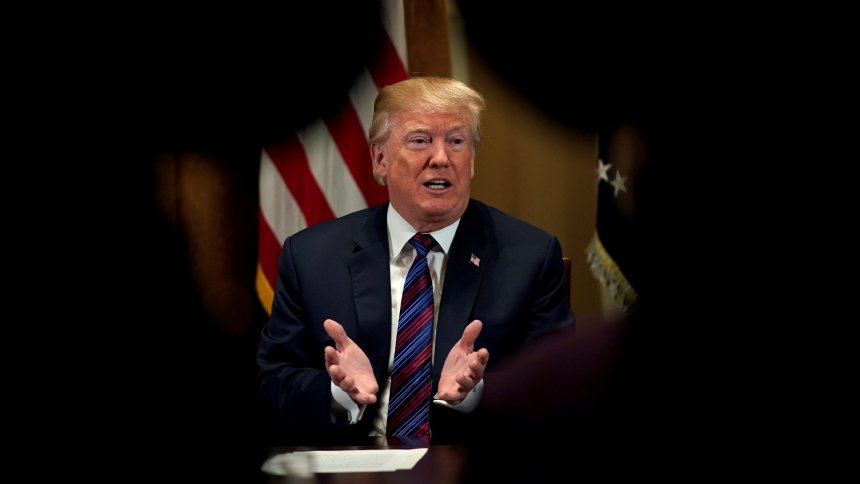
President Donald Trump has received applause from all the wrong places for his latest attack on Syria. The Bashar al-Assad regime is brutal, but the U.S. government should not police arbitrary rules of war or, even worse, get involved in someone else’s civil war. The president is being pushed into adopting Hillary Clinton’s policy.