Categories
July 2018

Day by Day Current Affairs (July 15, 2018) | MCQs for CSS, PMS, NTS

WELCOME TO CSS TIMES DAY BY  DAY CURRENT AFFAIRS, YOUR BEST SOURCE FOR UP-TO-DATE AND DAILY TOP CURRENT AFFAIRS 2018 FOR PREPARATION OF CSS, PMS, BANKING, NTS, RAILWAYS AND ALL COMPETITIVE EXAMS.  “DAY TO DAY CURRENT AFFAIRS” BASICALLY IS TOP 10 NEWS SUMMARY ON CURRENT HAPPENINGS OF NATIONAL AND INTERNATIONAL IMPORTANCE FOR ALL EXAMINATIONS

Categories
July 2018

Day by Day Current Affairs (July 14, 2018) | MCQs for CSS, PMS, NTS

WELCOME TO CSS TIMES DAY BY  DAY CURRENT AFFAIRS, YOUR BEST SOURCE FOR UP-TO-DATE AND DAILY TOP CURRENT AFFAIRS 2018 FOR PREPARATION OF CSS, PMS, BANKING, NTS, RAILWAYS AND ALL COMPETITIVE EXAMS.  “DAY TO DAY CURRENT AFFAIRS” BASICALLY IS TOP 10 NEWS SUMMARY ON CURRENT HAPPENINGS OF NATIONAL AND INTERNATIONAL IMPORTANCE FOR ALL EXAMINATIONS

Categories
July 2018

Day by Day Current Affairs (July 13, 2018) | MCQs for CSS, PMS, NTS

WELCOME TO CSS TIMES DAY BY  DAY CURRENT AFFAIRS, YOUR BEST SOURCE FOR UP-TO-DATE AND DAILY TOP CURRENT AFFAIRS 2018 FOR PREPARATION OF CSS, PMS, BANKING, NTS, RAILWAYS AND ALL COMPETITIVE EXAMS.  “DAY TO DAY CURRENT AFFAIRS” BASICALLY IS TOP 10 NEWS SUMMARY ON CURRENT HAPPENINGS OF NATIONAL AND INTERNATIONAL IMPORTANCE FOR ALL EXAMINATIONS

Categories
Articles Pakistani Newspapers

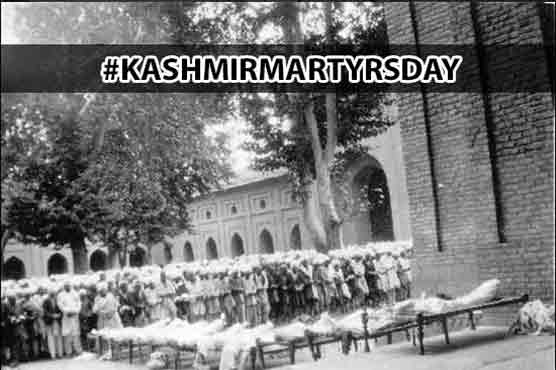
Kashmir Martyr’s Day – July 13th (By: Ghulam Nabi Fai)

[mks_button size=”large” title=”By: Ghulam Nabi Fai” style=”squared” url=”” target=”_self” bg_color=”#1e73be” txt_color=”#FFFFFF” icon=”” icon_type=”” nofollow=”0″]

[mks_social icon=”” size=”48″ style=”square” url=”http://www.facebook.com/CSSTimes” target=”_self”]

“It was on July 13, 1931, that the foreign occupying Dogra troops shot dead 22 Kashmiris in cold blood in front of Srinagar Central Jail. Since that ominous day, Kashmiris have organized peaceful protests, seminars and conferences throughout the world. The people of Kashmir observe Martyrs Day to reaffirm their resolve to continue the struggle for self-determination and pay homage to the 100,000 innocent men, women and children killed brutally within the past 29 years. In Srinagar, a massive march will take place towards the martyrs’ graveyard at Naqashband Sahib. This march has been approved by Joint Resistance Leadership – Syed Ali Geelani, Mirwaiz Umar Farooq and Mohammad Yasin Malik. We clearly and unequivocally call for all Kashmiris to continue to increase their solidarity at this critical juncture. As we know that Indian impotence, wilful ignorance and desperation to avoid a meaningful peace process and initiate wimpy attempts to pacify Kashmiri passion will fail miserably,” stated Dr. Ghulam Nabi Fai, Secretary General, Washington-based World Kashmir Awareness Forum (WKAF).

The Kashmiri people’s resolve and continued commitment to peaceful protest is principled on the ongoing massive violations of their human rights, and the Indian Government’s atrocious dismissal of their aspirations for self-determination. Amnesty International (AI) report, for India (2017-2018) says, “Impunity for human rights abuses (in Jammu and Kashmir) persisted. Security forces continued to use inherently inaccurate pellet-firing shotguns during protests, blinding and injuring several people. Authorities frequently shut down internet services, citing public order concerns.”

In that regard, the recent report issued by the United Nations on June 14, 2018 on the situation in Kashmir, is congratulatory. The report underscored that “Impunity for human rights violations and lack of access to justice are key human rights challenges in the state of Jammu and Kashmir.” And that “Impunity for enforced or involuntary disappearances in Kashmir continues as there has been little movement towards credibly investigating complaints including into alleged sites of mass graves in the Kashmir Valley and Jammu region.”

The people of Kashmir clearly have little faith in or respect for the so-called Indian democracy, and India hasn’t the slightest idea how to earn it. Its solution to the anger of people crying for freedom and a respite from the terror of 700,000 troops is to clamp down even harder, adding to the death toll of such a policy that now approaches the six-figure range.

The desire for self-determination is the one very big “element” India should be concerned about, yet continues to pretend to the world that it does not exist. However long India refuses to acknowledge it, the decades-old movement in Kashmir will not simply die out. Even the latest United Nations report recommends the Government of India to “fully respect the right of self-determination of the people of Kashmir as protected under international law.”

The hopes of the United Nations that the Kashmir dispute could be settled through bilateral talks between India and Pakistan are misguided. The litany of failed bilateral efforts proves this erroneous theory of bilateral peace, and this has been supported by the people of Kashmir, who have steadfastly maintained that tripartite talks between the Governments of India & Pakistan and the legitimate leadership of the people of Kashmir are the only way to resolve the Kashmir issue.

We appeal to the world powers to recognize the long-standing wishes and aspirations of the Kashmiri people as they observe Martyrs Day, July 13th. And we hope that the world powers will realize that what is at stake in the dispute is not only the survival of the people of Kashmir but also the peace and stability in the region of South Asia.

The writer is the Secretary General of World Kashmir Awareness Forum.

Published in: Daily The Nation Lahore

Categories
July 2018

Day by Day Current Affairs (July 12, 2018) | MCQs for CSS, PMS, NTS

WELCOME TO CSS TIMES DAY BY  DAY CURRENT AFFAIRS, YOUR BEST SOURCE FOR UP-TO-DATE AND DAILY TOP CURRENT AFFAIRS 2018 FOR PREPARATION OF CSS, PMS, BANKING, NTS, RAILWAYS AND ALL COMPETITIVE EXAMS.  “DAY TO DAY CURRENT AFFAIRS” BASICALLY IS TOP 10 NEWS SUMMARY ON CURRENT HAPPENINGS OF NATIONAL AND INTERNATIONAL IMPORTANCE FOR ALL EXAMINATIONS

Categories
July 2018

Day by Day Current Affairs (July 11, 2018) | MCQs for CSS, PMS, NTS

WELCOME TO CSS TIMES DAY BY  DAY CURRENT AFFAIRS, YOUR BEST SOURCE FOR UP-TO-DATE AND DAILY TOP CURRENT AFFAIRS 2018 FOR PREPARATION OF CSS, PMS, BANKING, NTS, RAILWAYS AND ALL COMPETITIVE EXAMS.  “DAY TO DAY CURRENT AFFAIRS” BASICALLY IS TOP 10 NEWS SUMMARY ON CURRENT HAPPENINGS OF NATIONAL AND INTERNATIONAL IMPORTANCE FOR ALL EXAMINATIONS

Categories
Current Affairs MCQs Day by Day Current Affairs

Day By Day Current Affairs MCQs One Liner (June 2018) | Download in PDF

WELCOME TO CSS TIMES DAY BY  DAY CURRENT AFFAIRS, YOUR BEST SOURCE FOR UP-TO-DATE AND DAILY TOP CURRENT AFFAIRS 2018 FOR PREPARATION OF CSS, PMS, BANKING, NTS, RAILWAYS AND ALL COMPETITIVE EXAMS.  “DAY TO DAY CURRENT AFFAIRS” BASICALLY IS TOP 10 NEWS SUMMARY ON CURRENT HAPPENINGS OF NATIONAL AND INTERNATIONAL IMPORTANCE FOR ALL EXAMINATIONS.

Categories
July 2018

Day by Day Current Affairs (July 10, 2018) | MCQs for CSS, PMS, NTS

WELCOME TO CSS TIMES DAY BY  DAY CURRENT AFFAIRS, YOUR BEST SOURCE FOR UP-TO-DATE AND DAILY TOP CURRENT AFFAIRS 2018 FOR PREPARATION OF CSS, PMS, BANKING, NTS, RAILWAYS AND ALL COMPETITIVE EXAMS.  “DAY TO DAY CURRENT AFFAIRS” BASICALLY IS TOP 10 NEWS SUMMARY ON CURRENT HAPPENINGS OF NATIONAL AND INTERNATIONAL IMPORTANCE FOR ALL EXAMINATIONS

Categories
Articles Pakistani Newspapers

FPSC’s blame on failed educated youth (By: Mushtaq Ahmed)

The tens of thousands of the highly educated but jobless youth are in desperate search of a job while hundreds of vacancies are laying vacant in FPSC for the reason that educated youth cannot qualify the exams held for the appointments. In support of the self-projected claim, FPSC told the nation that the 9,010 candidates appeared in the CSS examination-2017 have failed to reach the multilayers criterion laid down to judge the talent of the prospect ruling elite. On one hand, the number of disgruntled young people rapidly ascend the top of Himalaya and on the other hand the powerful state institutions under the complete control of the privileged minority in the structure of power, have failed to responds the challenge. Historically, whenever young population outnumbers the middle and old population, disastrous revolution becomes due. The recent population consensus shows that the young population forms more than 50% of total population for the first time in the 70 years history of Pakistan. This proposition is sufficient cause to collapse the system of the state. Radically charged revolution always plays destructive role in the nation facing long series of challenges, resulting in civil war in which fellowmen fight with fellowmen. The furious storm beneath the bottom of the Pakistani state and society gets momentum in every successive time because of the fact that important state institutions continue to enjoy a great inertia, lacking ability to perceive the fast reaching disaster. Everything is rotten in the state of Denmark, as Shakespeare explored the reason in the age of decadency and fall in 16th and 17th century Europe. Hence, our so-called prestigious institution FPSC itself has failed to give genius, prudent, honest and competent bureaucracy to the nation facing serious challenges since the day first it establish its state. This is the gloomy tale of the mother land FPSC diligently refuses to be the main character in this sad episode.

Like all national institutions of pivotal role in construction and reconstruction of a nation state, the Federal Public Service Commission of Pakistan has sunk in the deep and violent ocean of decline ever growing furious. For, recent announcement of the CSS Exam-2017 has sent a wave of anguish and resentment to the overwhelming majority of the youth taking part in the aforesaid exam, making thin minority of only 3.33 % to celebrate the victory in the competition for making of future ruling elite. Eulogizing its magnificent stature, the FPSC blatantly shifted the responsibility of the total scarcity of the talent in the fifth large democracy in the world, on others, laying the blame on the quota system and illiterate educated youth due to extremely low standard of higher education. Overtly, this over-emphasized claim may look genuine to some beneficiary of the situation but in reality the FPSC enjoys no exception as is equally blamed. As our national history tells, it has become an easy and fashionable trend to blame the politicians, military or to the judiciary for collective failure, leaving real culprits unaccounted for the collapse of the system of the state apparatus, forgetting the historic truth that the mechanism of decline is all ways collective and inclusive.

The philosophy of history we have come to know through greatest minds not in farthest time like Hegel and Toynbee conveys categorical message and innate lesson that a decline that reaches the final stage encompasses all the stakeholders including the state and social institutions. In this perspective, the bureaucracy’s failure to deter the total collapse of governance will be the failure of the prime hatchery——FPSC—-hatching the eggs of the peculiar specie destined to rule the multitudes. Thus, not only the HEC and Universities but also the FPSC is primarily responsible for allowing 95% of the vacancies unfilled. The plea that the quota system appears the cardinal cause for not filling all the vacancies, is unmaintainable being illogical; rather it looks insulter to the talented but voiceless youth seeking knowledge at farthest corner of the country in alien language without having least facilities necessary for acquiring knowledge. So, such kind of approach indicates political prejudice of the urbanized minds declaring the only genius and competent who can speak English fluently and write it with thorough dexterity. If essentially true, then we should call back our old masters, the English people to reign us, once more, being prime experts in their mother language, English. If the dominant language is honoured with the false shower of award of the only remedy of all the challenges, then how did the European communities break the shackles of the monarchic Latin in the Christendom? The FPSC must know the historic truth that the marvellous book on celestial world demolishing the false world of Aristotle and Ptolemy was not in Latin but in native language. For, the cardinal reason hidden in the hurdle in the way to finding geniuses in the country of 223 million people, is the decadent system of competition the FPSC evolved over the period of 35 years of indoctrination and a single dimensional theory injected in the minds of the youth subsequently given the task to response the age of uncertainty brewing the crafty challenges.

The test litmus the FPSC has fixed shows glaring deficiencies, inbuilt-flaws and self-negating contradictions. For example, on one hand, a simple graduate routinely defeat the contestants having successfully qualified for PhD degrees and on the other the highest scorer of 800 marks is failed and as the lowest scorers having just 650 marks are passed to get lucrative posts. Failure of the highest qualified candidates having more marks and the victory of lowest scorers with the lowest degrees form integral part of the long history of FPSC. In 2014, the question about the result of CSS Exam-2013 was raised at the floor of the Senate of Pakistan. Divulging the details, the relevant federal minister told the House 90% of successful candidates belonged to Lahore, Rawalpindi, Faisalabad, Karachi and Peshawar, leaving only 10% for the entire country. The legislators in the Upper House, irrespective of their political affiliations, agitated the vital discrepancy, for the assurance came from the minister to probe into grave matter. As Senate Secretariat itself gives no importance to a fair share of all stakeholders in the federation, the issue was thrown in the dustbin of history, though I compiled multiple stories for the English daily which were published, explicitly. One reason to raise this issue at the highest forum was that substantial number of the candidates having excellent academic career in high class English medium institutions including publication of research articles in the leading newspapers were among the failed candidates, as they could not pass either the Essay or Precise Writing.

A large number of the young candidates with brilliant degrees of M. Phil Economic or Development Economics from worldly recognized universities could not compete with the simple graduates because they expressed independent concept of national ideology. Even the highly qualified and talented candidates were wilfully debarred from the success only on the pretext that they refused to eulogize the national heroes in the conventional frame of reference. When these discouraged candidates got admission in the famous academies whose brilliant students had already succeeded in CSS Exams getting top positions, the first lesson they were given was that they should never criticize the Muslim Sultans, Shahs, Mughals and Turks of Ottoman Empire, if they wanted to become the part of the imperial system of royal service. As a result, most of disgruntled talented youth killed the idea to become a part of the future bureaucracy in Pakistan while remaining left the country in order to serve the foreign nations where they are now working on prestigious posts. This is the cardinal cause generating cyclical brain drain in Pakistan which continues unnoticed purely on the reason that talent carries no significance, at all. Only mediocre or fools in some cases, incompetent and dishonest are declared successful in CSS Exams due to their institutional-politico linkages. For the reason, we have the parasitic army of the state functionaries the FPSC have been selecting for the last 3.5 decades that have failed to offer a creative response to the challenge, as they first lack the geniuses and then natural capacity to mitigate the emerging disaster.

The writer is Ex-Director General Senate of Pakistan.

Published in: Daily Nation Lahore

Categories
Articles International Relations Pakistani Newspapers

What will Trump and Putin agree on at Helsinki summit?

[mks_button size=”large” title=”By: Joe Macaron” style=”squared” url=”#” target=”_self” bg_color=”#1e73be” txt_color=”#FFFFFF” icon=”” icon_type=”” nofollow=”0″]

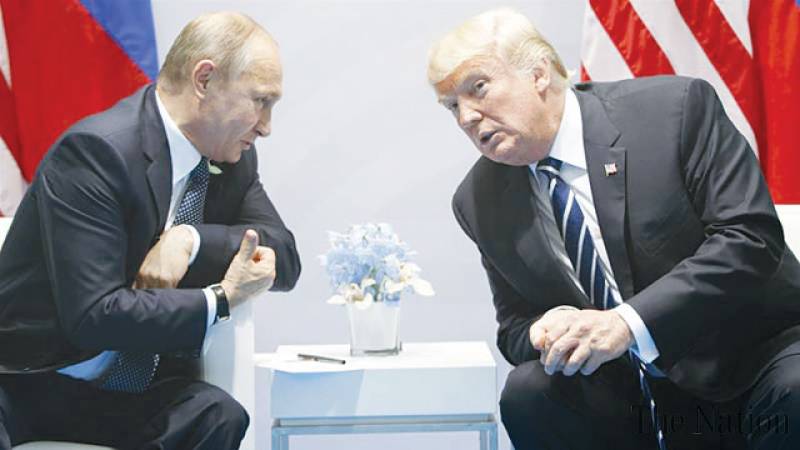
On July 16, US President Donald Trump will meet in the Finnish capital Helsinki a triumphant Russian President Vladimir Putin, who has just secured another victory in the Syrian war and obtained the international recognition he wanted from hosting the World Cup.

The Russian president will seek to exploit the growing rift between the United States and the European Union and the intensifying Iranian-Israeli rivalry to achieve his two main goals: Break Russia out of international isolation and become the sole kingmaker in Syria.

But in pursuing a deal with Trump, Putin poses the biggest threat to the legitimacy of his US counterpart domestically and internationally. The US establishment and intelligence community largely believe that the Kremlin favoured him in the 2016 US presidential race and an investigation into alleged Russian interference is still ongoing.

At the same time, Trump is confronted with an increasingly disgruntled group of allies who are wary of Russia’s aggressive posturing. That he will be meeting Putin right after attending the NATO summit in Brussels and visiting the UK (which has just had a major diplomatic crisis with Moscow), will not please any of them.

A history of Helsinki summits

The choice of Helsinki as the venue of the summit is not coincidental. The Finnish capital has hosted leaders of the two superpowers for important talks on two other major occasions.

In September 1990, a month after Iraq invaded Kuwait, US President George H W Bush met with Soviet leader Mikhail Gorbachev in Helsinki to discuss the crisis in the Gulf.

Preoccupied with the dissolution of the Eastern bloc after the fall of the Berlin Wall and with a Soviet Union on the verge of collapse, Gorbachev was negotiating from a position of weakness. Bush wanted his commitment to implementing sanctions on Saddam Hussein’s regime and he got it, in exchange for support for his counterpart’s reform plans. In March 1997, US President Bill Clinton met Russian President Boris Yeltsin to discuss a range of security and economic issues, including nuclear disarmament. At that summit, the Russian president had no trump cards to play.

The economic situation in Russia had been persistently deteriorating while the government was waging a highly unpopular war in Chechnya. Badly needing US financial support and backing, Yeltsin decided to concede to the expansion of NATO into Eastern Europe in return for Russia’s integration in the global economy with US help. For that disastrous decision, he was labelled a “US puppet” by his opponents.

On July 16, President Trump will meet President Putin, but this time around, it seems, the roles have been reversed. The US president is facing a growing legitimacy crisis at home, where he is perceived as “a Russian puppet”, while his Russian counterpart has been dealt a powerful hand.

The Trump-Putin deal

This will be the fourth meeting between the two leaders since Trump took office in January 2017. They met twice during the July 2017 G20 summit in Germany and once on the sidelines of the Asia-Pacific Economic Cooperation Summit (APEC) summit in Vietnam last November.

Since they last met, Trump succumbed to domestic pressure and took a number of anti-Russian measures, including approving lethal weapons sales to Ukraine in December, expelling Russian diplomats from the US in March, striking the Syrian regime and imposing additional sanctions on Russian officials in April.

Putin, too, upped the ante by giving a provocative speech on March 1, issuing unveiled threats of an arms race with the US. Then, after his re-election, he took advantage of the simmering US-EU trade war and the Iran nuclear deal crisis to re-engage with France and Germany, while also negotiating with Israel on key points of concern regarding the Syrian war.

Trump will give up Syria to Putin the way Gorbachev left Iraq to Bush in 1990.

Putin’s actions left Trump with no choice but to move up the meeting and send his national security adviser John Bolton to Moscow to set it up.

The US president plans to meet alone with his Russian counterpart and his translator, triggering concerns in the US and Europe regarding what he might concede if left alone in the room.

But despite these fears, no real breakthrough in US-Russian relations should be expected until Special Counsel Robert Mueller finalises his investigation. Lifting US sanctions on Russia, recognising its annexation of Crimea, and pulling US troops out of Eastern Europe are all off the table for the Helsinki summit; Trump’s hands are tied by US domestic politics. The only issue on which he can concede to lure in the Russian president is the Syrian war. Trump will give up Syria to Putin the way Gorbachev left Iraq to Bush in 1990.

The prerequisites for this deal are already in place. Trump’s closest ally, Israeli Prime Minister Benjamin Netanyahu, is scheduled to meet Putin on July 11, just five days before the Helsinki summit; this will be their third meeting this year.

Russia is engaging the Israeli prime minister, aiming to repeat the Deraa scenario in Quneitra province near the Israeli-occupied Golan Heights. Trump seems fine with the idea of ultimately removing US troops from the al-Tanf area on the Jordanian-Iraqi-Syrian border in return for keeping Iranian forces and their proxies away from southwest Syria. Trump’s endgame is not Syria. What he ultimately wants is for Putin to remain neutral in the US diplomatic offensive on Iran. The White House hopes Russia will follow through on the initial agreement with Saudi Arabia and OPEC and increase its oil output to compensate for the drop in Iranian oil exports caused by the reimposition of US sanctions. This move would diminish the effect of the US withdrawal from the Iran nuclear deal on international markets and minimise a potential negative impact on the US economy ahead of mid-term elections in November. Moreover, Trump is also attempting to outmanoeuvre the Europeans in their rapprochement with Moscow by offering Putin to rejoin the G7.

And it already seems that the agreement between the two leaders is solidified even before they met. Russia is passively watching as the EU states scramble to save the nuclear deal with Iran, while the US has done nothing to help the Syrian opposition factions it once supported against the Russian and Syrian regime operation in Deraa. Apart from that, the aftermath of the summit will also give an indication of how relations between Washington and Moscow will develop in the near future. Will a direct line of communication be re-established, most notably on arms control negotiations? Will the Russian ambassador in Washington have more access to US officials moving forward? Will the US establishment become more receptive to engaging Moscow without tangible shift in Russian policy post-Helsinky summit? If there is a change on one or more of these fronts, it could bring more dynamism into US-Russian relations.–AL JAZEERA

Printed in: Daily The Nation