Categories
Articles Pakistani Newspapers

American Fundamentalism and Trump’s Hysteria

American Fundamentalism and Trump’s Hysteria

By: Manaal Ahmed (Daily Nation)

While we were all told the liberalism is the only way forward, it seems that the world has chosen to take a different course of action

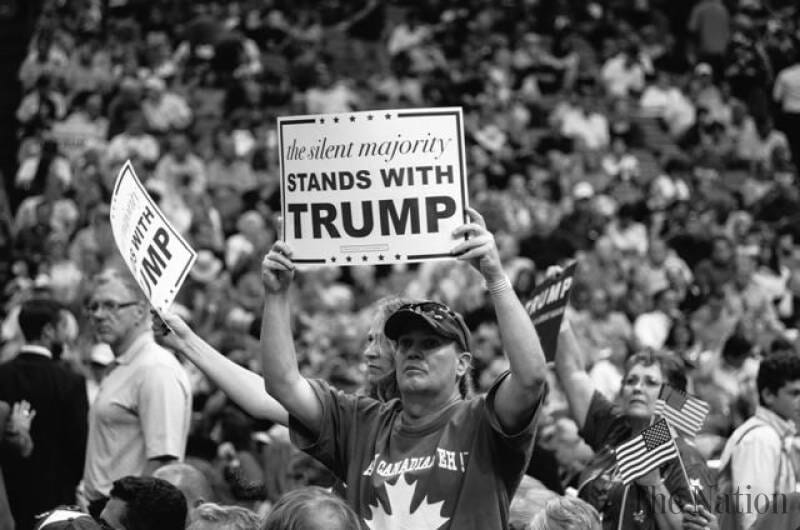
Donald Trump’s win has led many to question the hidden sentiments of the silent majority. In fact, the unfolding of recent events – Brexit and Charleston church shooting – raises questions on the humanitarian facade created by the liberal governments. This coincides with recent terrorist attacks in Paris, Beirut, Turkey, Syria and Pakistan which indicates a rise of fundamentalist approach towards global issues.

Following 9/11, America proclaimed a war on terror but what it and the rest of the world failed to predict was that it will be plunged into terror itself. US – openly or via proxy – intervened in the politics of other countries and then succeeded in committing one blunder after the other in Afghanistan, Iraq, and Pakistan. The unanticipated results of such violence were massive radicalization of the public on both sides of the conflict. When ISIS rose up from the ashes of the Iraq war it brought along a new a reign of terror and shook the global community with its unorthodox approach to terrorism leading us to conclude that perhaps the ones being affected the most were those who didn’t hold any public office and weren’t heard on the media: the common man/women. Their fear had fermented – ever since 9/11 into something almost indistinguishable and barely impalpable, until now.

This hysteria and incessant need to secure the country from arriving ‘threats’ is partly due to the exaggeration of media. They painted a picture of extremist Muslims who hate and will kill all liberals and infect our free homeland with their conservative ideology. Or of the super smart Asian children who’ll steal jobs of the hardworking white nationals or maybe drug dealers from Mexico who’ll sedate the youth into dysfunction. They pieced together fragments of reality to create a story that froze us all in fear, a story that would sell. All these images seem almost comic however, that was the message sent out to the commoner.

Simultaneously, cosmopolitan leaders resided in their bubble where the world was progressing and more modern than ever, hence, it is more liberal than ever. What they failed to gauge was the affect of fear on the minds of the people. The media depicted a monstrous image of the east and ISIS and Al Qaeda did nothing but legitimise it. When it felt as if everyone was the same page and left wing ideologies were the guiding principles of the liberal world, Donald J Trump won.

Pop! Burst the bubble of liberalism that the world so comfortably resided in. Most were shocked at the hypocrisy of America – the most liberal country in the world. In fact, what they demonstrated was not stupidity nor ignorance but a want for change. Liberal leaders had chosen to conveniently ignore the silent majority. As they parade around with rainbow flags, the world forgot the simple truth, fear. Perhaps the rise of the right was fueled by the continuous failure of the left. Following the Orlando shooting, hysteria was on the rise and it spread like wildfire among the nation. They needed change, any change that gave them a sense of security in a time when people felt more vulnerable than ever. While Hilary played it politically correct and continued to assume that the world was inherently liberal and that there was a principle difference between the radicals and them. That’s why she lost; she ignored the fact that radical behaviors bring out radial reactions. I don’t condone extremism from either side, but the truth is the world is gripped tightly in it.

It’s necessary to point out that most of their supporters aren’t hardcore racist or white supremacist. In fact, they’re just simpleminded people who got caught in this war. While liberals championed human rights and equality, right wing ideologies such as big government policies, fundamentalism and nationalism grew dramatically. Seen in the case of the Brexit where immigrants were blamed for taking away jobs of the common white man and subsequently, the majority voted to opt out of the EU to gain control over immigration policies. People had chosen to side with the radicals because it’s the one that promised the biggest change. It was criminal on part of the left wing to blindside the majority and its growing fear. Their sentiments were never taken into account because they weren’t politically correct. One could argue that this was just a knee-jerk reaction to extremism. The people believed it would invade their homes so they decided to close their doors. While governments tried to distinguish themselves from the extremist, radical thought bred in their homes. In my opinion, it was inevitable.

It is also true that the perpetrators of the liberalism were the reason for its fall as well. The idea was great, it was promising and delightful to the common eye but the realities of the ideal were left unquestioned and unchallenged, almost as to preserve something that was so precious one had to forgive it flaws. So they forged the ideology and begun to implement it until its practical implications tore open the façade that was so delicately crafted. In truth, the world was never liberal. It was always dominated by conservative leaders and countries which had only just begun to transition into liberal democracies. However, the impatience of the left wing politicians sought to impose liberalism. Pakistan, India, and Bangladesh are just few examples. They neglected the entire process of becoming liberal and pushed governments to apply liberal policies or risk isolation. The UN, EU, World Bank, and World Trade Organisation were tools to needed to actualize the pressure. Alas, the third world joined the liberal revolution but was stricken with the grave complexity of having a conservative populous with liberal policies. Conservative parties were formed in an outrage and in order to ‘protect’ their identity the populous chose the most converse leaders. Enter Imran khan, Modi, Haseena Wajid to the scenario with a fresh wave of nationalism and radicalism.

That fear so morphed into a tool to push for anti-globalisation policies by leaders such as Trump and Farage. It was wielded as a weapon against all notions of cosmopolitanism and liberal politics. It was used to justify turning away refugees, for testing missiles and even for bombing thousands of civilians in the Middle East and Afghanistan. Subsequently a global trend towards radical ideologies began to catch on and leftist ideals which ruled most of the 1900s were abandoned in a wisp. The United States eventually joined clique of right wing politics by electing Donald trump as the leader of the country that was the fountainhead of liberal thought.

What’s surprising is that the world learned nothing from the fall of the British Empire. The colonies had revolted indeed because English culture and ideas for perceived as a threat by the locals. It was seen as an attack on their religion, culture and ideology and hence, the British faced a massive uprising in all of the colonies especially in the subcontinent. The British Empire was the original attempt at globalisation and a somewhat liberal world but it was rejected and torn apart as the colonies claimed independence. What is happening now resembles it in many ways. The liberals of the west tried to impose a system if political thought on the nations which were not ready to embrace it. As a result nations started to gravitate towards its antithesis: radicalism.

In the end we are all trapped in between fundamentalists, who both use the same tactics to achieve the same goals. For now, it seems, the world has spoken, named its choice as far as political approach goes. While we were all told the liberalism is the only way forward, it seems that the world has chosen to take a different course of action. In my opinion the flaw is not in liberal thought itself but its implementation in the context of current world scenarios. It remains a possibility but for another day.
This article will help you in CSS Preparation specially in CSS International Relations Paper, Current Affairs Paper and History of USA Paper

Categories
Islamic Studies

Islamic Studies | Revised CSS Syllabus 2016

Compulsory Paper Syllabus

Islamic Studies 

(100 Marks)


I. Introduction of Islam.

  • Concept of Islam.
  • Importance of Deen in Human Life.
  • Difference between Deen and Religion.
  • Distinctive Aspects of Islam.
  • Islamic Beliefs & its Impact on Individual & Society and the Fundamental of Islam
  • Islamic Worships: Spiritual, Moral and Social Impa

Study of Seerah of Prophet Mohammad (PBUH) as Role Model for:-

  • Individual
  • Diplomat
  • Educator
  • Military Strategist
  • Peace Maker

III. Human Rights & Status of Woman in Islam.

  • Human Rights and Status of Woman in Islam
  • Dignity of Men and Women
Categories
Pakistan Affairs

CSS Pakistan Affairs | Revised CSS Syllabus 2016

Compulsory Paper Syllabus

Pakistan Affairs 

(100 Marks)

I. Ideology of Pakistan

Definition and elucidation, historical aspects: Muslim rule in the Sub-Continent, its downfall and efforts for Renaissance. Movements for reforms– Shaikh Ahmad Sarhindi, Shah Waliullah, Sayyid Ahmad Shaheed, Aligarh, Deoband, Nadwah, and other educational institutions——-Sindh Madrassah and Islamia College Peshawae. Ideology of Pakistan in the light of Speeches and statements of Allama Iqbal and Quaid- i Azam Muhammad Ali Jinnah.

Check also: CSS Pakistan Affairs MCQs

II. Land and people of Pakistan

Geography, Society, Natural resources, Agriculture, Industry and education with reference to characteristics, trends and problem

Categories
Current Affairs

Current Affairs | Revised CSS Syllabus 2016

Compulsory Paper Syllabus

Current Affairs

(100 Marks)

Candidates will be expected to display such general knowledge of history, politics and International Affairs, as deemed necessary to interpret current affairs.

I.  Pakistan’s Domestic Affairs (20 marks)

  • Political
  • Economic
  • Social

Check Also: Countries and Currencies, Religions & Languages

II.  Pakistan’s External Affairs (40 marks)

  • Pakistan’s relations with its Neighbors (India, China, Afghanistan, Russia)
  • Pakistan’s relations with the Muslim World (Iran, Saudi Arabia, Indonesia, Turkey)
  • Pakistan’s relations with the United States
  • Pakistan’s relations with Regional and International Organizations (UN, SAARC, ECO, OIC, WTO, CW)
Categories
General Science & Ability

General SCIENCE & Ability Revised Syllabus 2016

Compulsory Paper Syllabus

General SCIENCE & Ability

(100 Marks)

Part-I (General Science)    |   60 Marks

I.  Physical Sciences

Constituents and Structure:-Universe, Galaxy, Light Year, Solar System, Sun, Earth, Astronomical System of Units.

Process of Nature: – Solar and Lunar Eclipses, Rotation and Revolution, Weather Variables (Global Temperature, Pressure, Circulation, Precipitation, Humidity) and Weather Variations.

Natural Hazards and Disasters: – Earth Quake, Volcanic Eruption, Tsunami, Floods, Avalanche, Travelling Cyclone (Tropical Cyclone, Middle Latitude Cyclone and Tornadoes), Drought, Wildfire, Urban Fire. Disaster Risk Management.

Energy Resources: – Sources of Energy (Renewable i.e. LED Energy, Solar Energy, Wind Energy and Non-Renewable Energy conservation and its sustainable use.)

Atomic Structure, Chemical Bonding, Electromagnetic Radiations.

Modern Materials/Chemicals: – Ceramics, Plastics, Semiconductors. Antibiotics, Vaccines, Fertilizers, Pesticides.

Categories
English (Precis and Composition)

ENGLISH Precis & Composition | Revised Syllabus 2016

Compulsory Paper Syllabus

ENGLISH (Précis & Composition) 

(100 Marks)

The examination in this subject will be based upon a paper carrying 100 marks to Test the candidate’s abilities to handle Précis Writing, Reading Comprehension, Sentence Structuring, Translation, Grammar and Vocabulary, etc.

Download Complete CSS Syllabus in PDF

I.   Précis Writing (20 marks)

A careful selected passage with an orientation of generic understanding and enough flexibility for compression shall be given for précising and suggesting an appropriate title. Out of the total 20 marks allocated to this question, 15 shall go to précising the text and 5 to suggesting the title.

II.  Reading Comprehension (20 marks)

A carefully selected passage that is rich in substance but not very technical or discipline- specific shall be given, followed by five questions, each carrying 4 marks.

Check also: English Grammar MCQs

III. Grammar and Vocabulary (20 marks)

Correct usage of Tense, Articles, Prepositions, Conjunctions, Punctuation, Phrasal Verbs, Synonyms and Antonyms etc.

IV. Sentence Correction (10 marks)

The sentences shall be given each having a clear structural flaw in terms of grammar or punctuation. The candidates shall be asked to rewrite them with really needed correction only, without making unnecessary alterations. No two or more sentence should have exactly the same problem, and 2-3 sentences shall be based on correction of punctuation marks.

V. Grouping of Words (10 marks)

A random list of twenty words of moderate standard (neither very easy nor utterly unfamiliar) shall be given, to be grouped by the candidates in pairs of those having similar or opposite meaning, as may be clearly directed in the question.

VI. Pairs of Words (10 marks)

Ten pairs shall be given of seemingly similar words with different meanings, generally confused in communication, for bringing out the difference in meaning of any five of them by first explaining them in parenthesis and then using them in sentences.

VII. Translation (10 marks)

Ten short Urdu sentences involving structural composition, significant terms and figurative/idiomatic expressions shall be given, to be accurately translated into English.

SUGGESTED READINGS

Title Author
1. English Grammar in Use Raymond Murphy (Cambridge University Press).
2. Practical English Usage M.Swan (Oxford University Press).
3. The Little, Brown Handbook H. Ramsey Flower & Jane Aaron (The Little, Brown & Co; Harper Collins.)
4. A University English Grammar R. Quirk & S. Greenbaum (ELBS; Longmans)
5. Write Better, Speak Better Readers Digest Association.
6. Modern English in Action Henry Christ (D.C. Heath & Co.)

Check CSS ENGLISH Precis & Composition Past Papers


CSS ENGLISH Precis

Categories
English Essay

English ESSAY | Revised Syllabus 2016

English ESSAY Syllabus 2016

PUBLIC NOTICE

CSS COMPETITIVE EXAMINATION – 2016

It is notified for information of aspirants of CSS Competitive Examination that recognizing the need to align the subjects and syllabi of CSS Exam, which were last revised in 1981, with emerging global trends and for netting high talent and quality fabric for the Civil Service, the FPSC, with the approval of the Government, has revised the scheme and syllabi of forthcoming CSS Competitive Examination 2016 onwards. According to revised scheme of subjects, the aspirants of CSS Competitive Examination are required to attempt papers of 1200 marks in following compulsory and optional subjects:

Read also: CSS English Essay Paper 2021

Revised Syllabus

Compulsory Subject

Compulsory Paper Syllabus

English ESSAY 

(100 Marks)

Candidates will be required to write one or more Essay in English. A wide choice of topics will be given.

Candidates are expected to reflect comprehensive and research based knowledge on a selected topic. Candidate’s articulation, expression and technical treatment of the style of English Essay writing will be examined.

Check also: English Grammar MCQs

Categories
CSS Compulsory Subjects

CSS Compulsory Subjects

CSS Compulsory Subjects

According to the Revised Scheme of CSS Competitive Examination 2016 the Compulsory Subjects are as below

 To find related study materials kindly click on Subject. Thanks

Code No. Subjects Marks
1. English Essay 100
2. English (Precis and Composition) 100
3. General Science & Ability 100
4. Current Affairs 100
5. Pakistan Affairs 100
6. Islamic Studies OR Comparative Study of Major Religions (For Non Muslims) 100
Total   600

Check also: Everyday Science MCQs

Study Tips for CSS Compulsory Subjects

  1. Understand the Syllabus: Make sure you have a clear understanding of the syllabus for each compulsory subject. This will help you focus your study efforts on the most important areas and ensure that you are adequately prepared for the exam.
  2. Use Past Papers: Past papers are a great resource for preparing for the CSS exams. They provide a sense of the types of questions that will be asked, the format of the exam, and the level of difficulty of the material.
  3. Create a Study Plan: Create a study plan that works for you and stick to it. This will help you stay organized and on track.
  4. Practice Writing: Practice writing essays and answering multiple-choice questions. This will help you develop the necessary skills to perform well on the exam.
  5. Take Notes: Take notes while studying and review them regularly. This will help you retain the information better and refer back to it easily.

CSS Compulsory Subjects

Check Some CSS Past Papers Below:


Importance of CSS English Past Papers | CSS Past Papers | EVERYDAY SCIENCE | CSS Compulsory Subjects