Categories
GK MCQ’s

Universe MCQs Solved (for CSS, PMS, NTS) General Knowledge Paper

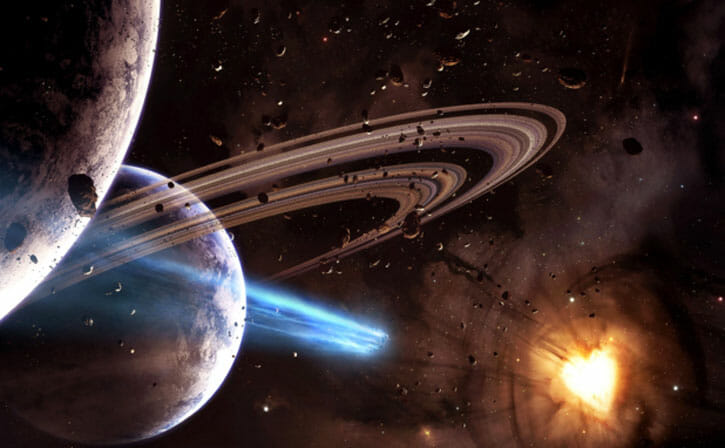
Universe MCQs

  • The Sun is the controlling body of Earth’s solar system.
  • Sodium was the first metal identified in the Sun
  • Hydrogen accounts for 71% of the Sun’s mass, helium 26.5 percent and all the other known elements. 2.5%.
  • The Sun’s core lies a giant nuclear furnace which converts hydrogen to helium at a rate of 600 million tonnes per second.
  • The diameter of the whole solar system is about 1170 crore kilometers.
  • The Sun is made up of extremely hot gases. Its glowing surface is called the photo sphere
  • The visible white light of the Sun is made up of 7 colours
  • Like other stars, the Sun is composed mainly of hydrogen.
  • The Moon is the one and only one satellite of the Earth. It is a natural satellite and is nearest neighbour in space.
  • The Moon revolves around the earth while rotating on its own axis. Only 59% of its surface is directly visible from the earth.
  • The moon is about 1/4 the size of its mother planet, the earth. It takes 1.3 seconds for Moonlight to reach the earth.
  • The sunlight takes about 8 minutes and 16.6 seconds to reach the earth.
  • The Moon is the first member of our solar system to have been visited by man.
  • The earth rotates around its axis. This axis is an imaginary line passing through the centre of the earth.
  • The earth completes one rotation in 24 hours (23 hrs 56 min. 4.09 secs). The earth rotates from west to east.
  • The Science which deals with the nature and motion of celestial bodies is called Astronomy.
  • Galaxies are dotted like islands throughout the universe. A galaxy is a huge concentration of stars which are held together by the force of the gravity. They are so big that sometimes they are called Island Galaxies.
  • Milky Way is our Home galaxy in one of a cluster of 25 galaxies called local group.
  • Cosmology is a branch of astronomy that deals with the origin and evolution of the universe.
  • In the universe, some matter appears small but emit more energy than the other stars of the milky way. Such stars are called “Quasars.”
  • When the hydrogen of a star is depleted, its outer regions swell and redden. This stage of a star is called a “Red Giant”. The sun will turn into a Red Giant in 5 billion Years.
  • Black hole stage of the star occurs when the ancient star collapses. Gravity becomes so intense in the hole that nothing escapes even light. This Dark object is thus called a “Black hole”.
  • An Earthquake is a vibration or oscillation of the surface of the earth caused by a transient disturbance of the elastic or gravitational equilibrium of the rocks at or beneath the surface.
  • Asteroids are a series of very small planets or fragments of planets lying between the orbits of Mars and Jupiter. Ceres (length 1000 km.) is the largest asteroid. Asteroids are also called planetoids.
  • It was believed that comets were formed from the remaining material that was left during the formation of the outer planets. A comet consists of three parts i.e. centre, coma and tail.
  • The Meteors are probably the remains of comets which are scattered in the interplanetary space of the solar system. On contact with earth’s atmosphere they burn due to friction. Those which completely burn out into ash are called Meteors or shooting star.
  • Equinox is the dates when the nights and days are equal. During these days the Sun shines directly over the equator. March 21 is called Unreal equinox and September 23 is called autumnal equinox.
  • The moon is said to be in eclipse when the earth comes between the moon and the sun, this is called Lunar Eclipse. Lunar eclipse occurs only on a pull, moon day.
  • The sun is said to be in eclipse when the moon comes between the sun and the earth. This is called solar eclipse. A solar eclipse occurs on a new moon day, when the moon is in line with the sun.

Check Also: Countries and Currencies, Religions & Languages

Solved Universe MCQs

1. Who discovered the Solar System?
(a) Kepler (b) Galileo
(c) Copernicus (d) Eratosthenes

2. Which planet is known as the “Morning Star”?
(a) Saturn (b) Venus
(c) Jupiter (d) Mercury

3. The scientists have found some proofs of presence of water on which of the following planets?
(a) Jupiter (b) Venus
(c) Mars (d) Mercury

4. Mercury is
(a) The smallest planet
(b) The fastest planet
(c) The planet nearest to Sun
(d) All of these

5. Which of the following planets has the smallest diameter?
(a) Mercury (b) Mars
(c) Pluto (d) Venus

6. Which is the brightest star in the night sky?
(a) Altair (b) Denim
(c) Sirius (d) Sun

Check also: English Grammar MCQs

7. Which is the natural satellite of the Earth?
(a) Mars (b) Moon
(c) Venus (d) Neptune

8. Bodies which usually fall from the sky on the Earth are called
(a) Comets (b) Meteors
(c) Rock (d) None of these

9. Solar eclipse occurs when
(a) Earth comes between sun and moon
(b) Moon is at right angle to the earth
(c) Moon comes between sun and earth
(d) Sun comes between moon and earth

10. Lunar eclipse is caused when the
(a) moon comes between the sun and the earth
(b) earth comes between the sun and the moon
(c) sun comes between the earth and the moon
(d) None of these

11. The rising of the evening star indicates the
(a) South Pole (b) North Pole
(c) East (d) West

12. Which is the hottest planet in our solar system?
(a) Venus (b) Neptune
(c) Mars (d) Jupiter

13. Which of the following planets is dropped from the list of planets in 2006?
(a) Neptune (b) Pluto
(c) Jupiter (d) Earth

14. Lunar eclipse occurs only on a
(a) first quarter day (b) full moon day
(c) new moon day (d)last quarter day

15. Which planet takes the largest time to go once around the Sun?
(a) Uranus (b) Jupiter
(c) Neptune (d) Pluto

16. Who was the first woman to travel into space?
(a) Sally Ride
(b) Valentina Tereshkova
(c) Svetlana Savitskaya
(d) Eileen Collins | Universe MCQs

17. Who was the first Tourist in space?
(a) Dirk Fremont
(b) Dennis Tito (Brazil)
(c) Rakesh Sharma
(d) Toyohiro Akiyama

18. There is a well developed system of rings around it. This statement is about
(a) Venus (b) Saturn
(c) Mars (d) Uranus

19. Which planet is known as the “Evening Star”?
(a) Saturn (b) Venus
(c) Jupiter (d) Mercury

20. How many days does the moon take to return to the same position among the constellations?
(a) 28 days (b) 29 days
(c) 26 days (d) 30 days

21. How many layers are present in the atmosphere of the sun?
(a) 1 (b) 2
(c) 3 (d) 4

22. Which is the brightest planet in the Solar System?
(a) Jupiter (b) Mercury
(c) Uranus (d) Venus

23. Which one of the following planets has the maximum number of satellites?
(a) Jupiter (b) Uranus
(c) Saturn (d) Venus

24. Name two planets lying between the sun and the earth.
(a) Mercury and Mars
(b) Venus and Mars
(c) Mercury and Venus
(d) Jupiter and Saturn | Universe MCQs

25. The first ever artificial satellite was launched by
(a) Russia (b) France
(c) Japan (d) America

26. The visible part of the sun is called
(a) Ionosphere (b) Hydrosphere
(c) Photosphere (d) Troposphere

27. Name the first astronaut to set foot on moon
(a) Edmund Halley
(b) Neil Armstrong
(c) Alen Shephered (d) Yuri Gagarin

28. NASA is a space agency of
(a) USA (b) UK
(c) China (d) Russia

29. Russia launched its space station into space in 1986, which was
(a) Sputnik (b) Rahber
(c) Mir (d) Skylab – II

30. Sun rises in the east and sets in the west due to the:
(a) Shape of the Earth
(b) Rotation of the Earth around the Sun
(c) Rotation of the Earth on its axis
(d) Movement of the Sun

31. How many planets are present in our galaxy?
(a) 9 (b) 8
(c) 10 (d) 11 | Universe MCQs

32. The planet which revolves very slowly around the sun is
(a) Neptune (b) Jupiter
(c) Mars (d) None of these

33. Which planet is known as “Earth’s near twin planet”?
(a) Mercury (b) Mars
(c) Venus (d) Neptune

34. Hubble is a (launched in 1990)
(a) Rocket name (b) Space station
(c) Space telescope
(d) Microscope

35. Which is the US space shuttle?
(a) Colombia (b) Discovery
(c) Apollo – II (d) Both a & b

36. Who was the first person in space?
(a) Marc Garneau (b) Yang Liwei
(c) Yuri Gagarin (d) None

37. Who was the first Saudi (first Muslim also) in space?
(a) Rai Shaher Yar
(b) Sheikh Muszaphar Shukor
(c) Muhammad Faris
(d) Sultan Salman Al Saud | Universe MCQs

38. The first ever artificial satellite was launched by
(a) Russia (b) France
(c) Japan (d) America

39. When did the space age begin with the launch of the Russian Sputnik?
(a) October 4, 1950
(b) October 2, 1952
(c) September 4, 1954
(d) October 4, 1957

40. Name the first animal to be sent in space:
(a) Laika (b) Laitka
(c) Dolly (d) Panda

41. Name the first artificial satellite:
(a) Sputnik I, of the former Soviet Union
(b) Suez I, of the former Soviet Union
(c) Apollo I, of the USA
(d) Skylab, of the USA

42. Which planet contains largest quantity of carbon dioxide with 95%?
(a) Earth (b) Jupiter
(c) Venus (d) Mercury

43. How many Satellites (Moons) of Saturn Planet?
(a) 27 (b) 36
(c) 47 (d) 56 | Universe MCQs

44. The comet, named after Edmund Halley, reappears after a time of every
(a) 36 years (b) 76 years
(c) 55 years (d) 56 years

45. The group of small pieces of rock revolving round the sun between the orbits of Mars and Jupiter are called
(a) Meteors (b) Comets
(c) Meteorites (d) Asteroids

46. ‘Blue dwarfs’ refer to
(a) Caucasians (b) Young stars
(c) Old stars (d) None of these

47. What are ‘Red giants’?
(a) Caucasians (b) Old stars
(c) Young stars (d) None of these

48. Which of the following US space shuttles?
(a) Opportunity (b) Colombia
(c) Challenger (d) All these

49. The heaviest mass revolving round the Sun is
(a) Moon (b) Jupiter
(c) Neptune (d) Pluto

50. The planet which has longest day is
(a) Mercury (b) Venus
(c) Earth (d) Pluto | Universe MCQs

51. What is the rank of the earth in the solar system in terms of size?
(a) Third (b) Fourth
(c) Fifth (d) Sixth

52. The earth revolves around the sun at a speed of
(a) 18.5 km/sec (b) 26.6 km/sec
(c) 29 km/sec (d) 31.9 km/sec

53. A light year is equal to
(a) 6 million, million kms
(b) 7,50 million, million kms
(c) 9.50 million, million kms
(d) 11 million, million kms

54. The planet which has shortest year is
(a) Mercury (b) Jupiter
(c) Earth (d) Pluto
55. The planet which has longest year is
(a) Mercury (b) Venus
(c) Earth (d) Neptune
Categories
Articles Pakistani Newspapers

Pakistan’s ‘national security’ dilemma

Addressing a seminar on ‘Interplay of Economy and Security” in Karachi last week, COAS General Qamar Javed Bajwa underlined the need to ensure a viable balance between economy and security in order to achieve prosperity. He pointed out that “national security and economy are interlinked in today’s world”. He expressed concerns over the country’s ‘sky high debt’ as well as the ‘abysmally low’ tax-to- GDP ratio. He also called for increasing tax base, bringing fiscal discipline and ensuring continuity of economic policies in Pakistan. Later, talking to the host of a popular TV talk show, DG ISPR said, “If Pakistan’s economy is not good, security is not good either”. Interior Minister Ahsan Iqbal, being highly concerned about the civilian supremacy, advised DG ISPR to refrain from commenting on the economy in public. In fact, this recent ‘national security-economy linkage’ saga just indicates that there is considerable trust-deficit between the military establishment and the civil government in Pakistan. At the same time, it also shows the fact of expanding domain of national security in the country.

Categories
Articles Current Affairs Foreign Articles

Rohingya Crisis: A Pragmatic Approach for Pakistan

By: Sadia Kazmi

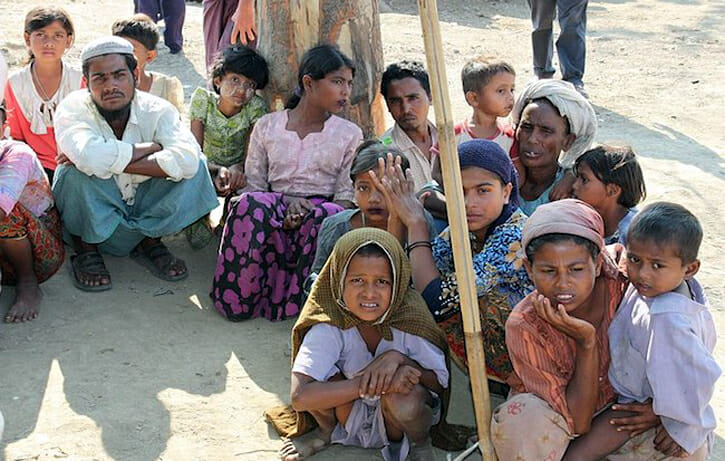
The killing of Rohingya Muslims through systemic ethnic cleansing by the state of Myanmar is the most horrific genocide in the history of mankind. In the garb of security operation against the Rohingya militants/insurgents in Rakhine state, the government of Myanmar has carried out the most brutal and disproportionate act of slaughter ever. More than half a million Rohingya Muslims have fled the army campaign since August 25 and have escaped to Bangladesh. Despite the recurrent news flash on TV channels and social media handles, the very existence of this humanitarian crisis has been denied by Myanmar’s Security Advisor U Thaung Tun who while addressing the UN Security council stated that “there is no ethnic cleansing and no genocide of Rohingya Muslims”. Even though the UN Secretary General Antonio Guterres termed it as the “the world’s fastest developing refugee emergency and a humanitarian and human rights nightmare”. However, Myanmar views them as mere allegation and maintains that if at all there is a mass exodus, the reasons behind it is not the crackdown by Myanmar army but the act of terrorism. The security operation as is claimed by Myanmar government, has led to 400 deaths, which are mostly terrorists, belonging to Arakan Rohingya Salvation Army (ARSA).

However, this doesn’t really explain the satellite images of civilians being viciously murdered. Nor does it change the fact that unarmed civilians are being killed even if it is at the hands of terrorists and the government is not only unable to control the situation but apparently is largely unaware of the whole fiasco. The state Counsellor of Myanmar Aung San Suu Kyi has been widely criticized for not being able to address the issue adequately. However, at the same time, China extends its support to Myanmar government and expresses the need for strict action against the elements causing unrest for the state. This makes the situation a bit complicated as while on one hand there is a growing international pressure on Myanmar as the United Nations rights chief Zeid Ra’ad Al Hussein stated that this is a typical example of “textbook ethnic cleansing”, on the other hand China expresses appreciation and encouragement to Counsellor Kyi. China’s foreign ministry spokesman Geng Shuang supported the state effort to “uphold peace and stability” in Rakhine. A possible reason as to why China has adopted this stance is because Myanmar serves as an important pillar in China’s energy, trade and infrastructure strategy in the Southeast Asian region. Aung Suu Kyi maintains that the army was only doing its “legitimate duty to restore stability” and that the troops were under the orders by the state to “exercise all due restraint and to take full measure to avoid collateral damage”.

Categories
Articles Current Affairs Islamic Articles

Growth of Islamic banking and finance in Pakistan

By: Hazrat Hassan (Foreign Policy News)

In recent years, Islamic banking and finance in Pakistan has experienced phenomenal growth. Islamic deposits – held by fully-fledged Islamic banks and Islamic windows of conventional banks – at present stand at 9.7% of total bank deposits in the country: meaning that every 10th rupee is now being deposited in an Islamic bank account. Similarly assets managed by a bank offering Islamic Financial Services are 8.9% of banking assets in the country. Total Islamic savings and investment are 8.2% of the total savings and investment in the banking sector of Pakistan. (a)

According to an analysis, there is still the capacity of 42 million more people in the market for the banking sector which they can grab. Islam is the predominant religion in Pakistan and Shariah compliant banking as of today has a very small market share, thus reflecting a huge potential for growth in this sector. The interest-free Islamic banking has gained a tremendous growth in the country in previous years and also can further expand by making effective policies and by introducing more products. (b)

Categories
2007 | CSS Past Papers CSS Past Papers

PAKISTAN AFFAIRS 2007 (General Knowledge Paper-III) | CSS Past Papers Complete

FEDERAL PUBLIC SERVICE COMMISSION
COMPETITIVE EXAMINATION FOR RECRUITMENT TO POSTS
IN B.P.S. -17, UNDER THE FEDERAL GOVERNMENT, 2007

GENERAL KNOWLEDGE PAPER- I
(PAKISTAN AFFAIRS)

Time Allowed: 3 Hours                                                      Maximum Marks: 100

Note: (i)    Attempt ONLY FIVE questions in all, including QUESTION NO. 1, which is COMPULSORY. All questions carry EQUAL marks.
(ii)   Extra attempt of any question or any part of the attempted question will not be considered.
(iii) Candidate must draw two straight lines (======) at the end to separate each question attempted in Answer Books.

Q.1.    Write only the correct answer in the Answer Book. Do not reproduce the question.
(1)     The first Muslim general entered Victorious in the sub-continent Indo-Pak in the year:
(a)   612 AD                                   (b)    712 AD
(c)   812 AD                                   (d)    None of these

(2)     On the execution of Muhammad Bin Qasim, the rule of Caliph ended and Arab princes in Mansura (Sindh) and Multan (Punjab) established their independent dynasties in Sub-continent in the year:
(a)   861 AD                                   (b)    871 AD
(c)   881 AD                                   (d)    None of these

(3)     Who became the first Sultan of newly established Muslim Sultanate of Delhi in 1207:
(a)   Shahabudin Ghuri             (b)    Qatub-din Aibek
(c)   Zaheer-ud-din Babar         (d)    None of these

(4)     Who has written the book entitled “The Making of Pakistan?”
(a)   Qurashi I. H.                         (b)    Muhammad Ali Ch.
(c)   Waheed-uz-Zaman            (d)    None of these

(5)     Who was first appointed Nazim of Nadva-ul-Ulema in 1883?
(a)   Maulana Shibli
(b)   Maulvi Abdul Ghafoor
(c)   Maulana Syed Muhammad Ali
(d)   None of these

(6)     Pakistan’s ideology is based on the ideals of:
(a)   Democracy                            (b)    Theocracy
(c)   Islam                                       (d)    None of these

(7)     Quaid-e-Azam called Islam “Our bedrock and sheet anchor” while addressing:
(a)   Punjab Students Federation
(b)   Muslim Students Peshawar
(c)   Indian Muslims
(d)   None of these

(8)     The resolution for formation of All-Indian Muslim League was passed at the meeting of All India Education Conference (1906) and was moved by:
(a)   Nawab Viqar ul Mulk       (b)    Nawab Mohsin ul Mulk
(c)   Nawab Salim ullah            (d)    None of these

(9)     The demand of separate electorate for Indian Muslims was first accepted in the Act of:
(a)   1909                                        (b)    1919
(c)   1935                                        (d)    None of these

(10)  The provincial governments of Congress resigned and All-India Muslim League as a mark of relief observed the “Day of Deliverance” on:
(a)   22 Oct. 1939                          (b)    22 Nov. 1939
(c)   22 Dec. 1939                         (d)    None of these

(11)  The Lahore Resolution was amended and Pakistan was made part of League’s objective. The amendment was made in the Annual session (1941) of All India Muslim League, which was held at:
(a)   Karachi                                  (b)    Lahore
(c)   Madras                                   (d)    None of these

(12)  Radcliff Commission submitted its formula for the division of India in to two countries to Lord Mountbatten on:
(a)   9 August 1947                      (b)    19 August 1947
(c)   29 August 1947                   (d)    None of these

(13)  Ch. Rahmat Ali, the architect of the name of the Pakistan, died on:
(a)   Feb. 2, 1951                           (b)    Feb. 12, 1951
(c)   Feb. 22, 1951                         (d)    None of these

(14)  Liaquat Ali Khan, the first Prime Minister of Pakistan, while addressing a meeting at Rawalpindi was assassinated on:
(a)   Oct 6, 1951                            (b)    Oct. 16, 1951
(c)   Oct. 26, 1951                         (d)    None of these

(15)  The Legal Framework Order, which amended a constitution of Pakistan unilaterally was issued by:
(a)   Yahya Khan                         (b)    Ayub Khan
(c)   Zia-ul-Haq                            (d)    None of these

(16)  The country, which supported the Pakistan Movement before the emergence of Pakistan:
(a)   Iran                                          (b)    Indonesia
(c)   Saudi Arabia                        (d)    None of these

(17)  Durand Line, which divided the border of Pakistan and Afghanistan, is as long as:
(a)   2252 Km                                (b)    2262 Km
(c)   2272 Km                                (d)    None of these

(18)  Which mountain range is located between China and Pakistan?
(a)   Siwaliks                                 (b)    Hindukush Range
(c)   Great Himalayas                (d)    None of these

(19)  What is the total area of Pakistan (in square kilometer)?
(a)   695095                                    (b)    795095
(c)   796096                                    (d)    None of these

(20)  The Regional Cooperation for Development (RCD) was established among Pakistan, Iran and Turkey in 1964 and was annulled in:
(a)   1969                                        (b)    1979
(c)   1989                                        (d)    None of these

Q.2.  Critically evaluate the contribution made by missionaries in the growth of Muslim society in the Sub-continent of Indo-Pak.

Q.3.  The Deoband School stood for “definite religio-political goals with limited sphere of influence.” Discuss.

Q.4.  Elucidate Ideology of Pakistan. What are the reasons which contributed for the development of two-nation theory? Is two-nation theory relevant after the fall of Dacca? Discuss

Q.5.  Minto – Morely Reforms was a “tool of change” in the political system of India. Discuss it with special reference to the demands of Simla Deputation.

Q.6.  Local government system under the “Devolution of Power Plan 2001” has miserably failed in delivering services to the masses. Discuss.

Q.7.  “Pakistan is a federation in form and unitary in spirit.” Discuss it keeping in view the strengths and weaknesses of Federation of Pakistan.

Q.8.  Highlight the salient features of National Education Policy of 1998-99. How can we improve the education standard of people of Pakistan?

Categories
2007 | CSS Past Papers CSS Past Papers (Compulsory)

GK Paper-II CURRENT AFFAIRS 2007 | CSS Past Papers Complete

FEDERAL PUBLIC SERVICE COMMISSION
COMPETITIVE EXAMINATION FOR RECRUITMENT TO POSTS
IN BPS – 17, UNDER THE FEDERAL GOVERNMENT, 2007

GENERAL KNOWLEDGE, PAPER – II

CURRENT AFFAIRS


Time Allowed: Three Hours                                            Maximum Marks: 100

Note: (i)    Attempt ONLY FIVE questions in all, including QUESTION NO.1, which is COMPULSORY. All questions carry EQUAL marks.

(ii)   Extra attempt of any question or any part of the attempted question will not be considered.
(iii) Candidate must draw two straight lines (======) at the end to separate each question attempted in Answer Books.

Categories
2007 | CSS Past Papers

GK Paper-I EVERYDAY SCIENCE (CSS Paper 2007) | CSS Past Papers Complete

FEDERAL PUBLIC SERVICE COMMISSION
COMPETITIVE EXAMINATION FOR RECRUITMENT TO POSTS
IN B.P.S. -17, UNDER THE FEDERAL GOVERNMENT, 2007

GENERAL KNOWLEDGE PAPER- I
(EVERYDAY SCIENCE)

PART-I (Subjective)

PART-II (MCQ Type) Questions Paper bearing 50 marks will be given to you at 10:40 AM which is to be solved on OMR Sheet

Time Allowed: 100 Minutes                                               Maximum Marks: 50

Note: (i)    Attempt ONLY FIVE questions. All questions carry EQUAL marks.
(ii)   Extra attempt of any question or any part of the attempted question will not be considered.
(iii) Candidate must draw two straight lines (======) at the end to separate each question attempted in Answer Books.

Categories
2007 | CSS Past Papers

ENGLISH (PRECIS & COMPOSITION) Paper 2007 | CSS English Past Papers

CSS English Past Papers

FEDERAL PUBLIC SERVICE COMMISSION
COMPETITIVE EXAMINATION FOR RECRUITMENT TO POSTS
IN B.P.S. -17, UNDER THE FEDERAL GOVERNMENT, 2006

ENGLISH (PRECIS & COMPOSITION)

CSS English Past Papers

Time Allowed: 3 Hours                                                      Maximum Marks: 100

Q.1.     Make a précis of the given passage and suggest a suitable heading.   (20+5)

The author of a work of imagination is trying to affect us wholly, as human beings, whether he knows it or not; and we are affected by it, as human beings, whether we intend to be or not. I suppose that everything we eat has some other effect upon us than merely the pleasure of taste and mastication; it affects us during the process of assimilation and digestion; and I believe that exactly the same is true of any thing we read.

Categories
2007 | CSS Past Papers

English Essay (CSS Paper 2007) | CSS Past Papers Complete

FEDERAL PUBLIC SERVICE COMMISSION
COMPETITIVE EXAMINATION FOR RECRUITMENT TO POSTS
IN B.P.S. -17, UNDER THE FEDERAL GOVERNMENT, 2007

ENGLISH ESSAY

Time Allowed: 3 Hours                                                      Maximum Marks: 100

Note: Write a COMPREHENSIVE essay (4000-5000 words) on any ONE of the topics listed below. Make sure you use different forms of discourse; viz. exposition, argument, persuasion, description and narration.

Categories
2006 | CSS Past Papers CSS Past Papers (Compulsory)

Islamiat CSS Past Paper (2006) | Complete

Islamiat CSS Past Paper

FEDERAL PUBLIC SERVICE COMMISSION
COMPETITIVE EXAMINATION FOR RECRUITMENT TO POSTS
IN B.P.S. -17, UNDER THE FEDERAL GOVERNMENT, 2006

ISLAMIAT

Time Allowed: 3 Hours                                                      Maximum Marks: 100

Note:  (i)      Attempt ONLY SIX questions, in all, including QUESTION NO.1 which is COMPULSORY and carries 20 marks.  All other questions carry 16 marks each.
(ii)    Attempt in Urdu or English.
(iii)   Extra attempt of any question or any part of the attempted question will not be considered.