Categories
June 2018

Day by Day Current Affairs (June 14, 2018) | MCQs for CSS, PMS, NTS

WELCOME TO CSS TIMES DAY BY  DAY CURRENT AFFAIRS, YOUR BEST SOURCE FOR UP-TO-DATE AND DAILY TOP CURRENT AFFAIRS 2018 FOR PREPARATION OF CSS, PMS, BANKING, NTS, RAILWAYS AND ALL COMPETITIVE EXAMS.  “DAY TO DAY CURRENT AFFAIRS” BASICALLY IS TOP 10 NEWS SUMMARY ON CURRENT HAPPENINGS OF NATIONAL AND INTERNATIONAL IMPORTANCE FOR ALL EXAMINATIONS

Categories
June 2018

Day by Day Current Affairs (June 13, 2018) | MCQs for CSS, PMS, NTS

June 13, 2018
1. Trump-Kim summit heavy on promises, light on substance

• US President Donald Trump and North Korean leader Kim Jong Un held a largely symbolic summit on June 12, 2018, and the US president offered an unexpected concession to the North, saying he would halt joint military exercises with South Korea.
• The two men smiled and shook hands before pledging at their historic summit to work toward the `denuclearisation` of the Korean Peninsula.
• The United States promised its Cold War foe security guarantees.
• The meeting in Singapore, the first between a sitting US president and a North Korean leader, was in stark contrast to a flurry of North Koreannuclear and missile tests and angry exchanges of insults between Trump and Kim last year that fuelled global worries about war.
• But in a joint statement afterward, the two men offered few specifics about how the relationship would evolve. Noting North Korean promises in the past to denuclearise, several analysts cast doubt on how effective Trump had been at obtaining his pre-summit goal of banishing North Korea`s `very substantial` nuclear arsenal.
• At a news conference later, Trump made a surprise announcement that was sure to rattle South Korea and Japan, which rely on a US security umbrella, saying he would halt the regular military exercises the US holds with South Korea because they were expensive and `very provocative`. North Korea has long sought an end to the exercises.
• The summit gave international standing to Kim, one of the world`s most reclusive leaders.
2. Bajwa visits Kabul amid new peace push
• Chief of Army Staff Gen Qamar Javed Bajwa on June 12, 2018 hoped that the peace initiatives and truce reached between the Afghanistan government and Taliban for the holy month of Ramazan would gain permanence, ultimately lead to enduring peace in the country.
• During his day-long visit to Kabul, the army chief congratulated Afghan authorities on the recent peace initiatives especially the ceasefire truce leading up to Eidul Fitr.
• During the visit, the COAS had exclusive one-on-one meeting with Afghan President Ashraf Ghani followed by delegation-level discussions. He also had meetings with Chief Executive Abdullah Abdullah and Commander Resolute Support Mission (RSM) General John Nicholson.
• The discussions encompassed wide range of issues, especially the ongoing efforts for reconciliation in Afghanistan, measures needed to check the rise of the ISIS and the issue of terrorists taking benefit of the porous border to indulge in terrorism, smuggling and drug trafficking, being often networked together.
• The COAS reiterated that it was the regions and not countries that developed, for which peace and development remained quintessential.
3. Two Punjab ministers get more portfolios
• Caretaker Chief Minister Dr Hasan Askari Rizvi on June 12, 2018 gave additional charge of some more portfolios to two members of Punjab cabinet.
• Energy and local government minister Zafar Mahmood was given additional charge of the irrigation and housing departments.
• Finance and excise and taxation minister Zia H Rizvi was given additional charge of the law and parliamentary affairs department.
• Meanwhile, Law Secretary Dr Syed Abul Hassan Najmi who has resigned reportedly in view of litigation over his extension in the office will continue to hold the charge till June 30.
4. 11-member Balochistan cabinet sworn in
• An 11-member caretaker cabinet was administered oath by Balochistan Governor Muhammad Khan Achakzai at a ceremony held at the Governor House here on June 12, 2018.
• The caretaker ministers who took the oath are Agha Omer Bangulzal, Imam Baksh Baloch, Dr Nasrullah Khan Khilji, Advocate Malik Inayatullah Kasi, Farzana Ali Baloch, Abdul Salam Khan, Manzoor Hussain, Faizullah Kakar, Hafiz Khalilur Rahman, Naveed Kalmati and Khurram Shahzad.
• Caretaker Chief Minister Alauddin Marri and Chief SecretaryAurangzebHaque as well as former ministers, ex-MPAs, senior officials and tribal elders attended the oath-taking ceremony.
5. Taliban kill Afghan district governor
• Taliban fighters killed a governor and took control of his district in northern Afghanistan as clashes broke out across the country, accusing the militants of defying the start of a government ceasefire with them.
• There was intense fighting between Afghan security forces and Taliban gunmen in the northern provinces of Faryab and Sari Pul, with officials reporting an unspecified number of casualties on both sides. The governor of Kohistan district in Faryab was killed along with eight others in an ambush overnight, provincial governor spokesman Jawed Bidar told AFP, blaming the Taliban.
• The militants had seized control of the district. That was confirmed by provincial police chief Nabi Jan Mullah Khail. The Taliban claimed the Faryab attack as well as one in Sayad district of neighbouring Sari Pul where provincial governor spokesman Zabiullah Amani said fighting was still under way.
6. World Day Against Child Labour observed
• The global theme this year was to promotion of health and safety at workplace.
• The children as young as 7- 8 years old are involved in child labour and are subjected to long working hours, little rest and vulnerability to physical, mental and sexual torture.
7. The Message to screen in S. Arabia four decades after ban
• The Message, Syrian-American director Moustafa Akkad`s epic film about Prophet Mohammad (PBUH), will be screened for the first time in Saudi cinemas on June 14, 2018 four decades after an initial ban.
• The 1976 film has been widely-watched in the Arab world since its release. But it was banned in the land of Islam`s holiest sites and boycotted by conservatives for its depiction of the prophet and his companions.
• Saudi Arabia lifted a longstanding ban on cinemas last year, part of an easing of social restrictions pushed by Crown Prince Mohammed bin Salman.
• Saudi theatres will now screen a restored version of the 1976 epic, produced from the film`s original negatives.
8. Turkey opens gas pipeline from Azerbaijan
• Turkish President Tayyip Erdogan held a ceremony on June 12, 2018 to mark the start of supplies of gas from Azerbaijan to Turkey through the Trans-Anatolian Natural Gas Pipeline (TANAP).
• The $7.99 billion pipeline, carrying gas from Azerbaijan`s Shah Deniz II field, is also a major step in the European Union`s efforts to reduce its dependence on Russian gas by developing the so-called Southern Gas Corridor.
• The gas will come from Azerbaijan via the South Caucasus pipeline extension through Georgia, then the 1,850 km TANAP through Turkey, and the Trans-Adriatic Pipeline (TAP) to Greece, Albania and Italy. Erdogan said on Tuesday gas deliveries to Greece would begin in June 2019.
• Output from Shah Deniz II is expected to reach an annual 16 billion cubic metres (bcm) of natural gas by 2020, with 10 bcm earmarked for Europe and 6 bcm for Turl(ey. Erdogan said the pipeline`s capacity would be increased depending on demand.
9. Greece ends 27-year Macedonia name row
• Macedonia Prime Minister Zoran Zaev hailed a “historic solution” on June 12, 2018 after Skopje and Athens resolved a longstanding row by agreeing to rename his country the Republic of Northern Macedonia.
• The 27-year dispute has led to frequent disagreement and protests, but the two countries agreed on the new title of the former Yugoslav republic after months of intensive diplomacy.
• “There is an agreement. We have a historic solution after two and a half decades. Our agreement includes Republic of Northern Macedonia for overall use,” Zaev told reporters in the capital Skopje. Greece has long objected to its northern neighbour being called Macedonia because it has its own northern province of the same name.
• Greek Prime Minister Alexis Tsipras also declared a deal had been struck. “We have reached an accord, a good accord that covers all the conditions set by Greece,” Tsipras said in televised comments after briefing Greece’s president Prokopis Pavlopoulos on the accord.
• Macedonia hopes that resolving the name dispute will help clear the way for it to join the European Union and NATO.
10. Pakistan cruise to easy win against Scotland
• Inspired by brilliant knocks from Sarfraz Ahmed and Shoaib Malik, Pakistan cruised to a comfortable 48-run victory in the first of two Twenty20 Internationals against Scotland at the Grange Cricket Club here on June 12, 2018.
• After posting an imposing total of 204-4, Pakistan restricted the hosts to 156-6 to take an unbeatable 1-0 lead in the two-match series.

Categories
Articles Pakistan Affairs

Nuclear Programme of Pakistan | History and Overview

Historical Perspective:

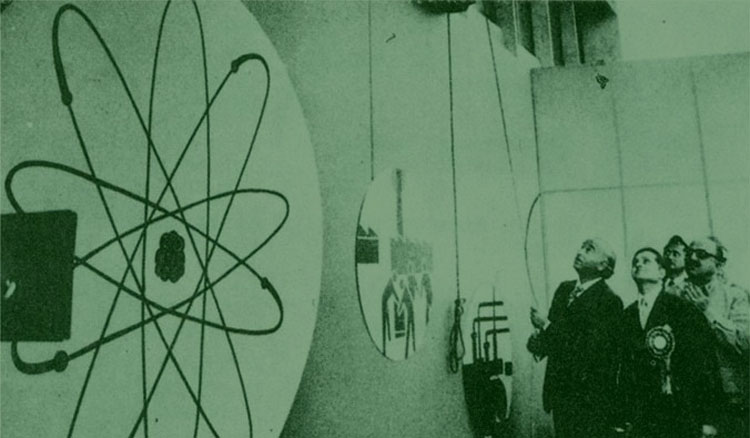
Pakistan successfully detonated its six nuclear devices at Chaagi on 28 may 1998. If we go into past, Although Pakistan recognized as an independent state on 14th August 1947. Our first door neighbor India never endure Pakistan as a state.  They always use to torture and destabalise Pakistan when they got an opportunity. Wars in 1948, 1965 and 1971 shows Indian wrath and rage for Pakistan.

As Pakistan was relatively fragile state than India, they have a continuous fear of physical confrontation from her neighbor. In reaction to the India’s demonstration as a nuclear state on 18th may 1974, Pakistan also decided to establish some Nuclear institutes in order to overcome the threats of the world particularly India. The two most important reasons behind Pakistan setting up of nuclear institutes are

  • India’s rash and imprudent decision to make a series of explosions.
  • Jubilation in India after adopting aggressive and hostile stance against Pakistan.

The impartial survey proves that Pakistan did their best to convince India to keep south Asia free from Nuclear weapons but Indian bosses’ didn’t’ accept any offer from Pakistan. Even they were not ready to negotiate with Pakistan.

Categories
June 2018

Day by Day Current Affairs (June 12, 2018) | MCQs for CSS, PMS, NTS

WELCOME TO CSS TIMES DAY BY  DAY CURRENT AFFAIRS, YOUR BEST SOURCE FOR UP-TO-DATE AND DAILY TOP CURRENT AFFAIRS 2018 FOR PREPARATION OF CSS, PMS, BANKING, NTS, RAILWAYS AND ALL COMPETITIVE EXAMS.  “DAY TO DAY CURRENT AFFAIRS” BASICALLY IS TOP 10 NEWS SUMMARY ON CURRENT HAPPENINGS OF NATIONAL AND INTERNATIONAL IMPORTANCE FOR ALL EXAMINATIONS

Categories
Articles CSS Compulsory Subjects Current Affairs Islamic Studies

The Muslim World on the Verge of Destruction

The Muslim World on the Verge of Destruction

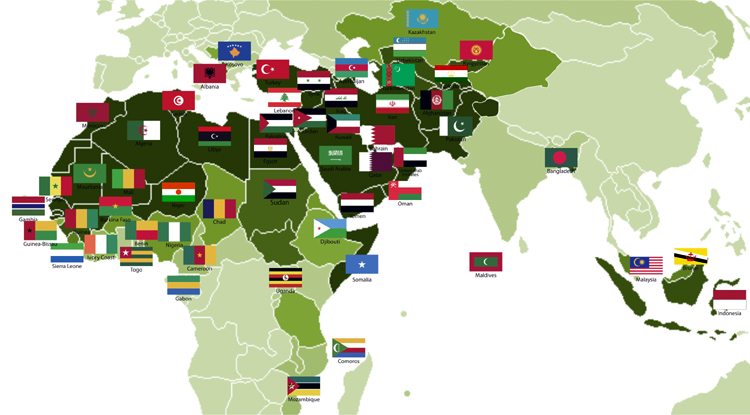
The Muslims had ruled over the world 1000 of years ago. They were at climax because of their firm belief at unity. They had firm belief on the Holy Quran but it is law of nature that everything that rises sees a downfall. As long as the Muslim stuck to their religion, they succeeded but when they abandoned their moral values, they suffered downfall.

Muslim Ummah currently passing from catastrophic period and the era of their destruction began when they commenced trusting their enemies, they suffered insurmountable loss.  If we look into the above issue with cool mind, it will dawn upon us that the disunity among the Muslim Ummah is the major cause of their decline. If we have a bird eye view of the current scenario, it will be revealed that the Muslims are fighting against their own Muslim brothers due to lack of unity.

Categories
June 2018

Day by Day Current Affairs (June 11, 2018) | MCQs for CSS, PMS, NTS

WELCOME TO CSS TIMES DAY BY  DAY CURRENT AFFAIRS, YOUR BEST SOURCE FOR UP-TO-DATE AND DAILY TOP CURRENT AFFAIRS 2018 FOR PREPARATION OF CSS, PMS, BANKING, NTS, RAILWAYS AND ALL COMPETITIVE EXAMS.  “DAY TO DAY CURRENT AFFAIRS” BASICALLY IS TOP 10 NEWS SUMMARY ON CURRENT HAPPENINGS OF NATIONAL AND INTERNATIONAL IMPORTANCE FOR ALL EXAMINATIONS

Categories
June 2018

Day by Day Current Affairs (June 10, 2018) | MCQs for CSS, PMS, NTS

WELCOME TO CSS TIMES DAY BY  DAY CURRENT AFFAIRS, YOUR BEST SOURCE FOR UP-TO-DATE AND DAILY TOP CURRENT AFFAIRS 2018 FOR PREPARATION OF CSS, PMS, BANKING, NTS, RAILWAYS AND ALL COMPETITIVE EXAMS.  “DAY TO DAY CURRENT AFFAIRS” BASICALLY IS TOP 10 NEWS SUMMARY ON CURRENT HAPPENINGS OF NATIONAL AND INTERNATIONAL IMPORTANCE FOR ALL EXAMINATIONS

Categories
June 2018

Day by Day Current Affairs (June 09, 2018) | MCQs for CSS, PMS, NTS

WELCOME TO CSS TIMES DAY BY  DAY CURRENT AFFAIRS, YOUR BEST SOURCE FOR UP-TO-DATE AND DAILY TOP CURRENT AFFAIRS 2018 FOR PREPARATION OF CSS, PMS, BANKING, NTS, RAILWAYS AND ALL COMPETITIVE EXAMS.  “DAY TO DAY CURRENT AFFAIRS” BASICALLY IS TOP 10 NEWS SUMMARY ON CURRENT HAPPENINGS OF NATIONAL AND INTERNATIONAL IMPORTANCE FOR ALL EXAMINATIONS

Categories
Current Affairs Pakistani Newspapers

Counting the cost of Trump’s air war in Afghanistan

[mks_button size=”medium” title=”By: Kevin Ponniah” style=”squared” url=”” target=”_self” bg_color=”#007974″ txt_color=”#FFFFFF” icon=”fa-user” icon_type=”fa” nofollow=”1″]

The helicopters arrived shortly after midday and sent a rocket hurtling into an area at the back of the crowd where children were sitting.

As people began to flee, witnesses said, heavy machine gun fire followed them.

It was the latest deadly example of how a ferocious new air campaign against the Taliban has caused a spike in civilian casualties from US and Afghan air operations.

This Afghan Air Force attack on 2 April in north-eastern Kunduz province killed at least 36 people and injured 71, the UN says. Although witnesses said Taliban fighters and senior figures were in the crowd, 30 of those killed were children. Hundreds of people had gathered outside a madrassa in the Taliban-controlled district of Dasht-e-Archi to watch a group of students have turbans tied around their heads in a traditional ceremony to recognise their memorisation of the Holy Quran.

“I saw turbans, shoes, arms, legs and blood everywhere,” one local resident told the BBC the next day, describing the aftermath. Everyone in the area knew the event was happening, and many children, he said, had turned up for the free lunch that was about to be served.

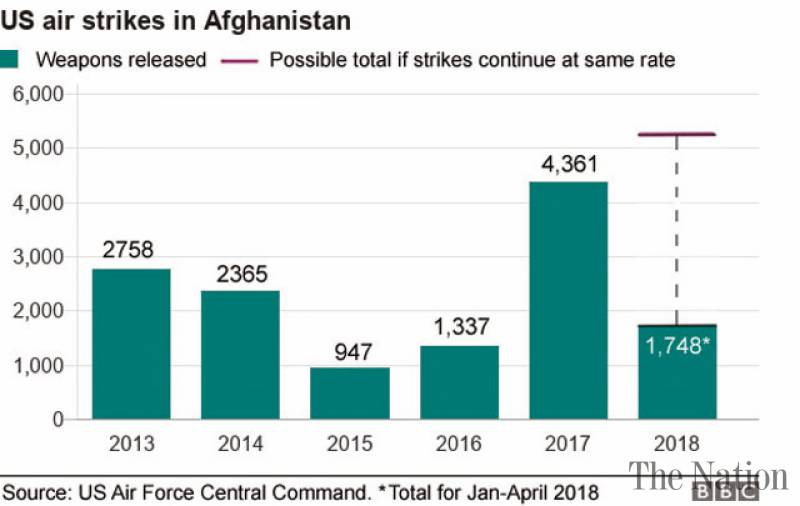
Since President Trump announced his Afghanistan strategy and committed more troops to the conflict last August, the number of bombs dropped by the US Air Force has surged dramatically. New rules of engagement have made it easier for US forces to carry out strikes against the Taliban, and resources have shifted to Afghanistan as the fight against the Islamic State group in Syria and Iraq winds down.

Heavy bombing against the Taliban and IS saw more Afghan civilians killed and injured from the air in 2017 than at any time since the UN began counting in 2009. In the first quarter of this year – before the Dasht-e-Archi incident – 67 people were killed and 75 injured by the strikes, more than half of them women and children. There was no let-up in the bombardment even during the bitter Afghan winter, a time when fighting usually draws down before picking up again in the spring. At the same time, the US has launched a five-year plan to massively expand and overhaul the Afghan Air Force, including providing it with 159 Black Hawk helicopters. John W Nicholson, the top US general in Afghanistan, has pledged that a “tidal wave of air power” will be unleashed.

The aim of this air barrage, analysts say, is to try to push the Taliban to the negotiating table, and perhaps bring an end to America’s longest war – which has dragged on for 17 years. But when helicopters mow down children at a religious ceremony, as in Dasht-e-Archi, it raises significant questions for both Washington and Kabul, and supplies potent propaganda for the Taliban.

Although the Afghan government said the strikes targeted senior Taliban leaders planning an attack on Kunduz city, “those helicopter pilots must have seen the children”, says Kate Clark of the Kabul-based Afghanistan Analysts Network. “You can’t attack an open-air gathering in a helicopter and not see who you are going to kill.”

A grim conclusion, she added, is the possibility that the Afghan Air Force did not see those particular civilians as “their people”.
US Air Strikes in AFghanistanIn a 5 June report, the Afghanistan Independent Human Rights Commission said the attack was a “war crime”.

After initially denying that civilians had been killed, the Afghan government eventually apologised well over a month later and offered compensation to victims’ families. It has announced an investigation. “The key difference between the government and insurgents is that a legitimate government will always seek forgiveness for mistakes,” President Ashraf Ghani said.

Activists say the US also bears responsibility for such attacks carried out by Afghan air forces. “They train the pilots, the controllers, and they provide all the equipment,” said Patricia Gossman, the senior Afghanistan researcher at Human Rights Watch.

The Nato mission in Afghanistan, Resolute Support, said US and international forces had “no involvement” in the 2 April attack. While advisers “assist in the development of doctrine that guides the Afghan Air Force decision-making process”, a spokesperson said, they are not involved in decision-making for Afghan mission planning or targeting,

The spokesperson added: “Both the Afghan Air Force and US Forces-Afghanistan adhere to the International Laws of Armed Conflict. We constantly reiterate the importance of minimising civilian casualties, from operational planning, to targeting, to execution.

“Distinguishing military targets from civilian persons, limiting collateral damage, and using only proportional force are all assessed and applied prior to each strike.”

But Afghan forces are not the only ones that make mistakes: US bombs killed at least 154 civilians in 2017, according to the UN mission in Afghanistan, while the Afghan Air Force killed 99.

Observers say that about a decade ago international forces made a concerted effort to bring down civilian casualties from air strikes. Then Afghan President Hamid Karzai was a strident critic of US bombings, decrying them as violations of Afghanistan’s sovereignty.

“They had a dedicated Civilian Casualty mitigation team that analysed each incident, they had people who made site visits,” said Ms Gossman. “Since 2014, the Civilian Casualties Team at Resolute Support is much smaller, they don’t do site visits. They don’t talk to victims, witnesses or other local sources like medical personnel.”

Resolute Support says it and the US military only investigate allegations of civilian casualties from their own actions. Those investigations may include site visits if it safe to do so and “if reasonably available information is insufficient to confirm or disprove the allegation”.

Most civilian casualties in Afghanistan are still caused by anti-government groups like the Taliban and IS and, despite the heavy bombing, it does not appear that the US has become more careless in its approach to protecting civilians. The total number of weapons dropped by the US Air Force increased by 226% from 2016 to 2017, while over the same period, civilian casualties from Afghan and US air strikes rose by 7%.

Total civilian casualties from all sources actually decreased slightly, driven in particular by a lower toll from ground offensives. So although more civilians died in air attacks, it looks like the increased air cover may have prevented the Taliban from mounting major assaults on population centres, says Kate Clark.

In any case, the Dasht-e-Archi incident should be “a wake-up call for the government, people in charge of the air force and the US trainers”, she said.

Others believe that the entire strategy of pounding the Taliban militarily is misguided. A recent BBC study found that Taliban fighters are openly active in 70% of Afghanistan.

Barnett Rubin, who served as senior adviser to the Special Representative for Afghanistan and Pakistan at the US Department of State from 2009-2013, said the air campaign was having “no strategic effect”.

“They are just fighting the same war over for the 17th time,” said Mr Rubin, who argues that a consensus between Afghanistan’s neighbours and the major powers is a pre-requisite to creating a stable Afghanistan.

The current situation “is an irreversible stalemate”, he said, adding that if it changes “in the medium to long-term, it will only change against us.”–BBC

Originally Published in Daily The Nation 

Categories
June 2018

Day by Day Current Affairs (June 08, 2018) | MCQs for CSS, PMS, NTS

WELCOME TO CSS TIMES DAY BY  DAY CURRENT AFFAIRS, YOUR BEST SOURCE FOR UP-TO-DATE AND DAILY TOP CURRENT AFFAIRS 2018 FOR PREPARATION OF CSS, PMS, BANKING, NTS, RAILWAYS AND ALL COMPETITIVE EXAMS.  “DAY TO DAY CURRENT AFFAIRS” BASICALLY IS TOP 10 NEWS SUMMARY ON CURRENT HAPPENINGS OF NATIONAL AND INTERNATIONAL IMPORTANCE FOR ALL EXAMINATIONS