Categories
FPSC News

PM instructs FPSC to carry out in-depth analysis of CSS result

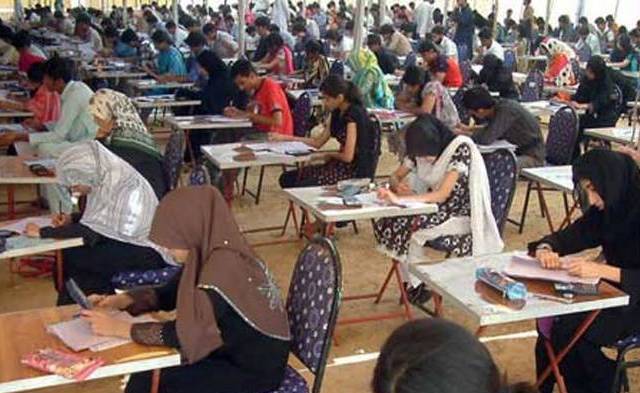
ISLAMABAD: In order to ascertain the low success rate in competitive examinations, Prime Minister Shahid Khaqan Abbasi has instructed the Federal Public Service Commission (FPSC) to undertake an in-depth analysis of the reasons behind the declining success rate for the past three years.

Sources told this scribe that PM Abbasi has given the task to FPSC to give a comprehensive report on low success rate in the Central Superior Services (CSS) exam.

One official of FPSC, on the condition of anonymity, told that FPSC has started work on this matter. The department will soon give the report to PM while taking input from Establishment Division and Ministry of Planning, Development and Reform.

Categories
Articles Current Affairs Pakistani Newspapers

Reforms for Peace (By: Mohammad Ali Babakhel)

Reforms for Peace

HISTORICALLY, Fata has always represented a smorgasbord of competing interests. Although an integral part of the federation by virtue of Article 1(C) of the Consti­tution, Fata’s administrative, legal and political dynamics are different in that it’s governed through the Frontier Crimes Re­­­gu­­­­­­­­la­tion (FCR). Since 1976, 15 commissions and committees have been constituted to reform Fata, but the recommendations were largely shelved. However, the 2016 report of the committee on Fata reforms has revitalised hopes. Point 8 of the Charter of Democracy and point 12 of the National Action Plan also expressed resolve to reform and merge Fata and KP.

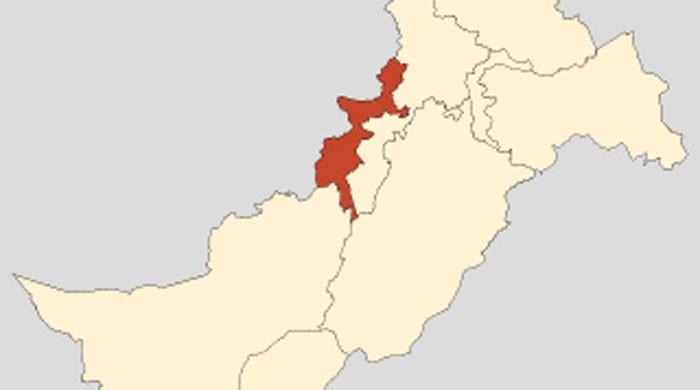
Reforming Fata is a task requiring constitutional, legal, administrative, procedural and capacity building interventions backed by political manifestation. Fata is divided into seven agencies and six Frontier Regions (Bannu, D.I. Khan, Kohat, Lakki Marwat, Tank and Peshawar), surrounded by 10 districts of KP and Balochistan’s Sherani district. Six agencies share a border with Afghanistan. Administratively, Fata is further divided into protective areas overseen by political agents (PAs), and non-protective areas indirectly administered by local tribes. Although predominantly inhabited by Pakh­tuns, tribal rivalries and sectarianism exist.

To further imperialistic designs, a strategic buffer was created — Fata’s administrative design neither considered service delivery nor rule of law. Remote-controlled administrative apparatus remained depen­dent upon intermediaries (maliks); as buying loyalty became a norm, public interest was the ultimate casualty. Fata is controlled by a long bureaucratic chain that hampers public facilitation.

Fata must be brought into the fold.

The FCR, promulgated in 1901, prescribes not only punishments for offences but also a system of governance; it is simultaneously a procedural and punitive framework. But Fata’s criminal justice system negates the principle of separation of judiciary from the executive, and functions without components like police, courts, prosecution and prison. The accused are deprived of fundamental rights and denied the opportunity to defend themselves in a court of law.

The cruel concept of ‘collective responsibility’ in the FCR was instituted to punish a whole tribe for the crime of one individual. Although the Constitution’s Article 10(A) provides entitlement to fair trial and due process and Article 25 guarantees equality of citizens, in practice the FCR negates such protection. Amendments to it have reduced the severity of collective responsibility, and barred detention of women and persons below 16 or above 65 years. Now, a detained person is to be produced before the assistant political agent and is entitled to bail and the right to appeal before a tribunal consisting of a chairman and two members; it functions on bureaucratic procedures and overlooks judicial norms.

By incorporating the jirga as an institution, the British imperialists made diplomatic moves but the real power remained with political authorities. Jirga recommendations are not binding upon the PA, who may refer the case to the second council. To resolve collective tribal issues, the concept of ‘qaumi jirga’ was legalised. To reduce tensions, the elders broker a teega (truce) between contending parties.

In case of merger, apart from integration of different law-enforcement forces into the KP police, introduction of other components like courts, prosecution, prison and anti-corruption must be introduced.

An estimate shows Fata costs the exchequer Rs21 billion in damages annually. Absence of real-time statistics compels planners to rely on hypothetical allocations. Fata is not included in the resource-sharing formula of the federation, and many are for including it in the next NFC Award.

Merging Fata with KP may fulfil a long-awaited demand, but may also intensify the demand for creating a Hazara province. Before merger, financial affordability needs to be thoroughly worked out. Take Malakand, where the non-extension of fiscal laws seriously compromised revenue collection. Presently in KP, six out of seven divisions pay taxes while its development portfolio is equally shared with non-revenue generating Malakand. If Fata is similarly merged, KP would not be able to sustain the added financial burden and this could lead to much inner wrangling. Since quality of public service delivery like law enforcement, social development, etc is primarily dependent on revenue collection, declaring Fata a non-revenue generating area may complicate matters.

Fata reforms should neither be narrowly interpreted nor be merely security-centric. After successful military operations that have significantly curtailed the use of Fata as a launching pad for militancy, it’s now time for the civil administration to implement a practical transition plan with the sole objective of ensuring that military gains now lead to long-term civil peace.


The writer is the author of Pakistan: In Between Extremism and Peace.

Published in Dawn, December 20th, 2017


Categories
Current Affairs MCQs

Day By Day Current Affairs MCQs One Liner (November 2017) | Download in PDF

WELCOME TO CSS TIMES DAY BY  DAY CURRENT AFFAIRS, YOUR BEST SOURCE FOR UP-TO-DATE AND DAILY TOP CURRENT AFFAIRS 2017 FOR PREPARATION OF CSS, PMS, BANKING, NTS, RAILWAYS AND ALL COMPETITIVE EXAMS.  “DAY TO DAY CURRENT AFFAIRS” BASICALLY IS TOP 10 NEWS SUMMARY ON CURRENT HAPPENINGS OF NATIONAL AND INTERNATIONAL IMPORTANCE FOR ALL EXAMINATIONS.

November 01, 2017

  1. The heads of nearly all parliamentary parties on October 31, 2017 agreed not to increase the number of seats in the National Assembly before next year`s general elections
  2. In a major development in Pakistan-Iran relations, Army Chief Gen Qamar Javed Bajwa is set to visit Tehran later this week
  3. Pir Kaleem Khurshid of the Independent group was elected president of the Supreme Court Bar Association (SCBA) for 2017-18 on October 31, 2017
    • Qamar Zaman Qureshi of the winning group was elected vice president on a Punjab seat
  4. The Drug Regulatory Authority of Pakistan (DRAP) is finalising arrangements to introduce the barcode system to check the sale of spurious medicines in the country
    • Chief Executive Officer (CEO) DRAP: Dr Mohammad Aslam
  5. The United States Agency for International Development (USAID) in partnership with the Fata Secretariat inaugurated Rs1.6 billion Fata Economic Revitalisation Programme here on October 31, 2017
  6. The Pakistan Post is issuing a commemorative postage stamp of Rs10 denomination and souvenir sheet of Rs50 denomination on Pakistan’s ICC Champions Trophy victory in England
  7. Pakistan Navy has placed an order for two 75m corvettes from an American shipbuilding company
  8. The World Bank on October 31, 2017 ranked Pakistan at 147th out of 190 countries in its `Doing Business 2018`report
    • Pakistan is among the South Asian economies that carried out a record 20 business reforms in the past year, bringing to a total of 127 the number of reforms enacted in the region over the past 15 years
    • South Asia is the only region not represented in the top 50 ranking for ease of doing business
  9. A `monster` planet, which should in theory not exist, has been discovered orbiting a faint dwarf star far
    • The star has a radius and mass about half that of the sun.
  10. Saudi Arabia plans to start issuing tourist visas “soon”
    • The ultra-conservative kingdom seeks to attract international visitors in a radical overhaul of its oil-dependent economy.

Categories
Articles Pakistani Newspapers

The failing civil service system (By: Masood Hameed)

[mks_button size=”medium” title=”By: Masood Hameed” style=”squared” url=”http://#” target=”_self” bg_color=”#1e73be” txt_color=”#FFFFFF” icon=”icon-users” icon_type=”sl” nofollow=”1″]

It seems like the structure and assessment techniques in the provincial civil services exams, particularly in Balochistan revolve around unrefined patterns that are hardly suitable, to say the least

The PCS aspirants in Balochistan breathed a sigh of relief when they heard that the Balochistan Public Service Commission (BPSC) is likely to hold Provincial civil services exams against posts of AC/SO in March 2018. As the aspirants have anxiously waited for the said posts, at the same time the BPSC also learned that many candidates show reservations and pinpointed several flaws in the examination system. And they emphasise reforms on the part of BPSC.

In 2016, a group of candidates appeared in the competitive exams of Tehsildar also followed to addressing a press conference in Quetta press club and lashed out at the poor management arranged for the exams.

Categories
GK MCQ’s

Analogy MCQs (for CSS, PMS, NTS General Knowledge MCQs Paper)

Analogy MCQs for CSS, PMS, NTS and all type of General Knowledge MCQs Papers

1. Tegal airport is to Germany and Kimpo airport is to?
(a) Laos (b) North Korea
(c) South Korea✔ (d) Latvia

2. Monrovia belongs to Liberia and Schwechat belongs to
(a) Oslo (b) Geneva
(c) Chile (d) Vienna✔

3. Ulan Bator belongs to Magnolia and Minsk belongs to
(a) China (b) Malaysia
(c) Belarus✔ (d) Canada

4. “Cortes” is to Spain and“ Folketing” is
(a) France (b) Italy
(c) China (d) Denmark✔

Categories
CSS Tips

My Strategy to hit CSS Essay Paper By: Zara Chaudhry (Assistant Commissioner)

My Strategy to hit CSS Essay Paper

Mostly people view that take notes from some far famed academy or join some teacher who is CSP(either he knows ABC of English or not but if he is CSP then do join) I am not declining that CSPs are not cognisant of essay techniques or ABC of English rather my point of view is something else.

First of all the teacher you are going to join must have quality time for your essay preparation, if he is of the view that I will take class once in a week rest is up to you then I would decline this joining .your teacher must need to give you proper time if not then don’t join.

Secondly mostly people think that joining CSP will be beneficial as he will give us his written essays and for this they spend a large amount I don’t second it because in case if those topics won’t come in paper what will you do???

Categories
CSS Tips

Fight-back Strategy for CSS (by: Zara Chaudhry, Assistant Commissioner)

Fight-back Strategy for CSS

Delving into one of the major issues that CSS aspirants go through is how to crack this hard nut within minimum time.

CSS is not a herculean task.  The issue of failure occurs when students start spending a lot of time in preparation without any strategy.

Categories
CSS Tips

15 Magical Tips on How to Study for CSS Exams at Home

15 Magical Tips on How to Study for CSS Exams at Home

Once aspirant decides to become CSP officer is his/her goal, the very next query comes to notice is coaching or self-study. If you have decided to learning from home then make sure that you have a appropriate direction in your homework for CSS Exam.

To crack country’s toughest examination you need not be intelligent and studious. Throughout the examination process FPSC, examine the general knowledge, common sense, aptitude, ethics and communication skill. If you are ready to mold yourself with a proper guidance, you can crack the exam easily by preparing from home.

There have been many aspirants who have cracked and topped in the FPSC Civil Services Examination by studying at home and without attending classroom coaching. They just followed self-paced study method. It is defined as something studied by oneself without any type of help or supervision by a teacher.

Here, we bring you the 15 magical tips that will break the myth that ‘one cannot prepare from home’. Follow these tips to study from home and prepare yourself for the FPSC examinations.

Categories
CSS Tips

30 Golden Tips for Clearing CSS, PMS and Other Competitive Exams

Only fittest students can clear the CSS exam. You will have to become a multidimensional person for becoming a 17th grade officer. We shall write a series of articles on this topic to guide you. It’s the second article in this regard. I stood first in a competitive exam that’s why I am sure that I can share golden tips with you in this regard. I saw many duffers too during my government service a gazette government officer.

Categories
Pakistani Newspapers

Why Climate Change Threats Are Real and Complex?

WHY CLIMATE CHANGE THREATS ARE REAL AND COMPLEX:
How we battle climate change will determine our future

By: Rina Saeed Khan

ALTHOUGH Pakistan does not contribute significantly to global carbon emissions ranl(ing 135th in per capita emissions it is amongst the top 10 countries most vulnerable to the impacts of climate change. According to a recent country profile by the Asian Development Bank (ADB), `Climatic changes are expected to have wide-ranging impacts on Pakistan, affecting agricultural productivity, water availability, and increased frequency of extreme climatic events.` Addressing these risks will require climate change to be mainstreamed into national strategy and policy, the report notes.

Check Also: Countries and Currencies, Religions & Languages

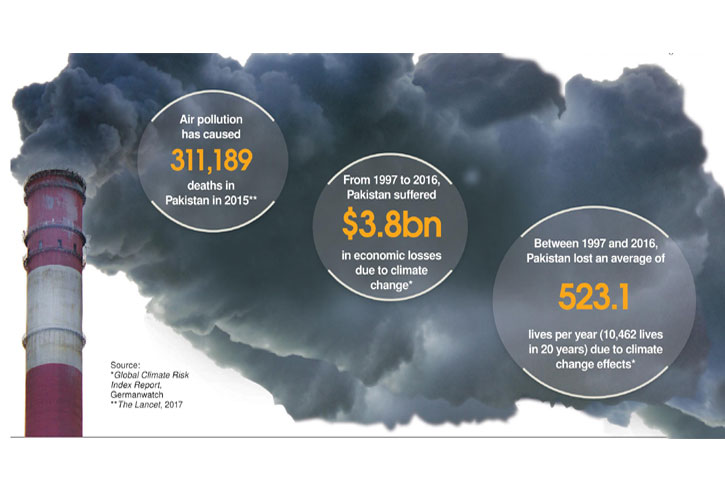
Noticeable changes in Pakistan`s weather patterns include an increase in the annual mean temperature by roughly 0.5°C in the last 50 years, according to ADB research, increasing the likelihood of extreme weather events. Annual heatwave days have increased nearly fivefold in the last 30 years in 2015, Karachi`s severe heatwave killed over 1,200 people.

Meanwhile, the sea-level along Karachi`s coast has risen approximately 10 centimetres in the last century. Sea-levels are projected to rise by one metre by 2100, severely affecting low-lying coastal cities.

Annual precipitation has also increased in the last 50 years. Increasing temperatures will result in a decline in snowpack and permafrost (frozen soil and rock), which might lead to less water in rivers in the future. More than 50 per cent of the flows from the Indus river system come from melting snow and glaciers. There is also the probability of greater flooding. In 2010, floods that were triggered by unprecedented rainfall killed 1,600 people and caused around $10 billion in damages.

Check also: CSS Pakistan Affairs MCQs

Given that the country is just about self-sufficient in food production, these climatic changes can prove disastrous to its rate of increase, which may be unable to keep pace with surging populations. Qamar-uz-Zaman Chaudhry, former director general of the Pakistan Meteorological Department, explains, `Both are difficult prospects given the negative impacts of climate change affecting water availability and crop yields.

The government must be cognisant of an impending food shortage as yields of wheat and rice are expected to decline which could drive production northward subject to water availability.

Chief executive of the World Wildlife Fund-Pakistan Hammad Nagi predicts the country`s water crisis will be exacerbated because of how water resources are being used.

`Pakistan has gone from being water surplus to water stressed, and soon there will be water scarcity. We have to change the way we grow certain commodities of crops. For example, we cannot afford to grow sugar cane in large areas when we don`t have enough water. Our leadership needs to make tough decisions, and soon.

Distracted leadership, weak governance Experts say that research into key areas impacted by climate change, including the future of glaciers and water security, are lacking. For its part, the government has revamped theGlobal Change Impact Studies Centre previously staffed by retired nuclear scientists. The appointment of Harvardtrained economist, Tariq Banuri, as executive director is reason enough, many believe, that mitigation policies may gradually see implementation.

Unfortunately, the country`s policymal(ers are too distracted by militancy and political instability to focus on pressing environmental challenges. Although Pakistan is one of the world`s few countries to have a dedicated federal climate change ministry, it was only activated in 2015 by the current government. In fact, when the PML-N came to power in 2013, it downgraded the ministry to a division, removing its ability to make high-level decisions. In January 2015, Senator Mushahidullah Khan, a long-time party loyalist with little climate change experience, was appointed minister of the newly reinstated ministry. Khan was replaced in August 2015 by Zahid Hamid, who took additional charge of the ministry and headed to the Paris conference in December 2015.

In Paris, alongside over 190 countries, Pakistan had pledged to limit the global average temperature increase to below 2°C which scientists say is the limit for safety meaning that global carbon emissions need to peak by 2020 at the latest, and get to net-zero by 2050. The Agreement included mechanisms for pledges to be reviewed, but without setting rules these will be decided at Bonn this week before being finalised in Warsaw in 2018.

Pakistan`s plan of action after the 2015 Paris Agreement Mr Hamid`s two years at the ministry were productive he helped ratify the Paris Agreement and submit Pakistan`s voluntary plans to cut emissions, called the Nationally Determined Contributions (NDC) document, to the UN.

Pakistan`s plan, however, foresees a fourfold increase in the country`s greenhouse gas emissions by 2030. It says the country will reduce up to 20pc of its 2030 projected greenhouse gas emissions, subject to the availability of international grants to meet the cumulative abatement costs amounting to approximately $40bn. Annual adaptation needs have been identified as between $7bn and $14bn -an amount expected from international climate finance that might not be forthcoming given that the US, a big contributor, is pulling out of the Paris Agreement. The recently operational Green Climate Fund has given Pakistan $37m for a project to scale up Glacial Lake Outburst Flood risk reduction in northern Pakistan. The GCF was supposed to receive $100bn annually until 2020 from developed countries, but it has only raised $10.3bn so far.

Critics say that Pakistan`s NDC is hardly ambitious compared to other developing countries in the region, needing to be reworked to reflect emission cuts from installed and upcoming renewable energy projects like the Quaid-iAzam solar park (which will go up to 1,000MW) and wind farms in Sindh.

Other projects under Mr Hamid`s tenure include introducing the Green Pakistan Programme with the objective to plant 100 million trees, ensuring the National Forest Policy was approved by the Council of Common Interests and passing the Climate ChangeAct (CCA), 2016. But criticism remains that little has been achieved on the ground. `The fact remains that we have policies for everything, but where is the enforcement?` Mr Nagi asks. The new legislation is, in fact, very similar to the Pakistan Environmental Protection Act (PEPA), 1997. Environmental protection agencies set up under PEPA were widely regarded as ineffective and unable to enforce the law. In an interview, the reinstated minister Senator Khan told Dawn that he is prepared to set up a new authority (envisioned by the CCA), including hiring half a dozen professionals and organising a meeting of a high-level climate change council chaired by the prime minister. Interestingly, the council set up under PEPA was also headed by the prime minister, and it barely met.

Why the government should prioritise climate change According to Mr Chaudhry also the author of Pakistan`s National Climate Change Policy (NCCP), 2012 steps proposed under CCA should have already been implemented. `In the UNDP`s Climate Public Expenditure and Institutional Review, we learned that Pakistan spends 8pc of its total budget on climate relevant activities, which is a good figure. However, there are certain areas, basically mitigation activities and climate adaptation, which should be taken more seriously.

As a guiding document, the NCCP highlighted the objective of achieving climate-resilient development by mainstreaming it into various sectors. It was passed by the then PPP government; later, an implementation framework for the policy was also prepared. After the 18th amendment, however, the onus was placed largely on the provinces to prepare their respective detailed action plans, although even at the time, there were concerns about a lack of capacity and competency at provincial levels.

Tackling climate change is beyond the ability of the provinces, admits Senator Khan. On this, he concurs with the findings of the ADB report that there has been an `erosion of climate change policy ownership by the provinces, due to potentially conflicting or overlapping objectives … between provinces and federal agencies.` Worl(ing towards a solution, he says that his ministry has now helped coordinate and prepare drafts of policies and action plans in Azad Kashmir, Khyber Pakhtunkhwa, Gilgit-Baltistan and Punjab. Given the communication gap between federal and provincial departments, he says he will `ensure that a member of parliament and a senator from each province are nominated to coordinate and oversee implementation in their respective province` Reacting to the lack of implementation on the NCCP, a farmer from Lahore recently petitioned the Lahore High Court. Justice Mansoor All Shah set up a 21-member climate change commission to investigate the implementation of the NCCP`s short-term and medium-term measures by relevant government departments. Mr Nagi, who serves on the commission, says, `The problem is that government departments relate everything to adaptation. The agricultural department says we are helping farmers level the land and that is adaptation or the forest department says we are planting trees so that is adaptation. That is all true, but we have to do so much more.

The writer is an environmental journalist.

courtesy: Daily Dawn