Pakistan day is adoption of Pakistan resolution by Muslim League at the Minaar e Pakistan. Pakistan resolution 1940 was a major step towards realization of dreams of Muslims of subcontinent.
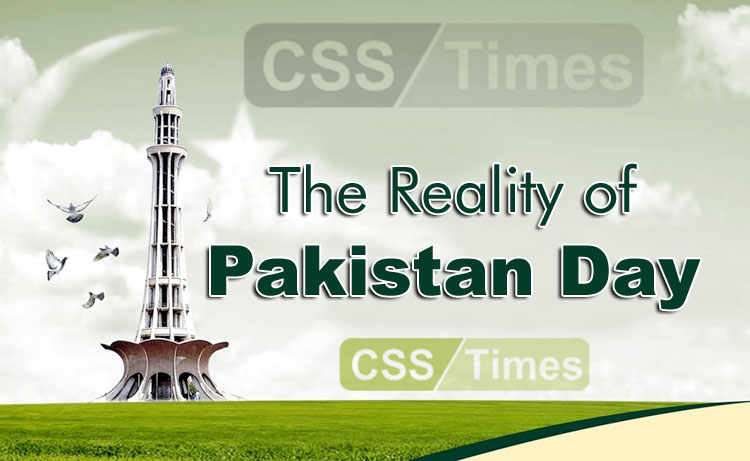
Pakistan day is adoption of Pakistan resolution by Muslim League at the Minaar e Pakistan. Pakistan resolution 1940 was a major step towards realization of dreams of Muslims of subcontinent.
1) What is the point of origin of an earthquake?
(a) Epicenter
(b) Focus
(c) Foreshock
(d) Scarp
(e) Seismograph
Answer: (b)
The exact point where the earthquake actually starts deep inside the earth’s crust (the point of origin) is called the focus, or hypocenter.
2) What is the point on the surface nearest the earthquake?
(a) Epicenter
(b) Focus
(c) Foreshock
(d) Scarp
(e) Seismograph
Answer: (a)
The epicenter is the point on the earth’s surface vertically above the hypocenter (or focus), point in the crust where a seismic rupture begins
3) Places experiencing equal impact of an earthquake are called (CSS-2012)
(a) Snowlines
(b) seismic belts
(c) Seismic lines
(d) None of these
Answer: (c)
4) Where do most earthquakes occur?
(a) Along dikes
(b) Along faults
(c) Along folds
(d) Along joints
(e) Along unconformities
Answer: (b)
Earthquakes can also occur far from the edges of plates, along faults. Faults are cracks in the earth where sections of a plate (or two plates) are moving in different directions. Faults are caused by all that bumping and sliding the plates do. They are more common near the edges of the plates.
5) What is the standardized distance from an earthquake epicenter for measuring Richter magnitudes?
(a) 0 km
(b) 10 km
(c) 100 km
(d) 500 km
(e) 1000 km
Answer: (c)
Richter established 100 km as the standard distance from an earthquake epicenter to measure Richter magnitude with a Wood-Anderson seismograph.
51. Who founded the Muhammadan Literary Society in 1863 at Calcutta?
(a) Altaf Hussain Hali
(b) Muahmmad Ali Johar
(c) Sir Syed Ahmad Khan
(d) Syed Ameer Ali
52. “Life of Muhammad” is a book which was written by William Muir. Against this who wrote “Khutbat-i-Ahmadia”?
(a) Altaf Hussain Hali
(b) Sir Syed Ahmad Khan
(c) Nazir Ahmad
(d) Muhammad Ali Johar
53. Muhammadan Anglo Oriental School at Aligarh was established by Sir Syed Ahmad Khan in:
(a) 1870
(b) 1875
(c) 1878
(d) 1880
54. Who laid the foundation stone of MAO College in 1877?
(a) Altaf Hussain Hali
(b) Lord Lytton
(c) Syed Mahmood
(d) Syed Ameer Ali
55. Who founded the Muhammadan Educational Conference in 1886?
(a) Syed Mahmood
(b) Sir Syed Ahmad Khan
(c) Shibli Numani
(d) Syed Ameer Ali
56. In which year Sir Syed Ahmad Khan was appointed a member of the Imperial Legislative Council by Lord Lytton?
(a) 1870
(b) 1872
(c) 1878
(d) 1882
57. “Asar-us-Sanadeed” was written by:
(a) Sir Syed Ahmad Khan
(b) Muhammad Ali Johar
(c) Nazir Ahmad
(d) Ameer Ali
58. Who established British Indian Association at Aligarh in 1866?
(a) Syed Mahmood
(b) Sir Syed Ahmad Khan
(c) Ameer Ali
(d) Muhammad Ali Johar
59. Indian National Congress was established by A.W. Hume in:
(a) 1880
(b) 1885
(c) 1888
(d) 1892
60. In which year the provinces of Bengal and Assam were reconstituted so as to form two provinces of manageable size?
(a) 1902
(b) 1905
(c) 1903
(d) 1910
61. The province of Eastern Bengal and Assam officially came into being on:
(a) October 16, 1905
(b) June 10, 1905
(c) August 10, 1906
(d) July 20, 1905
62. Who was the viceroy at the time of partition of Bengal?
(a) Lord Curzon
(b) Lord Canning
(c) Lord Minto
(d) Lord Hardinge
63. The Swadeshi Movement was a reaction of Hindus against:
(a) Foundation of Muslim League
(b) Congress
(c) Partition of Bengal
(d) Establishment of universities for Muslims
Check Also: Pakistan Affairs MCQs
64. Muslim leaders met the Lord Minto at Simla on October 1, 1906 for:
(a) Separate electorate
(b) Freedom of India
(c) Partition of Bengal
(d) Foundation of Muslim League
65. How many years the first Constituent Assembly lasted?
(a) 7 years
(b) 8 years
(c) 9 years
(d) 10 years
66. The Constituent Assembly was formed to frame the Constitution of Pakistan under the:
(a) Indian Independence Act, 1947
(b) Special Act, 1946
(c) Government of India Act, 1919
(d) Government of India Act, 1935
67. The first Chief Justice of Pakistan was:
(a) Zafar-ul-Haq
(b) Abdur Rashid
(c) Mushtaq Hussain
(d) Sajjad Ali Shah
68. In 1911, who was the Viceroy of India?
(a) Lord Rippon
(b) Lord Hardinge
(c) Lord Curzon
(d) Lord Canning
69. The president of first Constituent Assembly was:
(a) Allama Iqbal
(b) Quaid-e-Azam
(c) Muhammad Ali Johar
(d) Liaquat Ali Khan
70. In which year Minto-Morley Reforms were introduced in India?
(a) 1907
(b) 1909
(c) 1911
(d) 1915
71. Separate electorate is the main feature of:
(a) Minto-Morley Reforms
(b) Indian Councils Act, 1909
(c) Foundation of Congress
(d) Montague Chelemesford Reforms
72. In which year, the religious scholars gave verdict that India is a Dar-ul-Harab?
(a) 1918
(b) 1920
(c) 1930
(d) 1928
 73. Name the movement which was started in India with the cooperation of Hindus and Muslims?
(a) Khilafat
(b) Sauraj
(c) Swadeshi
(d) None of these
74. Muslim delegation visited Europe in 1919, at that time who was British prime minister?
(a) Lord Canning
(b) Lolyd George
(c) Lord Minto
(d) Lord Curzon
75. Which was the important enactment passed by the first Constituent Assembly?
(a) Political Parties Act
(b) PRODA
(c) Representative Act
(d) PODO
76. The transfer of capital from Calcutta to Delhi was announced on:
(a) December 12, 1911
(b) June 10, 1910
(c) July 12, 1909
(d) August 22, 1913
77. Who was Marquess?
(a) Viceroy of India
(b) Governor of U.P.
(c) Secretary of State for India
(d) None of these
78. Majlis-e-Khilafat was founded in:
(a) 1916
(b) 1919
(c) 1920
(d) 1922
79. When institution of Khilafat was abolished?
(a) 1920
(b) 1922
(c) 1924
(d) 1926
80. Which assembly passed One Unit Act?
(a) First Constituent Assembly
(b) Second Constituent Assembly
(c) First Elected Assembly
(d) None of these
81. Who founded the Anjuman-i-Khudam Ka’aba in 1913?
(a) Muhammad Ali Johar
(b) Dr. Mukhtar
(c) Malauna Abdul Bari Farangi
(d) Sir Syed Ahmed Khan
82. Hijrat Movement was started in:
(a) 1918
(b) 1920
(c) 1922
(d) 1925
83. Treaty of Lausanne was signed in:
(a) 1917
(b) 1920
(c) 1923
(d) 1925
84. After the event of Chauri Chaura which party left the Muslims?
(a) Congress
(b) Muslim League
(c) Suraj
(d) Arya Samaj
85. In which year Lord Chelmsford took over the viceroyalty of India?
(a) 1910
(b) 1912
(c) 1916
(d) 1918
86. Jallianwala Bagh, tragedy took place on:
(a) April 13, 1919
(b) May 15, 1918
(c) June 10, 1917
(d) July 25, 1920
87. Quaid-i-Azam was elected to Imperial Legislative Council of India:
(a) 1906
(b) 1909
(c) 1915
(d) None of these
88. Quaid-i-Azam was elected president of Muslim League in:
(a) 1906
(b) 1910
(c) 1916
(d) None of these
89. Mopla Revolt was made in:
(a) 1910
(b) 1912
(c) 1921
(d) 1918
90. Who was Lord Birkenhead in 1927?
(a) Viceroy of India
(b) Secretary of State for India
(c) Governor of Bengal
(d) Viceroy of India
91. Lucknow Pact was made on:
(a) 1914
(b) 1916
(c) 1918
(d) 1920
92. Who said that the Nehru Report (1928) was an attempt to secure the pre-domination of Hindus over Muslims?
(a) Muhammad Ali Johar
(b) Muhammad Ali Jinnah
(c) Dr. A.B. Rajput
(d) Allama Iqbal
93. Motilal Nehru was the head of:
(a) Committee regarding the education for India
(b) Committee regarding the Nehru Report
(c) Committee regarding the Khilafat Movement
(d) None of these
94. The Second Constituent Assembly was created on:
(a) May 28, 1955
(b) July 25, 1954
(c) August 14, 1955
(d) None of these
95. In which Act the subjects were divided into two parts, i.e. Central and provincial?
(a) Government of India Act, 1919
(b) Government of India Act, 1909
(c) Government of India Act, 1935
(d) Government of India Act, 1947
96. Two Muslim members were also selected for Nehru Committee. One was Sir Ali Imam. Name the second Muslim member.
(a) M. A. Jinnah
(b) M. A. Johar
(c) Shoaib Qureshi
(d) Allama Iqbal
97. Jinnah’s fourteen points were presented in the year:
(a) 1928
(b) 1929
(c) 1931
(d) 1932
98. When Allama Iqbal delivered an address at Allahabad?
(a) 1928
(b) 1930
(c) 1931
(d) 1933
99. The First Constituent Assembly was formed in:
(a) 1940
(b) 1945
(c) 1947
(d) 1949
100. Who started “Home Rule Movement”?
(a) A.B. Rajput
(b) M.A. Jinnah
(c) B.G. Tilak
(d) Annei Besant
| 51. | c | 52. | b | 53. | b | 54. | b | 55. | b |
| 56. | c | 57. | a | 58. | b | 59. | b | 60. | b |
| 61. | a | 62. | a | 63. | c | 64. | a | 65. | a |
| 66. | a | 67. | b | 68. | b | 69. | b | 70. | b |
| 71. | a | 72. | b | 73. | a | 74. | b | 75. | b |
| 76. | a | 77. | c | 78. | b | 79. | c | 80. | b |
| 81. | c | 82. | b | 83. | c | 84. | a | 85. | c |
| 86. | a | 87. | b | 88. | c | 89. | c | 90. | b |
| 91. | b | 92. | b | 93. | b | 94. | a | 95. | a |
| 96. | c | 97. | b | 98. | b | 99. | c | 100. | d |
1. Raja Dahir was defeated by
(a) Muhammad bin Qasim
(b) Tariq bin Ziad
(c) Khalid bin Waleed
(d) Abdul Malik
2. Muhammad bin Qasim was the nephew of:
(a) Sulaiman bin Abdul Malik
(b) Walid bin Abdul Malik
(c) Hajjaj bin Yousaf
(d) Abdul Malik bin Marwan
3. Which province of Pakistan is called Bab-ul-Islam?
(a) Punjab
(b) Sindh
(c) Khyber Pakhtunkhwa
(d) Balochistan
4. Sindh was conquered by Muhammad bin Qasim during the period of:
(a) Umayyads
(b) Tulun
(c) Abbasids
(d) Khiljis
5. Raja Dahir was the ruler of:
(a) Lahore
(b) Sindh
(c) Peshawar
(d) Delhi

The federal government issued the list of 127 persons (including 18 foreigners) on March 9, 2019, who will be conferred Pakistan’s civil awards by President Dr Arif Alvi for excellence in their respective fields of activities at ceremony to be held on March 23rd the Pakistan Day.
Following is the complete list of Civil Awards’ recipients:

“To write is human, to edit is divine.” — Stephen King
Writing is both physical and mental endeavor. Apparently, writing an essay seems to be very difficult. Why writing a paragraph, a mini essay or a full-fledged essay are challenging and grueling task given the fact aspirants to competitive exams are university graduates? Is it due to the complex phenomenon of English as a second language or the problem lies with the very education system and teaching methodologies?
A million dollar question is: Why students join 5-marla academies or a single classroom for acing CSS English essay, in particular, and the rest of the subjects, in general? Based on my practical experience in CSS English classes, majority of students are graduates from well-reputed universities seeking tutorship and teaching desperately. Does it signify that teachers at the level of higher education are either unwilling or incapable of equipping students for the insurmountable future challenges or students due to lack of interest and career counseling miss on important philosophical and practical dynamics of their studies ?
ESSAY writing is a struggle between a writer and a topic.
Keeping in view students’ inherent needs and common difficulties, I have decided to come up with pragmatic, practicable and comprehensive techniques, strategies and plans for acing Essay and Précis papers in a systematic way. They are as follows:
1. Global economic crisis
2. Economy of Pakistan at a crossroads
3. Causes of economic decay In Pakistan
1. Emergence of Industrial Revolution
2. What is global warming?
3. A real threat for life existence
1. Concentration of carbon dioxide, methane, nitrogen oxide and sulfur dioxide
2. Excessive use of insecticide, lubricants and fertilizers
3. Nuclear radiation
4. Deforestation
5. Burning of fossils fuel
6. Chlorofluoro carbon and depletion of ozone layer
7. Explosion of population

SOURCE: CSSFORUM, FPSC, different books
Content of Attached PDF File
File Title: CSS Islamiat Past Papers MCQs (2005-2016) by CSSTimes.pk
Total Number of Pages: 25
File Format: PDF (Portable Document Format)
Total Solved Papers: CSS Islamiat Paper from 2005 to 2016
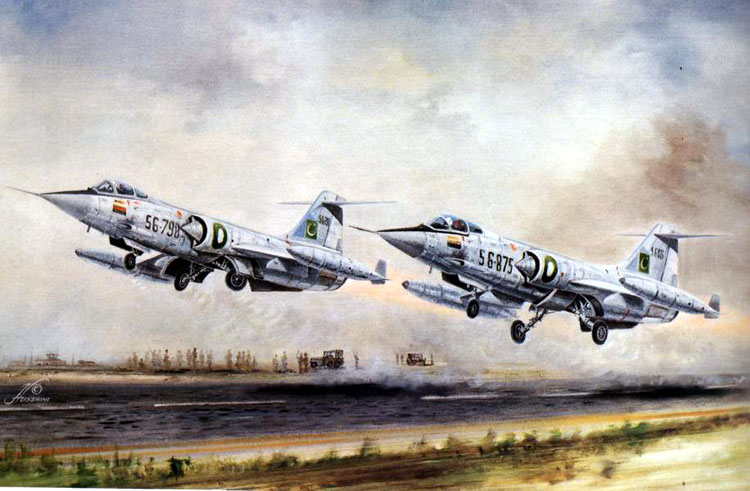
Once Ralph Waldo Emerson-an American essayist, lecturer, philosopher, and poet who led the transcendentalist movement of the mid-19th century said,” For every minute you remain angry, you give up sixty seconds of peace of mind.” Truth they say is the first casualty in war, in some cases in peace time too. But yelling and screaming TV anchors painted a picture in India of such precise details as though they were watching everything from the cockpits of Mirage planes. Media is not always helpless or bereft of resources to independently verify the truth.
It was difficult to find a journalist on Tuesday on Indian TV who would be asking questions and scrutinising the narrative from both sides instead of giving lectures in patriotism from the pulpit their newsroom has become but with the exception of certain liberal and literate voices.